Get Full Government Meeting Transcripts, Videos, & Alerts Forever!
Get email alerts on the Zoning Enforcement topic
No spam. Unsubscribe anytime.
Petersburg adopts civil fines for zoning violations after council debate over implementation policy
Summary
City council approved an amendment to the zoning ordinance authorizing civil penalties for zoning violations — up to $200 for the first offense and up to $500 for subsequent offenses, escalating to criminal process if fines reach $5,000 — after council discussion about the need for a written implementation policy.
The Petersburg City Council adopted an amendment April 15 to the city’s zoning ordinance permitting civil penalties for zoning violations, a tool city staff said is intended to provide an alternative to criminal prosecution for persistent or out‑of‑state property owners.
Planning Director Naomi Sayadmak told council the civil‑penalty process is designed to follow the city’s existing administrative compliance steps (30‑day notice plus 10‑day extension). If a property owner does not remedy a violation after those notices, staff may pursue civil fines instead of immediately seeking a criminal summons. Sayadmark said the ordinance uses the maximum amounts allowed by state code: up to $200 for a first offense, up to $500 for subsequent offenses, and fines are capped such that once $5,000 in fines is reached the matter returns to the criminal process.
Multiple members of the public urged enforcement. Mary Howard asked for more detailed guidance on how types of violations will be charged, and Joe Badison, chairman of the Architectural Review Board, described longstanding issues with properties in historic districts and said stronger enforcement would help preserve historic resources.
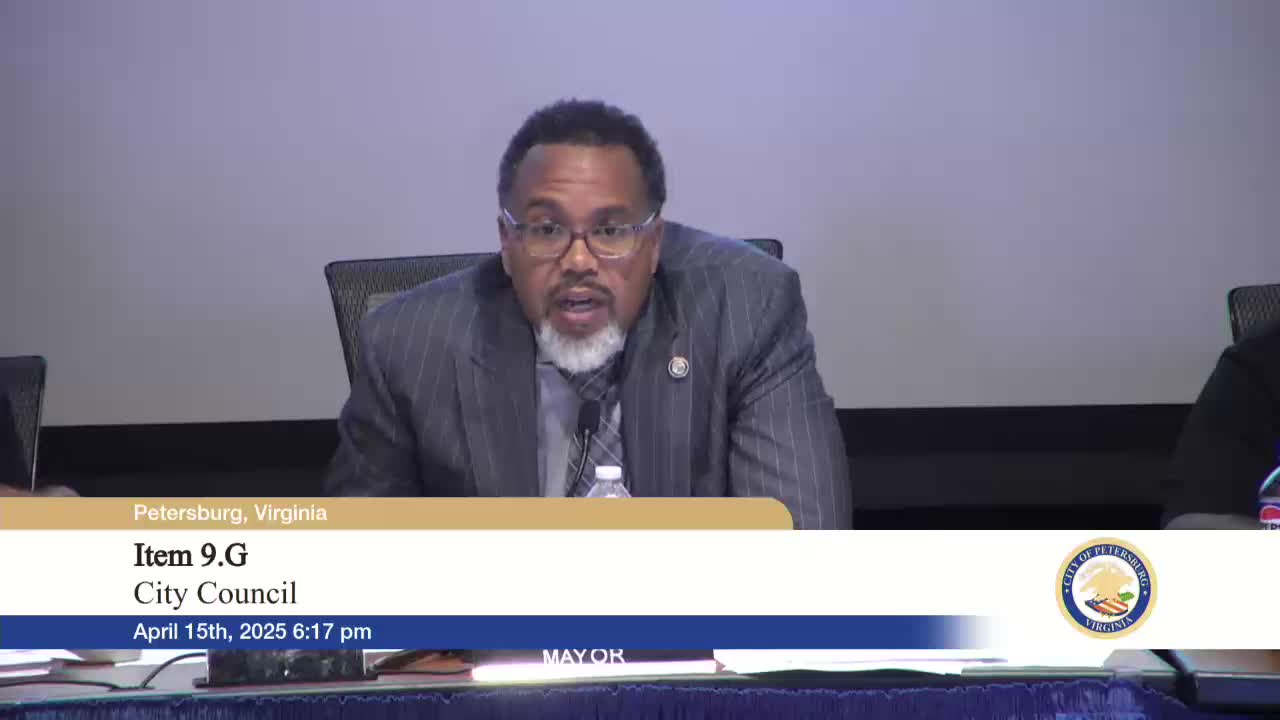
Council debate focused on fairness, targeting and whether the city should adopt an implementing policy before enacting the ordinance. Councilman Jones urged caution, saying staff should first adopt a written policy that would guide when to use civil fines versus criminal enforcement and to ensure uniform application. City Attorney Williams and City Manager Altman said staff will draft implementing guidance; Williams said he would provide the code‑enforcement policy used elsewhere as a template for the planning department to adapt.
The council voted to adopt the ordinance amendment; the roll call showed Councilmember Jones voting no and the remaining members voting in favor. Before the vote, planning staff said the city currently has 25 outstanding zoning violations that had not been remedied through administrative steps; examples included five abandoned‑vehicle storage‑lot violations, two illegal contractor equipment‑storage violations, five failures to maintain signage, and 13 sign‑permit violations.
Staff and supporters said civil penalties offer additional enforcement flexibility, especially against absentee landlords outside the commonwealth. Opponents and some council members said a clear policy and communication plan for residents should accompany implementation to avoid perceived targeting.