Get Full Government Meeting Transcripts, Videos, & Alerts Forever!
Get email alerts on the Permits And Construction Coordination topic
No spam. Unsubscribe anytime.
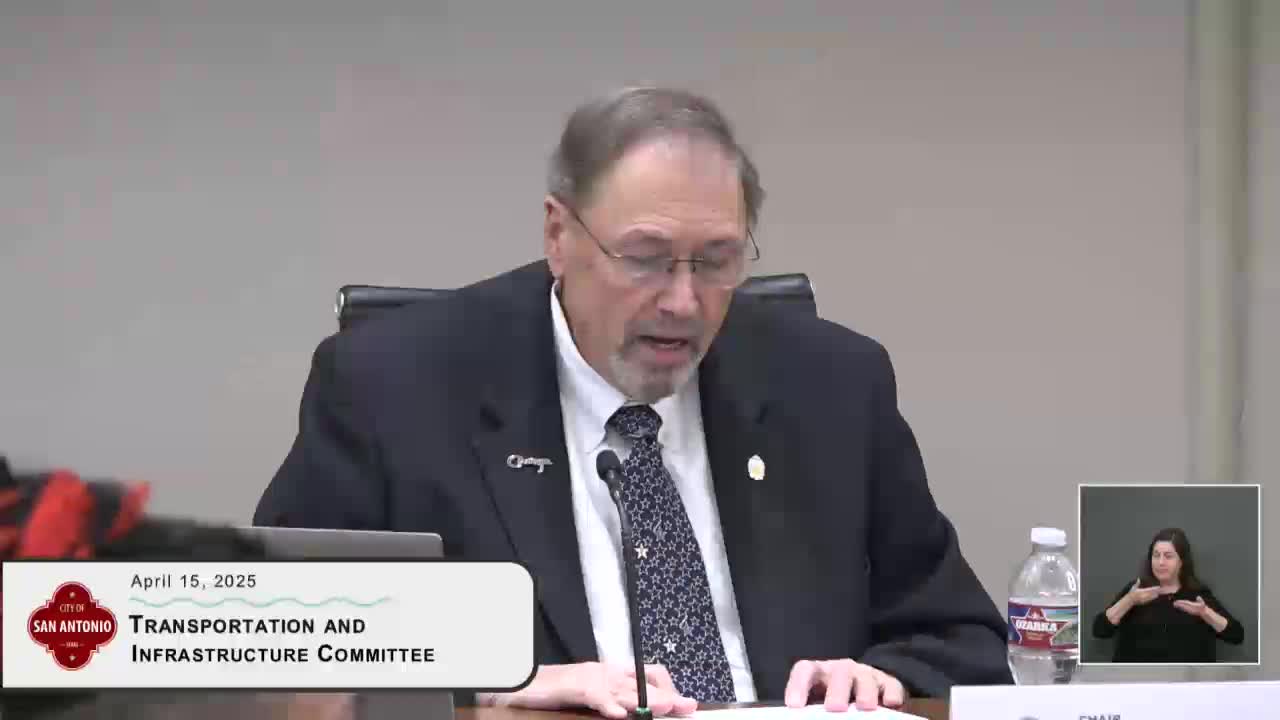
San Antonio committee hears industry, residents on construction delays and permit coordination
Summary
City staff, builders and residents told the Infrastructure and Transportation Committee that San Antonio’s construction boom has strained permitting, inspections and public communication; staff described online tools and inspection targets and contractors urged clearer outreach.
City of San Antonio Infrastructure and Transportation Committee members on April 15 heard industry representatives, residents and city staff describe coordination challenges as the city experiences a surge of private and public construction, particularly downtown.
Committee members were told that the city is using online tools — an OneStop permits dashboard and an Open Data portal — to publish permit status, preliminary projects and timelines, but several speakers said more proactive communication is needed to reduce neighborhood impacts and confusion.
The briefing came as contractors and community leaders described traffic disruptions, noise and business access problems tied to overlapping projects. "Construcción puede causar problemas, ruidos, tráfico, retrasos," said Estefi Reyes, president of Real San Antonio, urging "comunicación proactiva y de planificación y de coordinación" to mitigate impacts on residents and businesses.
Why it matters: Committee members said faster, clearer permitting and inspection processes could reduce complaints and help small businesses remain accessible during major projects. Staff emphasized current technical and operational improvements while industry speakers called for additional outreach and simpler guidance for first-time applicants.
City staff presentation and online tools
An initial presentation by a staff member described the city’s processes: permit review, inspections and interdepartmental coordination with public-utility partners. The staff member said the city publishes permit processing times and preliminary project maps online so residents can see where construction is expected months or even years in advance.
"Tenemos un portal de Open Data" and a OneStop dashboard, the staff member said, noting those tools list project applications, permit requests and construction permits. The staff member said the city has added cloud-based upgrades to improve user experience and that staff are continually reviewing webpages to keep forms and guidance current.
Inspections and service targets
Staff told the committee the city performs about 1,000 inspections per day across trades and aims to meet inspections on the scheduled day in 95 percent of cases. "Hacemos 1000 de inspecciones al día," the staff member said. The presentation said a current goal is on-time performance around 95 percent, with some remaining delay when inspections fail and must be rebooked. The city also uses remote video inspections for roughly 10 percent of inspections as a time-saving option.
Industry and community feedback
Contractor leaders said the industry is smaller and more interdependent than residents may realize, and that many contractors and engineers already coordinate regularly with city departments and utilities. "Nos juntamos con servicios públicos bastante," Estefi Reyes said, describing meetings with CPS and other agencies to reduce community impacts.
Michelle Davis, who identified herself as president of Contractors de South Texas, told the committee her group has about 170 members and recommended more education and simpler processes for small contractors and first-time applicants. "La mejor manera con este proceso es a través de la educación," Davis said.
An unnamed president of an engineering firm said San Antonio staff are among the strongest coordinators in the region and that developers typically collaborate successfully with city departments to secure permits and funding coordination.
Councilmembers’ concerns and suggested improvements
Several councilmembers raised specific points: updating web forms and guidance to avoid applicants using out-of-date documents; providing earlier notification to neighborhoods when projects will begin; and simplifying permit workflows for small-scale work. One councilmember asked staff to consider how often project maps or zonings should be updated and whether a monthly update would be feasible.
Staff said they work directly with applicants who submit outdated forms, prioritizing updates when delays have already occurred, and encouraged the public to use online scheduling and the new cloud-based portal. They also acknowledged room for improvement, saying the city is "continuamente revisándolos" and has launched the newer cloud version about a year and a half ago.
Other operational notes
Staff clarified common operational items: the city issues permits for sidewalks and street lane closures, enforces limits on the number of overlapping active permits in certain districts, and can set time-of-day restrictions for work in business districts. For large projects, the city coordinates lane closures and charging fees, with some exemptions or adjustments for affordable housing projects discussed during the meeting.
What the committee will do next
Committee members asked staff to keep working with industry and neighborhood stakeholders on clarity, outreach and inspection reliability. Multiple councilmembers encouraged staff and development partners to continue meetings and to provide clearer, easily accessible infographics or step-by-step guidance for first-time applicants.
Ending: Committee members thanked presenters and community speakers and invited continued feedback; staff and industry representatives agreed to follow up with committee staff and stakeholders to identify targeted improvements.