Get Full Government Meeting Transcripts, Videos, & Alerts Forever!
Get email alerts on the Emergency Preparedness topic
No spam. Unsubscribe anytime.
Austin-area emergency officials urge residents to register for Warn Central Texas, prepare for spring floods
Summary
City and county emergency managers and watershed staff briefed residents on flood-season risks, urged signing up for Warn Central Texas alerts and Ready Central Texas resources, and outlined outreach to vulnerable people ahead of April–May storms.
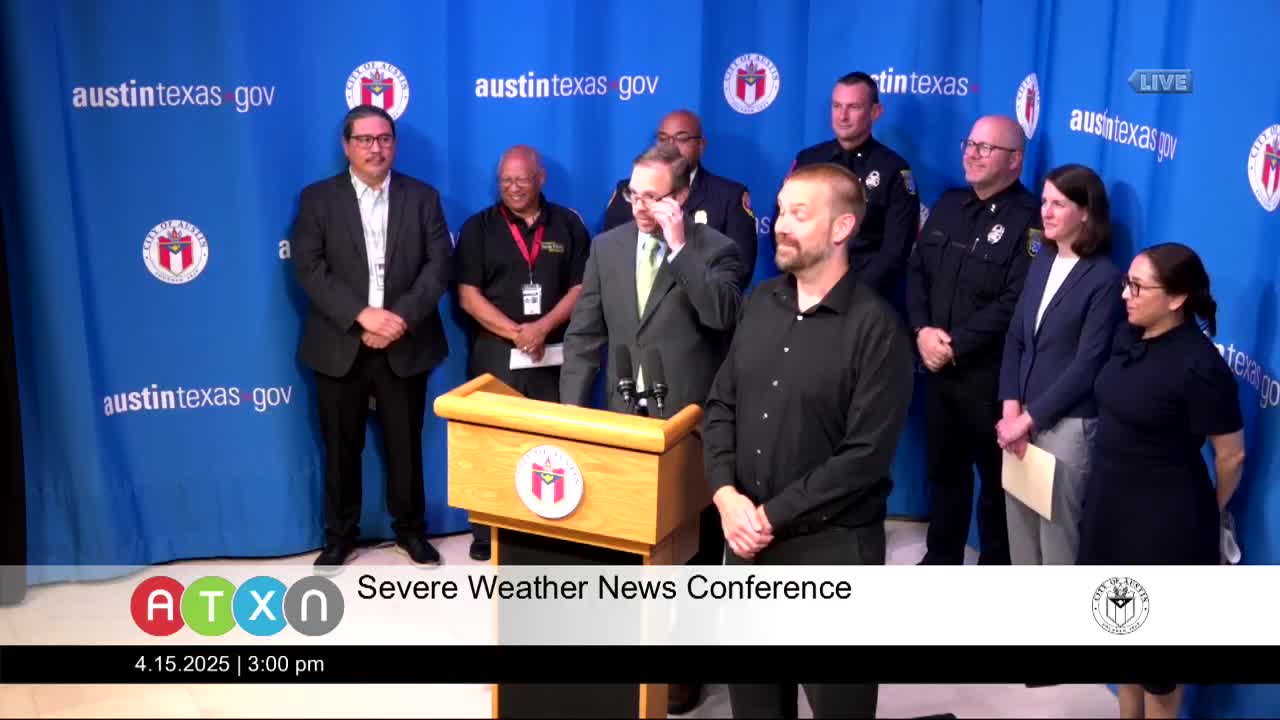
Debridick, marketing manager for the Office of Emergency Management, and Eric Carter, emergency manager for Travis County, urged Central Texas residents to prepare for spring storms and flash flooding and to register for the Warn Central Texas alert system.
Officials said April and May are the region’s principal severe-weather months and pointed to past flood events — including Austin-area flooding in 2013 and May 2015 — as reasons to take preparedness steps now. Debridick said the emergency office has text-message connections with about 1,000 vulnerable people and that staff use those messages to warn residents and people experiencing homelessness when flooding or other severe weather is expected.
"We want people to turn around and not drive through floodwaters," Debridick said, noting past local flood damage. Eric Carter emphasized that even a few inches of water are dangerous, saying, "Nada más, 6 poquito de agua, 6 pulgadas de agua te puede hacer daño" (as little as six inches of water can be harmful). Both speakers warned that storm conditions can change rapidly.
Officials described practical steps residents should take: sign up for Warn Central Texas to receive free weather and evacuation alerts; consult the Ready Central Texas preparedness hub for guidance; make an emergency plan; assemble a kit with water, nonperishable food, batteries or a flashlight, phone chargers and basic first-aid supplies; know evacuation routes and where to shelter during tornado or hail warnings; and check on neighbors who may need assistance. They also asked people to bring pets when seeking shelter.
Jorge Morales, director of the Watershed unit in the Department of Water, reiterated that flash flooding can occur quickly in Austin and pointed listeners to local online resources for flood monitoring. Morales asked residents to report drainage problems or emergencies by calling 3-1-1 so city crews can respond. He said the city uses cameras and a regional monitoring site to decide when to close streets and place barricades.
Officials said the county and city will monitor weather and activate shelters and outreach as needed during severe weather. They announced a public preparedness event tied to a local flood-awareness week scheduled April 21–26 and a community event at Campbell Elementary School on April 26 that is open to the public for preparedness information and prize announcements related to a public-safety campaign.
No formal actions or votes were taken during the briefing; officials framed the session as public information and outreach rather than a decision meeting.