Get Full Government Meeting Transcripts, Videos, & Alerts Forever!
Get email alerts on the Elections Administration topic
No spam. Unsubscribe anytime.
Senate subcommittee advances bills adding minimum qualifications, training for county treasurers and auditors
Summary
A finance subcommittee voted to give favorable reports to S.97 and S.98 after approving amendments that add minimum education/experience requirements, a phased-in 40-hour initial orientation and grandfathering language for current officeholders.
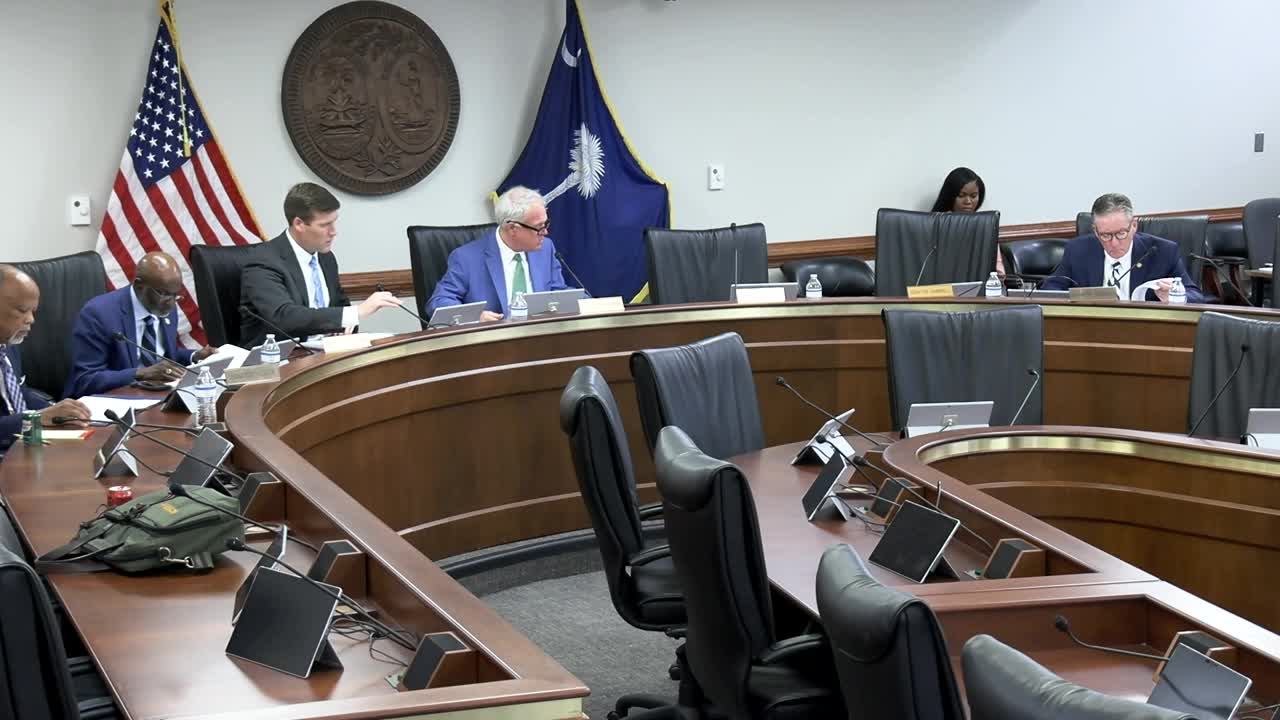
The Finance Committeeproperty tax subcommittee on Thursday voted to give favorable reports as amended to two bills (S.97 and S.98) that would set minimum qualifications and training requirements for county treasurers and county auditors across South Carolina.
Supporters said the measures are designed to professionalize offices that currently have no uniform statutory qualifications. "Our state association, the South Carolina Association of Auditors, Treasurers, and Tax Collectors are in support of this," Jason Phillips, Anderson County treasurer, told the subcommittee. Phillips said the association set these changes as a legislative priority and described plans for an initial orientation session to smooth transitions when newly elected officers take office in July.
The bills would require that candidates be U.S. and South Carolina citizens, a qualified elector in the county they would serve, and show either a four-year bachelors degree in accounting, finance, business administration or economics, or at least four years of relevant experience in accounting, financial management, financial reporting, budgeting, as an employee in a treasurers office in the state, or as a treasurer in the state. Language discussed at the hearing would also add a 40-hour initial training for newly elected or appointed treasurers and auditors and specify a forfeiture for failing to complete training; the existing annual training requirement is an 18-hour academy administered by the Department of Revenue.
Senators pressed witnesses about whether any current officeholders would be disqualified by the new language. "Is there anybody who would be negatively affected who is a current treasurer that would get caught in this continue to serve language?" asked Senator Morrie. Witnesses said they expected current treasurers and auditors "to be grandfathered in," and the committee adopted amendments to add explicit grandfathering and to clarify the training requirement would not be mandatory for incumbents.
The subcommittee formally adopted the amendment package on S.97 and then offered the same amendments to S.98; both bills received voice votes in favor. The committee chair indicated staff would prepare final amendment language before the full committee hearing.
Supporters said the proposals align treasurer and auditor qualifications with other elected offices that have statutory requirements and aim to reduce transition problems when new officers take office in July, a month when audits and millage-setting overlap. Opponents and some senators emphasized concerns about imposing new statutory qualifications on elected offices and the need to ensure any change would not unexpectedly disqualify people who had been lawfully elected.
The subcommittee record shows the measures advanced with a directive that staff draft the precise grandfathering and training language in time for full committee consideration.