Get Full Government Meeting Transcripts, Videos, & Alerts Forever!
Get email alerts on the Police K9 Penalties topic
No spam. Unsubscribe anytime.
Senate panel advances bill increasing penalties for harming police dogs and horses
Summary
A Senate Judiciary subcommittee voted to send Senate Bill 427 to the full committee after testimony from sheriffs, prosecutors and police organizations urging tougher penalties, restitution and other measures for persons who injure or kill law-enforcement dogs or horses.
A Senate Judiciary subcommittee on April 27 advanced Senate Bill 427, which would raise penalties for mistreating law-enforcement dogs and horses and require restitution to agencies that lose or must replace a service animal.
The bill, as described to the subcommittee, would raise misdemeanor penalties for taunting, tormenting, teasing, beating, striking or drugging a law-enforcement dog or horse to a fine of $2,000 to $5,000 and/or 30 days to five years in jail. It would raise the felony penalty for torturing, mutilating, injuring, disabling, poisoning or killing such an animal to a fine of $2,000 to $20,000 and/or two to 10 years in prison, require payment of restitution to the law-enforcement agency to cover replacement costs, and allow a potential additional sentence of one year of animal-related community service. The bill would also make clear that nothing in the section limits a defendant’s right to assert self-defense.
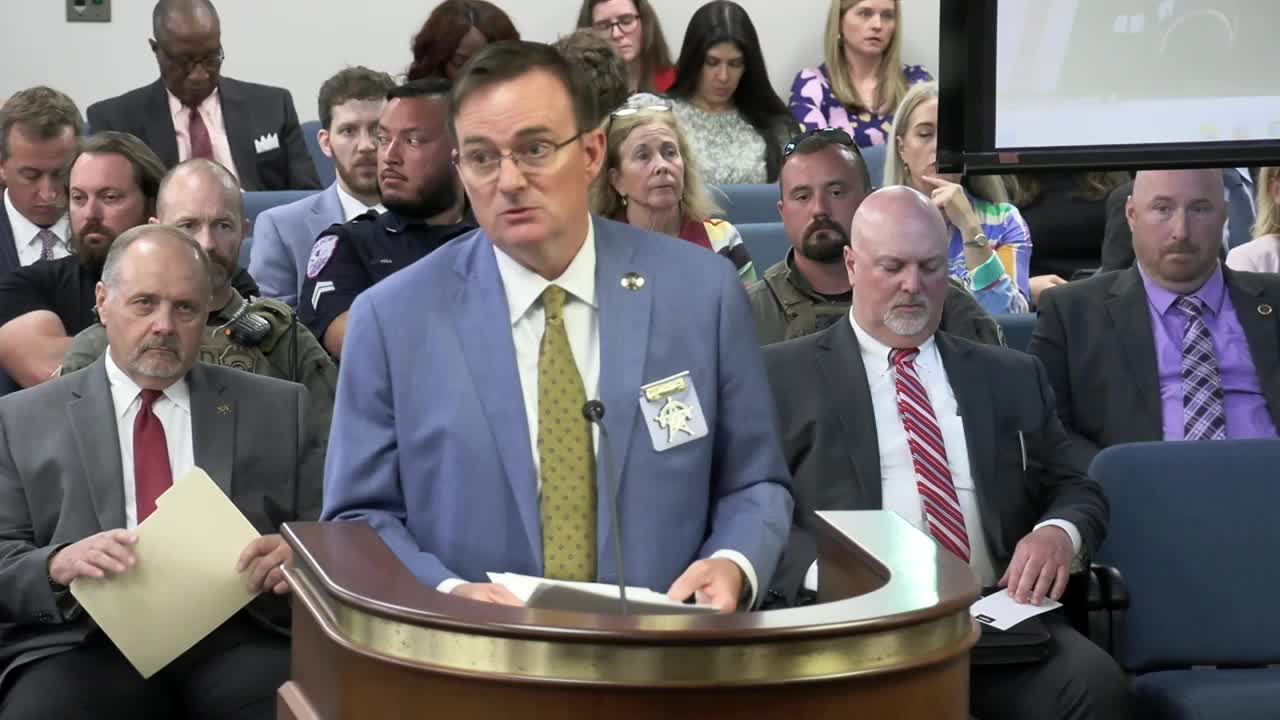
Supporters told the subcommittee they have seen dogs and horses killed or seriously injured in recent years and argued stiffer penalties are needed. Richland County Sheriff Lott described Fargo, “the first police dog killed in the state of South Carolina,” and said Fargo’s death and more recent losses show the animals “go out every single day and put a vest on and they go out and they put their life on the line just like all of us who wear this uniform do.”
Greenville County Sheriff Lewis said the animals are “certainly more than just a tool, their law enforcement officers,” and described the financial and training investments agencies make: “The investment on a single trained k 9 is upwards to $12,500 not including the hundreds of hours of training that follow,” and that a dog receives “a minimum of 600 hours of basic training plus continued weekly training” during a typical nine-year career.
A prosecutor who participated remotely, identified in testimony as Mr. Stumbo, recounted prosecuting a recent case involving the killing of a canine and said the existing five-year maximum for that offense left prosecutors and law enforcement “offended” and that the sentence in that matter was augmented by other charges. He said prosecutors prefer a higher maximum prison term and noted practical limits on collecting restitution from many defendants.
John Blackman, identifying himself as president of the South Carolina for Toronto Police and a retired law-enforcement officer, said 2024 was “a historically tragic year for law enforcement canines” and urged the committee to support the bill to protect the animals and the taxpayer funds invested in them.
After roughly 30 to 45 minutes of testimony and questions, a subcommittee member moved that Senate Bill 427 be reported favorably from the subcommittee. A second was recorded, members voted “aye,” and the bill “now moves to the full committee,” according to the record.
The subcommittee did not set a date for action by the full committee during the session recorded in the transcript.