Get Full Government Meeting Transcripts, Videos, & Alerts Forever!
Get email alerts on the Digital Health Sdg3 topic
No spam. Unsubscribe anytime.
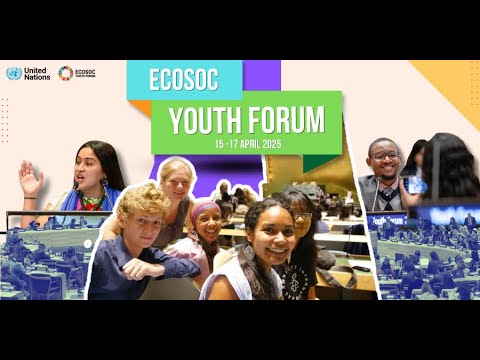
Delegates and youth call for equitable digital health, protections against tech‑facilitated harm at ECOSOC SDG3 session
Summary
At a plenary on SDG 3, youth leaders, U.N. agencies and member states urged treating digital health as a public good, expanding digital literacy and safeguards, and confronting technology‑facilitated gender‑based violence and misinformation.
In a plenary focused on Sustainable Development Goal 3 (health), youth leaders, United Nations agencies and member‑state representatives urged that digital health be treated as a public good, called for expanded digital literacy and coherent regulatory safeguards, and warned that new technologies are already enabling harms from misinformation to synthetic imagery used in technology‑facilitated gender‑based violence.
Marina Al Kawan, founder of Meddonations, described how a single social‑media post in the wake of the 2020 Beirut explosions helped secure life‑saving medication and inspired a volunteer network. “One post, one click can truly save a life,” she told the forum. She said Meddonations has since mobilized more than 2,500 donors across 65 countries and helped secure medicines for roughly 20,000 people in Lebanon and beyond, and announced a free health‑tech clinic in Lebanon that will use AI and digital tools to expand access.
Speakers from U.N. agencies described practical programming that targets access and equity. Diana Keita, Assistant Secretary‑General and Deputy Executive Director for Programmes at the United Nations Population Fund (UNFPA), highlighted digital efforts in several countries: a voice‑based platform in Ethiopia that provides audio SRHR (sexual and reproductive health and rights) content and recorded more than 200,000 calls since 2021; podcasts and TikTok programming in Tunisia to break taboos; and a confidential mobile app in the State of Palestine to expand adolescents’ access to SRHR information.
Speakers also warned of concrete risks. Rehman Nesan, a youth digital‑health policy leader, said algorithms can exclude or misclassify marginalized groups: “If you're not seen by the system, you're not served by the system,” he said, describing an AI model that repeatedly misclassified distress signals from female, trans and non‑binary youth because their experiences were missing from training data.
Diana Keita and other panelists flagged technology‑facilitated gender‑based violence (TFGBV) as a growing threat. Keita warned that generative artificial intelligence makes it easier and cheaper to create synthetic explicit images and deepfakes and recounted examples of students targeted in classrooms. UNFPA and partners urged cross‑sector action: prevention, better digital literacy, platform accountability and survivor support services.
Health‑system and civil‑society voices pushed for education and workforce readiness. Grace Huertas of the International Federation of Medical Students' Associations noted a recent brief showing only 13 countries have fully implemented digital health curricula in medical education. Leonardo Bolstad of DTHLab previewed a forthcoming 2026 blueprint for “digital‑first” health systems co‑designed with youth, stressing value‑based design grounded in human rights.
Member states and youth delegates described national programs and needs. Delegations from Malta, Mexico, Tunisia, Serbia, Thailand, Egypt, Angola, Uzbekistan and others highlighted national mental‑health campaigns, school curriculum changes, investments in primary health care and youth employment initiatives; many called for international cooperation on technology transfer, research and funding for health systems and for the pandemic accord negotiations to deliver better global preparedness.
Why this matters: panelists framed digital health as a lever for universal health coverage but said equitable outcomes require deliberate design choices — local language interfaces, privacy protections, platform accountability and sustained funding for youth‑led efforts. Participants asked donor countries and development banks to match digital health commitments with resources and to integrate digital protections into public health planning.
Discussion versus decision: the session produced program announcements, peer‑to‑peer lessons and calls for funding. There were no binding decisions; member states and U.N. agencies committed to follow‑up cooperation and to scaling youth‑led pilots where feasible.