Get Full Government Meeting Transcripts, Videos, & Alerts Forever!
Get email alerts on the Youth Participation Digital Inclusion topic
No spam. Unsubscribe anytime.
Youth, U.N. officials call for meaningful power, digital inclusion and AI ethics at ECOSOC Youth Forum
Summary
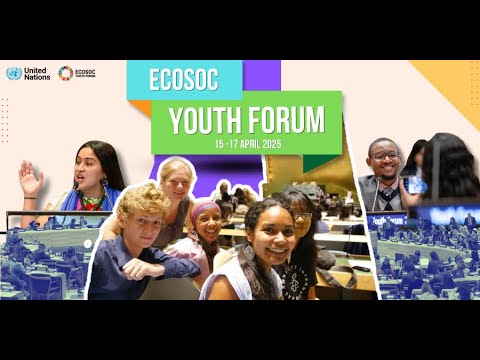
At the opening of the 2025 ECOSOC Youth Forum, youth delegates and senior U.N. officials urged concrete steps to make young people decision-makers now, close the digital divide and embed ethics into artificial intelligence and science policy.
The 2025 Economic and Social Council (ECOSOC) Youth Forum opened at United Nations headquarters with calls from youth delegates and senior U.N. officials for faster, more substantive youth participation, wider access to digital tools and ethical governance of technology.
The president of the Economic and Social Council called on attendees to stop treating young people as “tomorrow’s leaders.” “You are not only the leaders of tomorrow...you are today's leaders,” the president said in opening remarks, urging participants to move from talk to action and to hold institutions accountable.
The forum’s early speakers emphasized three linked priorities: ensure equitable access to the internet and digital skills, give young people genuine decision‑making power in multilateral forums, and protect basic rights as new technologies such as artificial intelligence scale.
Umaima, an AI engineer speaking for the Major Group for Children and Youth, used personal testimony and global examples to press for concrete resources. She told the forum that climate crisis, conflict and lack of universal health care make youth engagement urgent, and she urged governments and donors to “do not invest in warfare. Invest in the power in youth.” Umaima cited widespread gaps in health and education and proposed four concrete steps including a global fund of funds for grassroots youth projects and stronger follow‑up to ECOSOC youth outputs.
Felipe, the United Nations Assistant Secretary‑General for Youth Affairs, told the forum that current forms of youth participation remain insufficient. He said institutions must change and commit resources, and he announced a new U.N. flagship effort — the United Nations Youth Compass — intended to coordinate youth networks and improve follow‑through on commitments made at multilateral meetings.
Panelists and moderators repeatedly framed the digital divide as both technical and political: while the president noted that about “80% of young people have access to the internet” he pointed out that “1 in 5 do not,” a gap that panelists said will limit education, jobs and participation if not addressed.
Speakers warned that technology governance often reproduces existing biases unless young people and marginalized communities co‑design systems. Maria Teresa Pereira, technology focal point at the Youth Science‑Policy Interface platform, said climate and AI systems are currently developed “without input from the communities most affected,” and called for investment in local technological capacity and pathways for meaningful participation beyond token representation.
Why this matters: the forum feeds into U.N. processes and near‑term political moments — speakers said youth contributions will inform the High‑Level Political Forum on Sustainable Development in July and other 2025 decision points. Delegates and youth leaders pressed member states to convert declarations and the Path/Pact for the Future into funded programs and accountability mechanisms that give young people influence over scientific, technological and development policy.
Discussion versus decision: the session produced announcements and commitments — for example, the U.N. Youth Compass launch — but no binding multilateral decisions. Most outcomes were calls for action, requests for funding and pledges to strengthen youth representation in existing processes.