Get Full Government Meeting Transcripts, Videos, & Alerts Forever!
Get email alerts on the Ombudsman Agency Oversight topic
No spam. Unsubscribe anytime.
Arizona Ombudsman outlines role, limits and statutes for public complaints; behavioral health board reports complaint data
Summary
Joanne McDonald, Arizona Ombudsman and Citizen Aide, explained the office's independent, investigatory role under Arizona Revised Statutes and urged complainants to exhaust agency remedies before seeking ombudsman review.
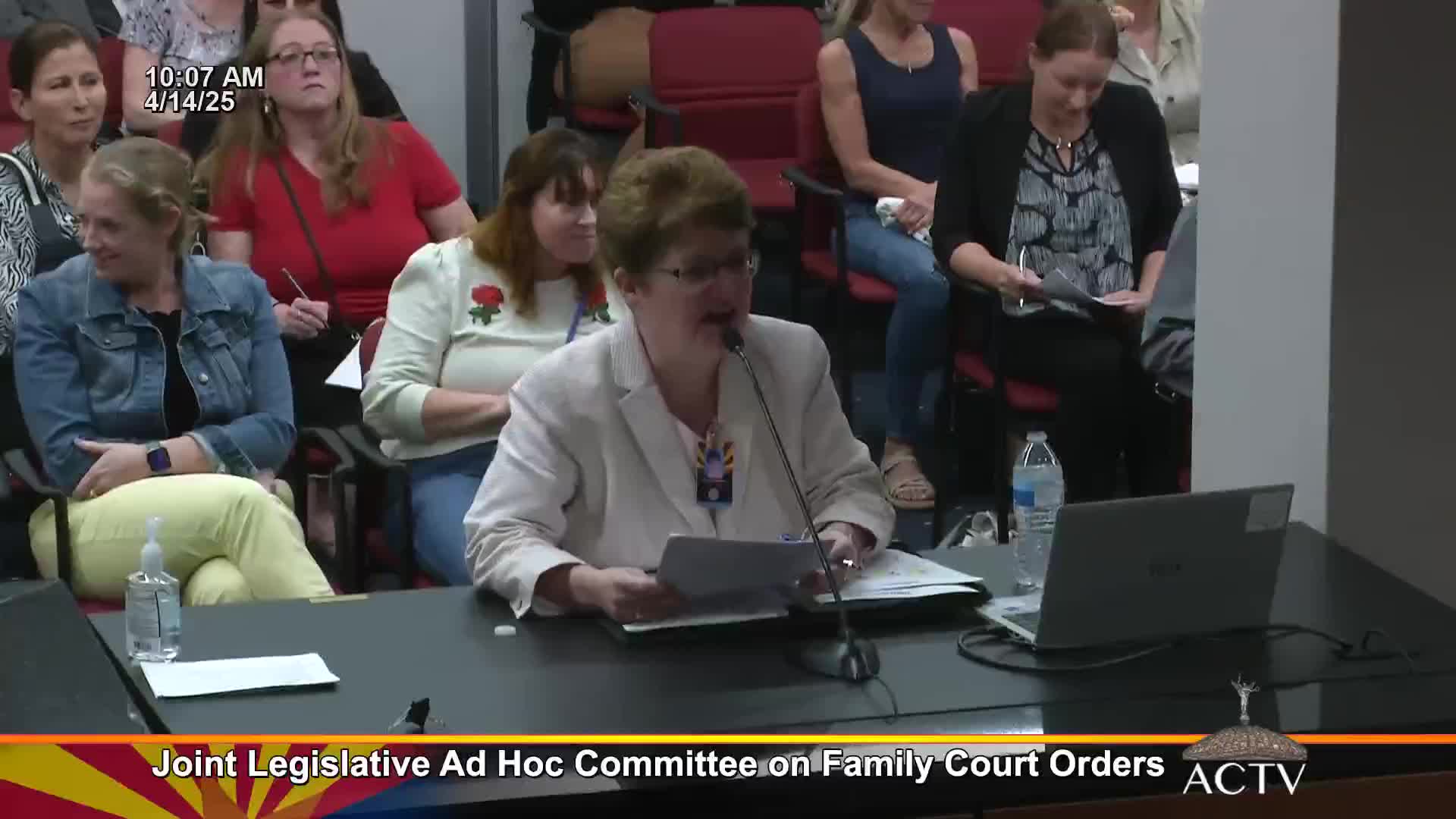
Joanne McDonald, Arizona Ombudsman and Citizen Aide, told a joint legislative ad hoc committee that her office is an independent, nonpartisan legislative branch agency established to make state government more responsive and to help citizens navigate administrative systems.
“We receive public complaints and may investigate administrative acts of agencies,” McDonald said. She told the committee the ombudsman’s authority comes from Arizona Revised Statutes “sections 41‑13‑71 through 41‑13‑83” and referenced administrative rules in the Arizona Administrative Code (Title 2, Chapter 16). McDonald said ombudsman services are free and, when requested by complainants, confidential; she emphasized that the office cannot order agencies to change rules but can investigate and make recommendations and that it will report findings annually.
McDonald described the office’s standards for investigation: actions contrary to law; unreasonable, arbitrary, or oppressive acts; actions based on mistake or improper grounds; actions unsupported by an adequate statement of reasons; inefficient or discourteous conduct; or otherwise erroneous administrative acts. She said the ombudsman will generally decline a matter until the complainant has exhausted reasonable agency remedies, and it has limited jurisdiction over courts and some board expert determinations.
Toby Zavala, executive director of the Arizona Board of Behavioral Health Examiners, told the committee the board oversees four professions — social workers, counselors, marriage and family therapists, and addiction counselors — and licenses over 19,000 practitioners. Zavala said the board employs 27 full‑time equivalent staff (13 investigations, 8 credentialing, 3 administration, 3 operations) and that in February 2024 the board received about 260 complaints, with roughly 30% resulting in disciplinary action when there was clear and convincing evidence of professional misconduct. He said most enforcement cases involve boundary violations.
Acting Senate staff read a summary email from the Arizona Board of Psychologist Examiners, which reported it had about 2,220 active psychologists and provided aggregated complaint counts across license types (the email reported 47 psychologist complaints, 16 psychologist claims, 19 behavioral analyst complaints, and an additional 49 submissions that appeared to lack jurisdiction). Committee staff noted the email would be entered in full into the hearing record.
Committee members asked about whether family courts and the courts’ records fall within the ombudsman’s jurisdiction. McDonald and members explained courts are separate: the ombudsman generally cannot investigate judicial decisions or most court actions but participates in court committees and can provide guidance when the underlying issue involves an agency. She urged litigants to use each agency’s internal ombudsman and outlet first before seeking AZOCA review.
No formal action was taken; members said the presentations and agency materials would be part of the record and used to inform subsequent committee work.