
Arizona Legislature opens ad hoc hearings on family court orders; public testimony scheduled across five sessions
Get AI-powered insights, summaries, and transcripts
Subscribe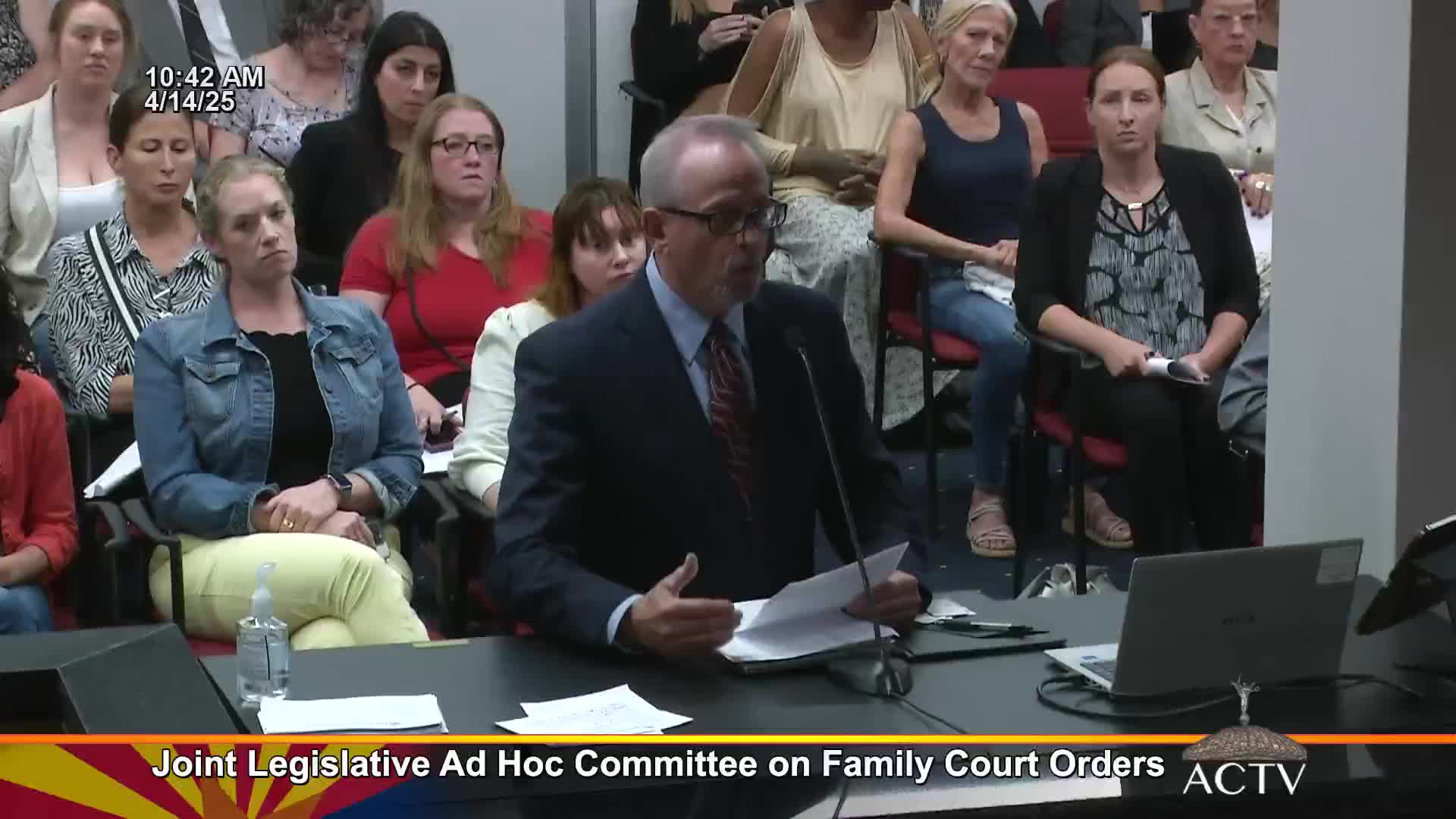
Summary
A newly formed joint legislative ad hoc committee held its first hearing to gather information on family court orders, announce five planned hearings and invite public testimony; chairs said reform work will be incremental and will include follow-ups and additional meetings.
A joint ad hoc committee of the Arizona Legislature convened its first public hearing on family court orders to collect information from state agencies and hear testimony from affected families and professionals. Committee leaders said the panel will hold five hearings, collect written testimony and produce a report with recommendations.
Co-chair Senator Finchem opened the session by telling attendees the committee’s goal: “After receiving several reports with allegations of abuse and mismanagement, our goal is to collect information from various state agencies and to hear public comment so that we can review the current issues and evaluate potential legislative reforms.” He told the room that testimony would become public record and asked witnesses not to share details subject to active litigation.
Committee members introduced themselves and described planned next steps: additional hearings (the chairs cited a May 12 date for the next meeting), distribution of a JotForm to collect documents and the intent to draft legislation incrementally. Representative Rachel Keshel and others said the committee expects extended engagement over the summer to ensure broad input.
Members set a hard noon adjournment and limited individual public testimony to five minutes so the panel could hear as many speakers as possible. Co-chair Finchem told attendees there were 33 people signed up to speak and warned the panel would follow its schedule.
In closing remarks Representative Keshel said the legislature must provide checks and balances on a system she described as flawed: “Judges do what they want. And that’s a problem.” Senator Finchem said House Bill 2256 was being amended and other bills may follow, and he urged attendees to continue providing evidence and documents to committee staff.
The committee did not take votes or adopt actions at this first hearing. Members said they will collect written submissions and convene additional hearings to gather data before preparing any formal legislative recommendations.