Get Full Government Meeting Transcripts, Videos, & Alerts Forever!
Get email alerts on the Infrastructure Sewer topic
No spam. Unsubscribe anytime.
Collierville approves $465,227.50 amendment for sewer‑evaluation work in three critical basins; local match increases modestly
Summary
The board approved a contract amendment to fund an expanded sanitary sewer evaluation study (SSES) by Trek Design Group for three basins with significant infiltration and inflow problems; the amendment adds $465,227.50 to engineering work and raises the town's match by $13,649 to $255,011 on a multi‑project grant contract.
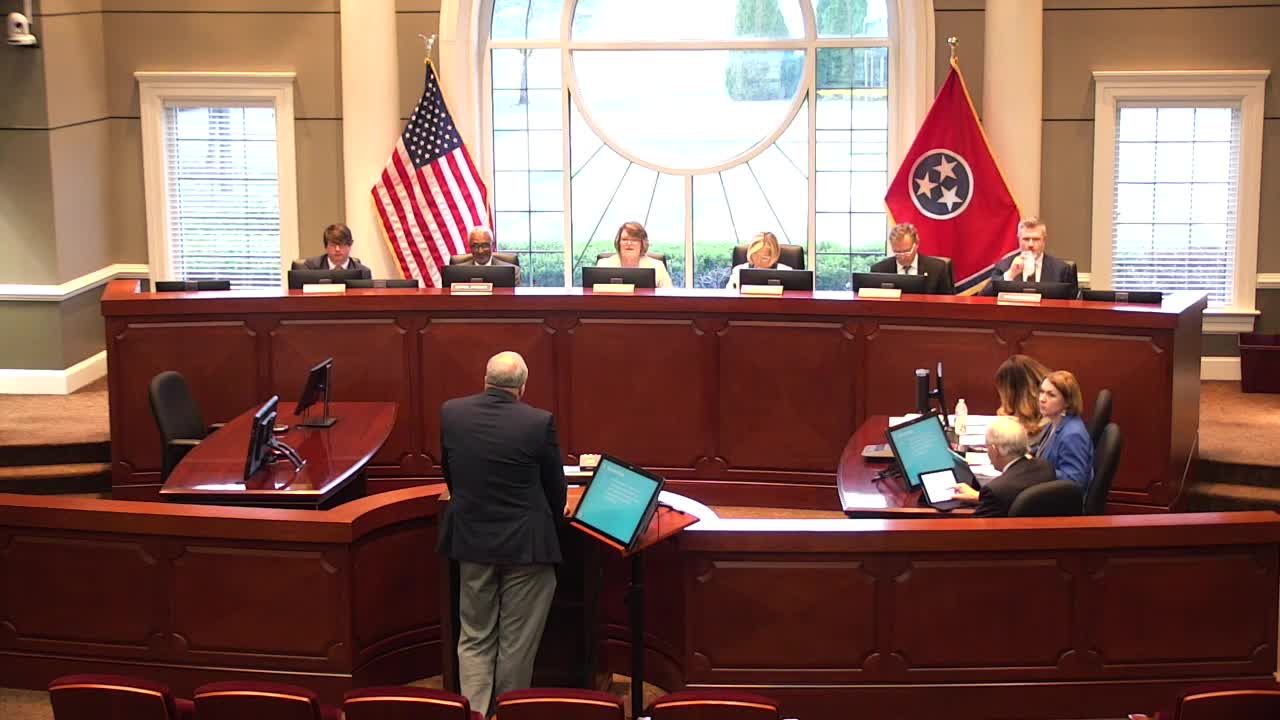
Collierville’s Board of Mayor and Aldermen on March 24 approved a contract amendment to fund additional sanitary sewer evaluation study (SSES) work for three critical sewer basins identified during an investigative phase of a grant‑funded sewer rehabilitation project.
Staff said the additional work—submitted by subconsultant Trek Design Group at $465,227.50 and proposed by Grisham Smith—will include smoke testing of approximately 168,600 linear feet of sewer, inspection of about 775 sewer manholes, cleaning and CCTV inspection of roughly 38,500 linear feet of 8–18 inch sewer pipe and cleaning/CCTV inspection of about 2,000 linear feet of 24–30 inch pipe. The SSES work is expected to take about eight months.
The contract amendment was part of the $2.6 million grant contract funded in part by Shelby County ARP/Grama dollars (the meeting referenced prior grant participation approvals). The additional SSES scope will raise the town’s funded portion of the $2.6 million contract by $13,649, from $241,362 to $255,011.
Board members voted to approve the amendment on a roll call vote with all members present voting yes. Staff said the work aims to identify sources of infiltration and inflow (I&I), reduce wet‑weather flows to treatment plants, lower treatment costs, support future development and reduce the risk of sanitary sewer overflows and potential regulatory violations.