Get Full Government Meeting Transcripts, Videos, & Alerts Forever!
Get email alerts on the Behavioral Health Assessments Police topic
No spam. Unsubscribe anytime.
Committee approves House Bill 7069 on police behavioral-health assessments after debate on confidentiality and qualifications
Summary
The Public Safety and Security Committee voted to approve House Bill 7069, which adds confidentiality protections to mandated behavioral-health assessments for police officers; members debated provider qualifications and safeguards for acute safety risks.
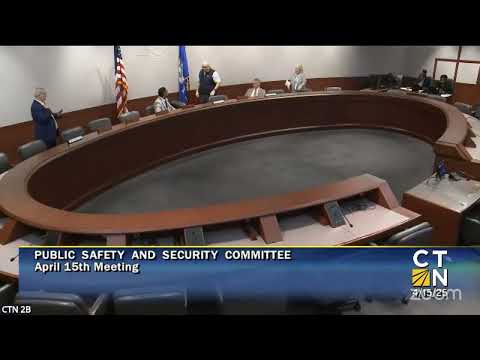
The Public Safety and Security Committee voted April 15 to approve House Bill 7069, an act concerning behavioral-health assessments of police officers, following debate over confidentiality, provider qualifications and procedures for reporting acute safety risks.
The bill, which was referred to the committee from the insurance committee, adds a confidentiality component to the state's existing behavioral-health-assessment program for police officers. The committee chair opened the meeting and Representative Howard moved the referral; Representative Heffern (second) supported the motion. The clerk then called a roll-call vote; the clerk recorded 24 yes votes, 0 no votes and 0 abstentions, and the motion carried.
Supporters said the bill is intended to protect officers' privacy when they seek behavioral-health care while preserving existing safety reporting requirements. "Certainly, if I go to a psychiatrist today and say I wanna hurt myself or hurt somebody else, they're already required to report that," Representative Howard said, describing how the bill would not remove mandated reporting for imminent threats.
Opponents and cautious supporters pushed for clearer qualification standards for professionals conducting assessments. Representative Linehan said she supports the bill's aim but warned that "there will need to be an amendment on the floor before this is voted on just to ensure that our officers ... that someone is looking out for them who is qualified." Representative Lamarque Mer voiced a similar concern about ensuring clinicians are specialized to understand policing-related trauma.
Representative Barry replied that qualifications already exist in current policy and that the bill is primarily adding confidentiality language. "That is already in the current policy. We are just adding to it the confidentiality," Barry said.
Senator Gessen (who spoke during discussion) asked whether the bill provides a mechanism to "quietly" notify supervisors when an officer's condition presents an immediate safety risk, and said there should be "some level of guardrails" for acute situations. Committee members clarified that mandated reporting for imminent threats remains in place and that the bill would not prevent behavioral-health professionals from reporting concerns that pose a danger to the officer or the public.
The committee recessed after the vote and indicated no further business unless additional referrals arrive. The bill moves forward with the committee's approval and will proceed to the next legislative step indicated by the committee process.