Get Full Government Meeting Transcripts, Videos, & Alerts Forever!
Get email alerts on the Revenue Collection topic
No spam. Unsubscribe anytime.
Syracuse to begin collecting room-occupancy tax April 1; budget includes $800,000 estimate for FY26
Summary
Finance staff told Council the city will begin collecting its newly adopted room-occupancy tax on April 1, projecting about $800,000 for FY26 and approximately $200,000 for the final quarter of FY25; staff also described accounting shifts that restrict a $375,000 university-neighborhood payment for specific uses.
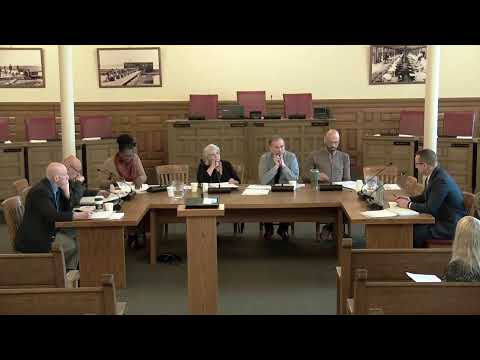
The City of Syracuse will begin collecting its new room-occupancy tax on April 1, finance staff told the Common Council during the April 15 budget hearing, and the proposed FY26 budget projects $800,000 in annual revenue from the levy.
Commissioner Mike Kennezera said the FY25 projection includes $200,000 for the quarter from April 1 through June 30, and described the FY26 projection as based on an average room rate of roughly $178 and a 50 percent occupancy assumption. “Right now, the average room rate in the City Of Syracuse is $178 and this is projecting 50% occupancy at our hotels in the City,” he said.
Ken- nezera said the city opted to administer occupancy collections in-house rather than have the county collect and remit the money. Councilors asked whether the additional workload would strain BOA staff; Kennezera said the department had prepared communications for hotels and updated the city website in advance of collection.
Finance staff also described several accounting reclassifications in the proposed budget. A previously budgeted $500,000 annual payment tied to university neighborhoods will be split: $125,000 will be brought into the general fund for police general services, and $375,000 will be placed into a restricted fund to ensure those dollars are spent only for the designated neighborhood associations. Kennezera said the restricted classification changes where the revenue and expense appear in the book but does not change the underlying agreements.
The hearing included discussion of declining cable-franchise fees tied to cord-cutting and modest revenue from small-cell/5G leases; finance staff said they had no precise public estimate for per-site lease revenue during the session.