Get Full Government Meeting Transcripts, Videos, & Alerts Forever!
Get email alerts on the Budget topic
No spam. Unsubscribe anytime.
Pennridge projects $3.3 million gap after cuts; special-education and charter costs cited as primary drivers
Summary
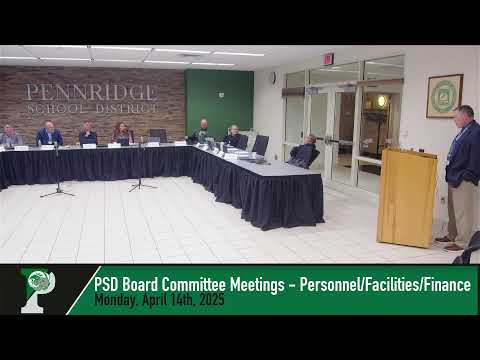
District finance staff told the Pennridge School District personnel and finance committees on April 14 that after several rounds of cuts the general fund still shows a $3.3 million shortfall, driven largely by special-education placements, charter/cyber tuition and rising mandated costs.
Pennridge School District finance staff told the district’s personnel and finance committees on April 14 that the district still faces an estimated $3.3 million general-fund shortfall after about $6.3 million in expenditure reductions.
The shortfall follows year-over-year increases in mandated expenses — special-education tuition and related services, pension and benefit obligations — and rising charter and cyber-school tuition, officials said. Business administrators said a $6.1 million annual debt-service “drop off” has allowed transfers into the capital projects fund in recent years but cannot by itself eliminate operating deficits.
Why it matters: Special-education and charter/cyber tuition make up the largest growth in Pennridge’s operating budget, staff said. Finance staff reported the district’s proposed 2025–26 general fund budget would total roughly $163.3 million in expenditures versus about $159.9 million in revenue, leaving the $3.3 million gap before any tax action.
Finance staff identified the largest cost drivers as placements outside the district and charter/cyber tuition; they noted that charter tuition can be roughly $15,000 for cyber placements and roughly $40,000 for some brick-and-mortar special-education placements. Staff reviewed data showing 98 students currently enrolled in cyber programs and about 43 students attending charter schools. Those counts and tuition formulas are closely watched because state rules and court decisions affect how much the district must pay.
Officials said they have cut roughly $6.3 million since an initial March estimate, including salary and benefits reductions (about $713,000), cuts to professional services such as some IU (intermediate unit) contracts, reductions in substitute and bus-replacement requests, and the removal of a set of proposed new positions. Still, the district remains short without either new revenue or further cuts.
Other fiscal details: At June 30, 2024, the district’s capital projects fund balance stood at about $5.7 million. With planned transfers and anticipated project timing, staff estimated a possible capital fund balance in the $13–14 million range after next fiscal year if transfers continue and planned project spending is controlled. Staff warned, however, that those projections assume no sudden swings in interest income (the budget currently assumes roughly $3.2 million in interest revenue) and stable federal/state grants; any erosion in those revenue sources would widen operating gaps.
What officials recommend next: Staff briefed the board on a timeline to present the tentative 2025–26 budget for adoption in May and final adoption in June. They emphasized scenarios for using unassigned fund balance as a last-resort bridge, but said relying on reserves would increase future-year pressure and reduce the district’s ability to cover emergency capital needs or weather revenue shocks.
Quotes and attributions: “We are still in a hole of about $3.3 million,” said a finance staff member presenting the budget. “You have to remember that much of this is driven by mandated costs outside our control: special-education placements, pension and retirement obligations, and rising charter tuition.” Staff also noted the district’s Act 1 index (the state school tax cap mechanism) would permit roughly $3.5 million of additional levy capacity in 2025–26 — an amount insufficient to close the shortfall without other steps.
Next steps and outlook: The administration will return to the finance committee on May 7 with refinements and expects the first formal budget adoption vote at the board’s May meeting, with a final adoption on June 16. Officials said they will continue searching for additional reductions, pursue grant opportunities where possible, and press for longer-term district facility planning with the district’s facilities consultant to focus capital spending where it most reduces future operating risk.
Ending: District leaders told the committees they will continue reviewing hiring, software subscriptions and vendor contracts and will keep the board apprised; they repeatedly urged the community and legislators to note the structural pressures on Pennsylvania districts from charter/cyber tuition and growing mandated costs.