Lincoln Park council adopts final 2026 water and sewer project plan; engineers warn of lead-service replacements and possible rate increase
Loading...
Summary
The Lincoln Park City Council on April 14 adopted a final project plan for 2026 drinking-water and sanitary-sewer improvements and authorized city staff to submit the plan to Michigan’s State Revolving Fund programs.
The Lincoln Park City Council on April 14 adopted a final project plan for 2026 drinking-water and sanitary-sewer improvements and authorized city staff to submit the plan to Michigan’s State Revolving Fund programs.
The work described in the plan focuses on replacing aging water mains in seven project areas, removing lead and galvanized water service lines from the main to 18 inches inside buildings, and investigating and rehabilitating sanitary sewers using cleaning, CCTV, smoke testing and cured-in-place pipelining. Hennessy/NEC engineer Kyle Hanna told the council the plan also includes rehabilitation of retention basins, new pumps and a generator the city has already ordered.
Why it matters: council members and staff said the work responds to long-standing infrastructure problems — frequent main breaks, low pressure, and sanitary overflows that have contributed to basement flooding. Engineers said state and federal rules on lead service lines require replacement schedules that will require multi-year work, and the city’s status as an overburdened community could make it eligible for principal forgiveness or longer loan terms.
Engineer Kyle Hanna, the plan presenter, said a distribution-system material investigation identified roughly 2,600 properties with lead service lines and that, at current estimates, the city would need to replace about 265 lead services per year to meet the timetable discussed with regulators. He said the clean-water portion would fund smoke testing, CCTV inspection, sanitary sewer cleaning and point and segment rehabilitation; the drinking-water portion would fund water-main replacement and full service-line replacement to address lead and galvanized services.
Hanna summarized likely effects if the city declined the work: "Frequent main breaks and water will continue to deteriorate," he said, and sanitary-system deterioration would continue to cause backups and basement flooding that can affect public health.
On funding, Hanna told the council the city has previously received SRF awards and that for 2026 it will submit projects by the state’s May 1 final-plan deadline; the state publishes rankings in August. He said that because Lincoln Park is designated an overburdened community it may qualify for loan forgiveness and for 30-year loan terms, but that grant and forgiveness awards are not guaranteed.
Cost and rate estimates: Hanna presented an illustrative per-account impact based on the draft plan and financing scenarios. He said the drinking-water projects in the plan translate to an estimated $48 per account per year (about $4 per month) and the clean-water projects to roughly $60 per account per year (about $5 per month). When a council member asked whether that could mean roughly $9 per month for residents if grants are not awarded, Hanna said the combined estimate could be about that amount depending on final awards and the number of accounts covered.
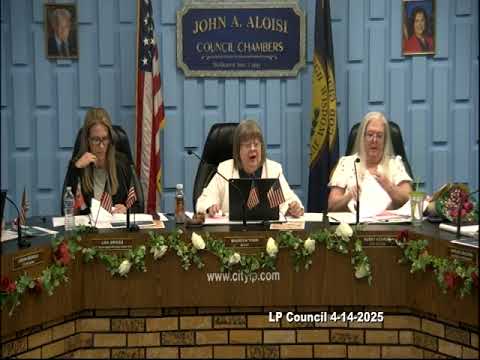
Council and next steps: after the public hearing and the staff recommendation the council voted in favor of a resolution to adopt the final project planning document and agreed to implement the selected alternatives. The resolution designates the city’s DPS director, John Kazzu, as the authorized representative for SRF application activity and project implementation steps. The council approved the resolution by roll call (Ross, Nichols, Salcedo, Baer, Dupree and Mayor Tobin all voting yes).
The project team told the council it will submit the final plan to the state by May 1 (Hanna said the final submittal deadline they were working toward is May 1, 2025) and that, if selected, construction would be expected to start in mid-2026 with a January 2026 anticipated loan closing if awards are received. Hanna emphasized that outcomes depend on the state ranking and any grant/forgiveness awards.
The adopted plan contains multiple elements that the city would pursue in parallel: water-main replacement in selected streets, full lead-service replacement to the private side up to 18 inches into buildings, sanitary sewer cleaning and rehabilitation, and retention-basin repairs. Staff said portions of the sanitary work stem from an administrative consent order tied to overflows to the nearby river during wet weather.
What the council recorded: the formal resolution adopting the plan was moved and supported and passed on a roll call vote; the resolution also authorizes project-plan submittal to the Michigan Clean Water and Drinking Water State Revolving Fund programs and names the DPS director as the authorized representative for the project.
Community context and next public steps: staff said the city will continue to pursue grants and principal-forgiveness options to reduce the per-account impact and will return with implementation schedules if and when the state awards funding. The council’s adoption makes the city’s plan eligible for state ranking in the 2026 SRF cycle.