Get Full Government Meeting Transcripts, Videos, & Alerts Forever!
Get email alerts on the Fleet Management topic
No spam. Unsubscribe anytime.
Kalispell reviews overcrowded Central Garage, eyes $6 million shop and $1.3 million solid-waste storage
Summary
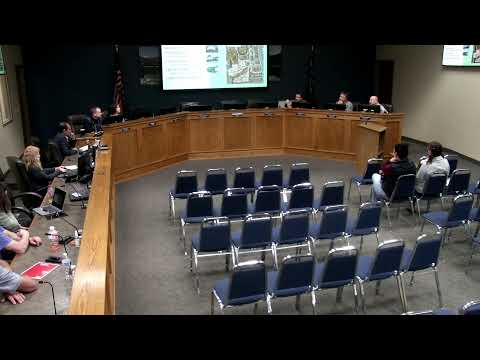
Kalispell city staff told the City Council at a work session April 14 that the city's Central Garage is too small to support a growing municipal fleet and that officials plan to seek preliminary engineering and financing for a replacement shop.
Kalispell city staff told the City Council at a work session April 14 that the city's Central Garage is too small to support a growing municipal fleet and that officials plan to seek preliminary engineering and financing for a replacement shop.
The presentation by Susie Turner, Director of Public Works, said the Central Garage maintains more than 325 pieces of equipment used across city departments and that the existing building—about 16 feet tall—lacks the ceiling height and bay space to safely service large vehicles such as dump trucks and ladder trucks. Turner said staff will request one additional mechanic in the fiscal year 2026 budget and asked council to consider funding options for a new maintenance facility and a heated solid-waste equipment storage building.
Why it matters: City operations rely on in-house maintenance to reduce downtime and avoid higher costs and scheduling delays when equipment must be outsourced for repair. Council members were shown how limited bay count, low clearances and storage congestion have forced some major repairs outdoors or in other city buildings, extending vehicle downtime and complicating seasonal operations.
Turner said the Central Garage is responsible for preventative maintenance, major repairs and fabrication for all five city departments and that technicians now must be trained for complex diagnostics on “computers on wheels,” including high-voltage hybrid systems. The shop presently has one supervisor and two full-time mechanics supporting the fleet; Turner said a nationwide fleet-management matrix produced an estimated need of about six technicians based on the city’s equipment mix, but staff believe they can maintain current service levels with four technicians and are requesting one additional mechanic for FY26.
Turner described the facility's physical limits: the existing building’s roughly 16-foot clear height is short of the roughly 19 feet city staff said are needed to work inside a solid-waste truck, about 21 feet to raise some dump trucks and roughly 26 feet to properly service ladder trucks. Tires are currently stored in Conex boxes outside the building, and a mezzanine and crowded parts area are at capacity. She said welding and fabrication sometimes must be done outdoors because the garage lacks proper ventilation for larger fabrication jobs.
Staff outlined two capital options for a replacement Central Garage: a proposed facility of roughly 13,500 square feet in the westerly portion of the shop complex with three general-service bays, a dedicated preventative-maintenance/fluids bay, a welding bay with ventilation, dedicated tire storage and parts space. Turner said the cost estimate including engineering and site improvements is about $6,000,000; the estimate used comparative numbers from work by the Montana Department of Transportation.
Finance options presented to council included a 10-year intercap loan at about 5 percent and a 20-year certificate-of-participation–style financing at about 4 percent. Turner said the city modeled internal-service transfers from 17 funds that pay the Central Garage; debt service would be included in those internal transfers and would affect streets and solid-waste funds most because those divisions house the largest portion of heavy equipment. Staff modeled a half-year debt payment in FY26 and full payments beginning in FY27. Turner told council a 20-year financing reduced annual pressure on internal funds and appeared “manageable,” but she warned it would still be a “heavy lift” for some funds.
Turner also reported a separate project included in the FY26 plan: a heated storage building for four pieces of solid-waste equipment estimated at about $1,300,000 that staff plan to finance using an intercap 10-year loan and to site in the western area of the same shop complex. She recommended considering both projects together during siting and preliminary engineering work.
On outsourcing and warranty work, staff said the Central Garage’s contract-services budget is approximately $40,000 for the current fiscal year and staff proposed increasing that line to roughly $50,000 in the next fiscal year. Turner said some vehicles—hybrid patrol cars and specialized solid-waste equipment—require manufacturer or out-of-area work (examples given included trips to Spokane and to Texas), and warranties or lack of local specialists sometimes require outsourcing.
Council members asked about safety, storage, long-term staffing and the site's constraints. Turner said the garage recently passed a state OSHA compliance inspection, but noted the welding bay ventilation is inadequate for larger jobs. Doug Russell, a city staff member who opened discussion of the item, said the issue is a long-term one the city must address: “It’s one of those things that is gonna not go away,” he told council.
Next steps described by Turner: pursue preliminary engineering and siting to refine cost estimates and a financing plan, and, if funding permits, return to council with formal capital requests and recommended repayment mechanisms. No formal action or vote was taken at the work session.
Votes at the meeting: none (work session; information and direction only).