Get Full Government Meeting Transcripts, Videos, & Alerts Forever!
Get email alerts on the K 12 Academics topic
No spam. Unsubscribe anytime.
Grand Forks board hears update on literacy, math goals; administration flags gaps for some cohorts and subgroups
Summary
Superintendent Dr. Brenner and Chief Academic Officer Amy Barch presented progress on the district's "Be Legendary" literacy and math goals, reporting mixed results across grades and student subgroups and outlining curricular changes, diagnostic plans and next steps, including a formal K'5 adoption request in two weeks.
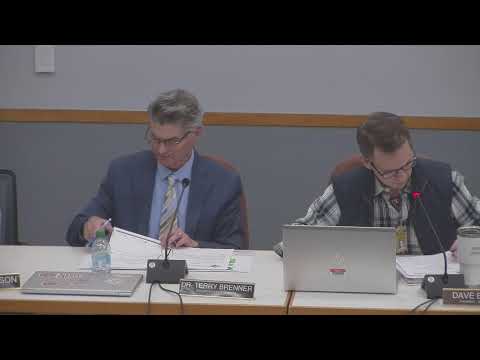
Grand Forks School Board President Burger heard an update April 14 from Superintendent Dr. Brenner and Chief Academic Officer Amy Barch on the district's "Be Legendary" academic goals, which aim to raise literacy and math proficiency by 2028.
The presentation laid out districtwide outcome goals, progress-monitoring results from Renaissance STAR and other screeners, subgroup breakdowns and the instructional inputs the administration is using or proposing to reach targets. Dr. Brenner said the district's two headline targets are increasing English language arts proficiency and mathematics proficiency across K'12, with interim cohort and grade-level benchmarks used as progress checks.
Why it matters: the board adopted the goals recommended by district administration; the presentation identified specific cohorts and subgroups that are not on track, and recommended programmatic and staffing options that would require ongoing budget and training commitments. The status of multilingual (ML) learners and students with special education needs was raised repeatedly as an area requiring additional time and targeted supports.
The district reported mixed results by grade and subgroup. Highlights and shortfalls included:
- Early literacy (K'1): STAR early literacy winter checks showed K'1 students at 65% at-or-above benchmark for the winter window, with a spring STAR window scheduled to start in early to mid-May. Dr. Brenner noted the district is "not even to our spring assessment yet" and that some subgroups (multilingual and special education) had not met the winter benchmark.
- Elementary grades: Grade 2 met its winter benchmark trajectory; grades 3 and certain elementary subgroups (Black, Native American, multilingual learners, special education) were not meeting cohort goals and require further diagnostic work.
- Middle grades and high school: Several middle-grade cohorts (notably grades 6'8) were below target in STAR measures. Grade 10 rebounded in the most recent winter window and met the district's internal prediction for the summative assessment in one reporting period, but subgroup gaps persisted.
Administration described the instructional inputs intended to produce gains: adoption and pilot work with structured literacy tools (Really Great Reading programs including Countdown and Blast), a planned shift to Heggerty phonemic-awareness routines in earlier grades, a K'5 pilot and upcoming formal adoption request for the Wit & Wisdom curriculum, expanded use of curriculum-based measures (CBMs) and diagnostic assessments, job-embedded professional development for instructional coaches, and targeted interventions such as UFLI (University of Florida Literacy Interventions) for older cohorts with decoding gaps.
Dr. Brenner summarized the approach: screening (STAR and CBMs) identifies students who are "on track" or who need diagnostics; diagnostics then identify the specific skill breakdown (letter names, sounds, segmentation, blending) and trigger MTSS (multi-tiered systems of support) plans. "If the screener tells us that that student is where we expect them to be, we go deeper," Barch explained. "When the diagnostic says we need more support for that child, that's the data literacy training we've been trying to do."
Board members pressed for clarification on subgroup reporting, parent engagement and how summer school and early-release planning tie to interventions. Dr. Brenner and Barch said the district will:
- Return in two weeks with a formal request to adopt and fund Wit & Wisdom for K'5 (the administration said it will ask the board to "approve that expenditure and adoption formally for K'5"). - Continue data-literacy professional development for instructional coaches and principals to support school-by-school diagnostics and tiered interventions. - Provide further reporting on summer-school outcomes and a new approach to tracking STAR component improvements for students who attend summer programs (Mr. Peterson was identified as the staff contact who will present that summer-school tracking data).
Budget context and limits were also highlighted. Barch and Dr. Brenner said the district's planned curricular allocation had been reduced from a previously considered $1,500,000 to $850,000 after budget adjustments, and administrators described that trade-offs in personnel and purchased resources constrain how many interventionists and supplemental programs can be staffed and sustained.
On assessments and accountability, the presentation reiterated district testing uses: Renaissance STAR and CBMs for progress-monitoring, diagnostic tests for identifying skill-level gaps, and the North Dakota state assessment (NDSA/NDAPlus) as the summative accountability measure. Dr. Brenner noted the state's policy change that removed an earlier option to substitute the ACT for the state assessment as the accountability measure; the district still administers the ACT to juniors for college- and career-readiness data.
Board members asked for more comparative context against state averages; Barch said direct comparison is possible beginning at third grade when NDSA results are available statewide, and that earlier progress-monitoring tools are not standardized across districts.
Next steps: administration will return with the K'5 Wit & Wisdom adoption and associated expenditure request in two weeks, provide summer-school tracking reports requested by the board, and continue school-level data reviews to refine intervention staffing and diagnostic deployment.
Dr. Brenner closed: "We still have work to do. We're pleased with where we're at in some of our content areas ... but the work will never end," and urged continued reporting and school-level Be Legendary presentations so trustees can compare district and campus progress.
Sources: presentation to the Grand Forks School Board on April 14, 2025, by Superintendent Dr. Brenner and Chief Academic Officer Amy Barch; board member questions and administrative responses recorded in the meeting transcript.