Get Full Government Meeting Transcripts, Videos, & Alerts Forever!
Get email alerts on the Religion And Government topic
No spam. Unsubscribe anytime.
Controversy over proposed Christian flag at Hartford City Hall raises legal and civic concerns
Summary
Public commenters both urged and warned against a council resolution to fly a Christian flag at City Hall: supporters cited local municipal code and the government-speech doctrine, while opponents cautioned about establishment-clause challenges, the cost of litigation and civic inclusivity.
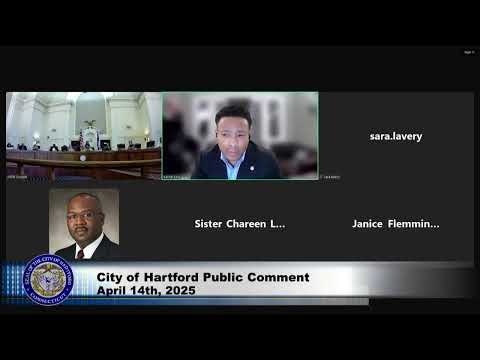
Public comment at a Hartford City Council meeting included sharply divided views on a resolution that would allow the Christian flag to be flown at City Hall in recognition of service by faith-based organizations.
Jonathan Adekonis, a Hartford resident who described himself as raised in the Christian tradition, said he opposed flying a flag for one faith at city property. "The city is served by more people than just the Christian faith," Adekonis said, adding that the gesture "suggests that one community's good works are more important than others."
Bishop Torres urged the council to permit the flag-raising. He cited the city municipal code permitting flags to be displayed "in conjunction with official events or ceremonies as announced by council resolution," and argued that Supreme Court precedent on government speech means the city may express recognition without violating the Establishment Clause. "The city's proposed flying of the Christian flag will not amount to an establishment clause violation," Torres said.
Other commenters warned of legal and practical risks. Sarah Labry said flying a flag of a particular faith at City Hall could prompt litigation and divert city resources. "I do believe that it is a violation of the establishment clause and that flying the flag over City Hall runs the risk of potential legal challenge," Labry said. William Moffett expressed concern about how the symbol might be perceived amid national trends of religious nationalism and urged the council to prioritize budgets that address basic needs over symbolic gestures.
Bishop Torres referenced Hartford municipal code, chapter 2, article 1, section 2-13(f)(2), and invoked federal case law generally when urging approval. Opponents pointed to the First Amendment's Establishment Clause and the possibility that litigation, if filed, could require the city to defend the action and incur legal costs.
No council vote occurred during the public-comment period. Commenters asked the council to weigh legal risk and the city's role in recognizing community service, and several urged the council to consider alternatives such as nonexclusive recognition or investments in programs over symbolic actions.
The council did not respond during public comment; the issue may appear on a future agenda for formal consideration.