Get Full Government Meeting Transcripts, Videos, & Alerts Forever!
Get email alerts on the Solid Waste topic
No spam. Unsubscribe anytime.
San Benito supervisors weigh landfill expansion, transfer station and alternative technologies as county landfill nears capacity
Summary
Board heard staff and consultant briefings on options for John Smith Road Landfill as county has under-15 years of disposal capacity; ad hoc recommended feedstock study, regional partnerships and tours of alternative-technology facilities; board asked staff to develop cost estimates and return with more details.
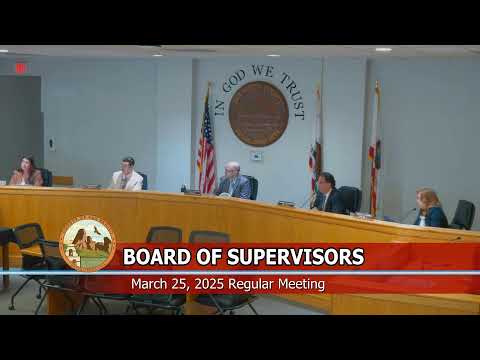
San Benito County supervisors heard a detailed update March 25 on the county's long-term solid-waste options, including a possible limited landfill expansion, constructing a local transfer station and further study of alternative technologies such as anaerobic digestion.
County solid-waste consultant Selena Stottler told the board that the John Smith Road Landfill currently has fewer than 13 years of remaining capacity and that state law (the Integrated Waste Management Act, AB 939) generally calls for counties to maintain about 15 years of disposal capacity. "The John Smith Road landfill has less than 13 years of remaining capacity," Stottler said during the presentation.
Why it matters: With the landfill's remaining life below the planning target, county officials said they need more complete cost and operations data so the board and public can weigh options ranging from a modest, in-county-only landfill expansion to building a county transfer station or participating in regional alternative-technology facilities.
What staff presented: County staff and the county's engineering consultant, Lewis Engineering, outlined two conceptual transfer-station layouts: one at the existing John Smith Road landfill entrance (a tight site with steep ramps and retaining walls) and a larger facility at the county's Resource Recovery Park that would accommodate greater queuing, separate commercial and public lanes, and a larger building footprint. Consultant Sangeeta Lewis summarized the team's initial findings and said the county is not yet confident it has enough local feedstock to make an alternative-technology plant feasible without importing feedstock from outside the county. "At this time, we are not confident we have enough local feedstock to make a local project feasible," Lewis said.
Regional options and partners: Staff summarized discussions with regional operators and facilities the county has contacted about disposal or partnerships, including Regen Monterey (material recovery and landfill gas-to-energy), Kirby Canyon and other landfills, Republic Services' Madison Lane transfer station, and RJR (a recycling/transfer facility in Hollister). RJR told county staff it currently accepts 50 tons per day and has explored expanding to about 300 tons per day if permits are approved. Regen Monterey and Kirby Canyon were identified as potential out-of-county disposal partners roughly 35—2 miles away.
Landfill operator interest: Waste Solutions, the county's landfill operator, has told staff it would consider a smaller, in-county-only expansion limited to about 300—50 tons per day; both the operator and ad hoc members signaled interest in revisiting the operating agreement to increase transparency if the county pursues expansion.
Public comment and board reaction: Several residents urged greater focus on diversion and public education; Recology South Valley's general manager, Mike Kelly, advised the board that transfer stations can be costly and that a 10—13-year horizon is relatively short in solid-waste planning. Others urged electric equipment and methane monitoring if a new facility is built. Supervisors on the sanitary ad hoc and staff repeatedly emphasized outreach, the need for accurate cost estimates and the value of seeing working alternative-technology sites in person.
Board directions and next steps: The board asked staff and the ad hoc committee to pursue multiple, parallel steps: (1) a targeted feedstock study to quantify in-county organic and other recyclable streams; (2) additional research into alternative technologies (composting, anaerobic digestion and regional digester options); (3) schedule a site tour of Regen Monterey's material recovery and landfill-gas-to-energy facilities and a possible tour of local transfer stations (RJR and San Martin) for supervisors; (4) refine conceptual transfer-station cost estimates for the two layouts shown and return with more robust numbers; and (5) continue discussions with the landfill operator about an in-county-only expansion, including exploring a revised operating agreement. Staff said they expect to meet with the ad hoc and return with more detailed cost and timeline information before the end of the county's fiscal year (roughly a three-month horizon) and recommended public outreach be added to the schedule.
Background and context: The county ad hoc on sanitary solutions was formed in April last year with supervisors Zenger and Kuro appointed. Stottler noted the county previously saw a conditional-use-permit denial on a larger expansion and that no new formal expansion application has been submitted to the county since the denial and the withdrawal of an appeal. Staff said an in-county-only expansion, if proposed by the landfill operator, would still be subject to environmental review and public hearings.
What the board will consider next: Staff will return with refined cost estimates, a proposed schedule for public engagement (town halls and briefings), a proposed scope for a feedstock study, and recommendations on the logistics and likely permitting path for either a transfer station or an expansion. The ad hoc and staff signaled they will pursue both regional and local alternatives in parallel rather than present only a single path forward.