Get Full Government Meeting Transcripts, Videos, & Alerts Forever!
Get email alerts on the Budget Fy27 topic
No spam. Unsubscribe anytime.
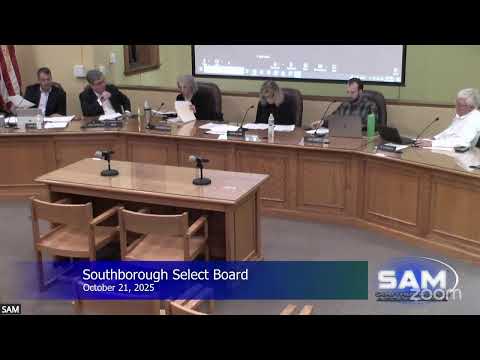
Select Board sets FY27 budget guidance: no new positions or hours, $1.5M capital baseline, schools asked to target 3% increase
Summary
The Town of Southborough Select Board on Oct. 21 issued initial budget guidance for FY27: no new positions or additional hours, a near‑term capital target of $1.5 million, and a 3% overall school budget target including benefits.
The Town of Southborough Select Board on Oct. 21 set initial guidance for the FY27 budget process and identified priorities and constraints the finance staff should use when preparing department submissions.
After an extended discussion the board agreed on these initial parameters: no new full‑time positions and no increases in employee hours, a capital guideline of $1.5 million for the coming fiscal year (board members discussed $1.5 million as the base alternative to $1.8 million), and that non‑salary operating lines should begin from fiscal 2025 actuals and require justification for increases. For the schools, the board asked the district to present an overall budget target of no more than a 3% increase including benefits.
Select Board members and finance staff discussed several related items: the board’s desire to avoid an override, the multi‑year implications of school and benefit cost increases (members noted pressures in FY28 and beyond), and the use of this year’s unexpectedly strong free cash (reported as about $3.6 million) to smooth immediate tax impacts. Board members debated whether to use all available free cash for FY27 expenses or to adopt a more conservative approach; the board asked staff to develop scenarios showing both approaches and how they affect tax rates.
Board members also directed staff guidance to departments: base non‑salary line items on FY25 actual spend and require written justification for increases; provide a capital plan early in the process and have departments rank projects by priority; and avoid submitting second, supplemental budgets unless significant new circumstances arise. The board also said it does not want additional new hourly positions or increases to existing hours this cycle.
Several board members emphasized benefits and contractual obligations as a material driver of the budget; one member proposed budgeting from FY24 actuals for baseline calculations where appropriate. The board asked departments to return early drafts (calendar instructions to follow) and discussed potential use of free cash either wholly for FY27 support or partially placed into stabilization—staff will prepare both scenarios.
Ending: The Select Board confirmed the calendar and directed staff to prepare departmental budget templates and capital planning materials consistent with the parameters adopted. The board scheduled further budget review meetings in November and December as the first drafts arrive.