Get Full Government Meeting Transcripts, Videos, & Alerts Forever!
Get email alerts on the Housing Element Update topic
No spam. Unsubscribe anytime.
Planning department presents draft 2022 housing element at full‑board hearing as community groups press for deeply affordable program and tenant protections
Summary
The Planning Department outlined the city's draft 2022 housing element at a committee‑of‑the‑whole public hearing Nov. 15, saying the city can identify roughly 60,000 units in the pipeline and zoning but still faces a large shortfall in meeting state RHNA targets that include tens of thousands of affordable units.
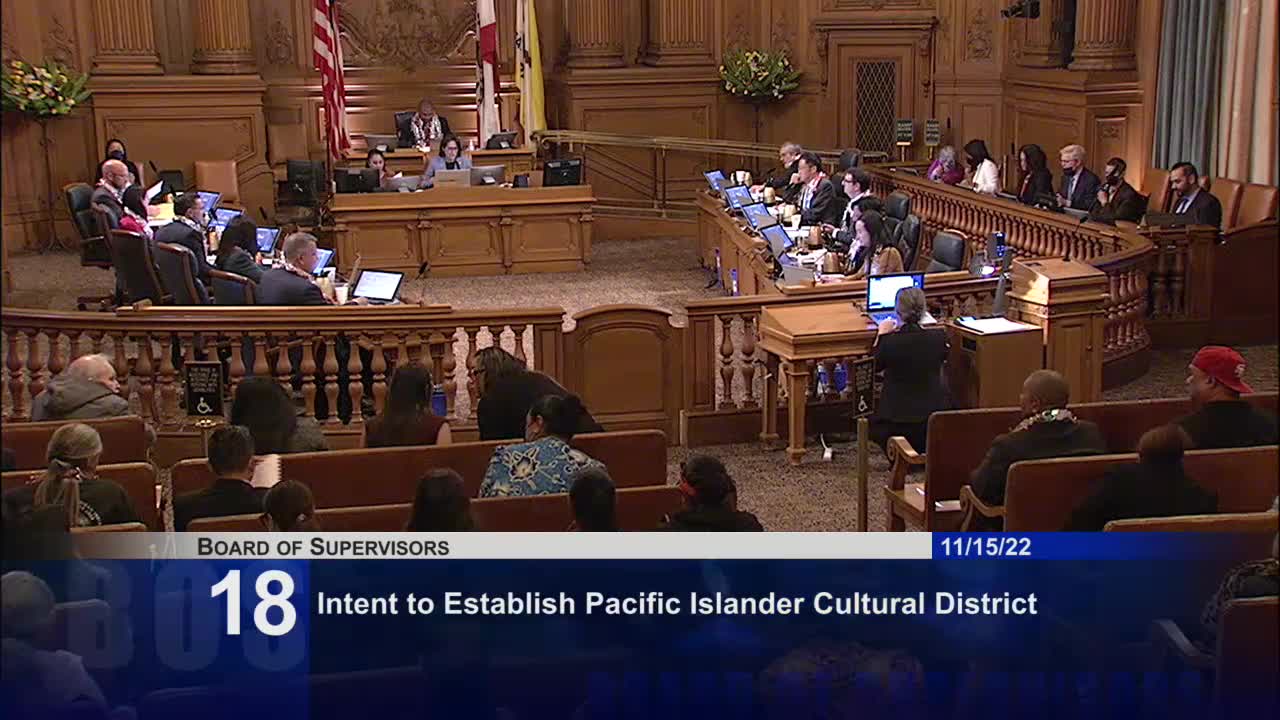
The San Francisco Planning Department presented the city's draft 2022 housing element at a committee‑of‑the‑whole public hearing Nov. 15, describing maps of priority equity geographies, proposed rezoning strategies, and an updated inventory of development capacity while advocates pressed the board to add a concrete funding and anti‑displacement plan to meet state targets.
Why it matters: The state requires each jurisdiction to adopt a housing element showing how it will house its Regional Housing Needs Allocation (RHNA). For San Francisco the new cycle assigns a greatly increased obligation that city staff and advocates said requires bold local actions, new revenue, and measures to prevent displacement.
What planning presented: Director Shaun Hillis said the draft element compiles community outreach, an inventory of current pipeline projects, and zoning—finding roughly 60,000 units of plausible capacity under current zoning and pipeline with an additional roughly 35,000 units that must be accommodated by rezoning and other actions to meet the state RHNA target (including a recommended 15% buffer). The department framed five goals—centering racial and social equity, stopping displacement, expanding affordable housing across neighborhoods, and building infrastructure for healthy neighborhoods.
HCD compliance: Hillis and staff told supervisors they are in regular contact with the California Department of Housing and Community Development (HCD). Staff said HCD's early feedback required stronger documentation of how many units the city can reasonably count from the existing pipeline and more measurable actions to affirmatively further fair housing. Planning said it expects additional formal comments from HCD in early December and is aiming for planning commission action Dec. 15 and board consideration in January.
Advocates' briefs and demands: John Avalos, executive director of the Council of Community Housing Organizations, told the board the city must not rely on business‑as‑usual or inclusionary zoning alone to meet the RHNA obligations. "The city will need to dedicate ample resources to build the 46,000 units of affordable housing," Avalos said, and suggested the city rebuild public institutions, create land banking, and seek predictable revenue streams. "The portion of the city budget for affordable housing will have to grow exponentially in the range of $4,000,000,000 per year over the next decade," he told the board.
Diane Ruiz, representing the Race and Equity in All Planning (REP) coalition, urged planning to keep robust community input even while streamlining approvals. "We can do both," Ruiz said, citing New York City's uniform land use review procedure as an example of predictable timing that retains community review.
Key disputes and themes in the hearing: - Pipeline vs. zoning capacity: Planning counts about 60,000 units in the pipeline and existing zoning that could plausibly be built in the eight‑year RHNA window, but HCD has pushed the city to justify what portion of that pipeline is realistically achievable. Staff said the city is short by tens of thousands of units and must zone more land and increase capacity in well‑resourced neighborhoods as well as secure sites in equity priority areas. - Displacement and tenant protections: Community groups and several supervisors warned rezoning and streamlining could spur demolitions and displacement unless tenant protections, demolition controls and funding for replacement housing are explicit and enforceable. REP and other groups asked planning to instruct staff to protect tenants when demolitions are proposed. - Funding and acquisitions: Multiple nonprofit affordable housing developers and advocates urged an immediate land‑banking and acquisition strategy to secure sites while prices are favorable. They and supervisors argued the city must produce an explicit financing plan for the roughly 46,000 low‑ and very‑low‑income units the RHNA period requires, and suggested dedicating long‑term local revenue streams rather than rely entirely on state and federal grants. - Streamlining vs. public input: Planning proposed process changes to shorten timelines; community coalitions insisted on preserving meaningful early public input and community board‑style review while making timelines predictable.
Planning department responses: Director Hillis and Miriam Chien (director of community equity) said the draft contains more than 300 actions including site inventories, rezoning concepts, community‑driven cultural‑district protections, and tenant protection measures. Staff said constraints include funding, construction costs, and internal city permitting and interdepartmental reviews; Hillis said HCD asked the city to add clearer, measurable actions to affirmatively further fair housing.
Public comment: More than two dozen community members and representatives of immigrant, labor and housing justice groups urged the board to adopt the citywide "People's Plan" or to fold its priorities into the housing element. Speakers called repeatedly for prioritizing deeply affordable housing, preservation of existing subsidized and rent‑controlled units, land banking, tenant protections when demolitions are proposed, and substantial new local funding.
Next steps: Planning staff said the department will continue to refine the element in response to HCD comments and to supervisor direction; planning commission consideration is scheduled for Dec. 15 and the board will take final action in January. Planning urged the board to provide early budget signals so the mayor's office, MOHCD and the board can align the FY 2023‑24 budget toward affordable housing priorities.
Ending: The hearing underscored a central tension: how to pair rezoning and process changes the state expects with a credible, financed plan to preserve communities and build tens of thousands of deeply affordable homes. Planning and community groups left the session urging the board and the mayor's office to move quickly to fund land acquisition, tenant protections and capacity building for nonprofit developers.