Get Full Government Meeting Transcripts, Videos, & Alerts Forever!
Get email alerts on the Nomination Confirmation topic
No spam. Unsubscribe anytime.
Senate committee advances Reese nomination after questioning on coastal preservation, permitting and climate stance
Summary
The Senate Agriculture and Natural Resources Committee on Tuesday gave a favorable report to Miss Reese’s nomination to lead the Department of Environmental Services after questioning about coastal preservation policy, permitting delays and the department’s approach to climate-related causes.
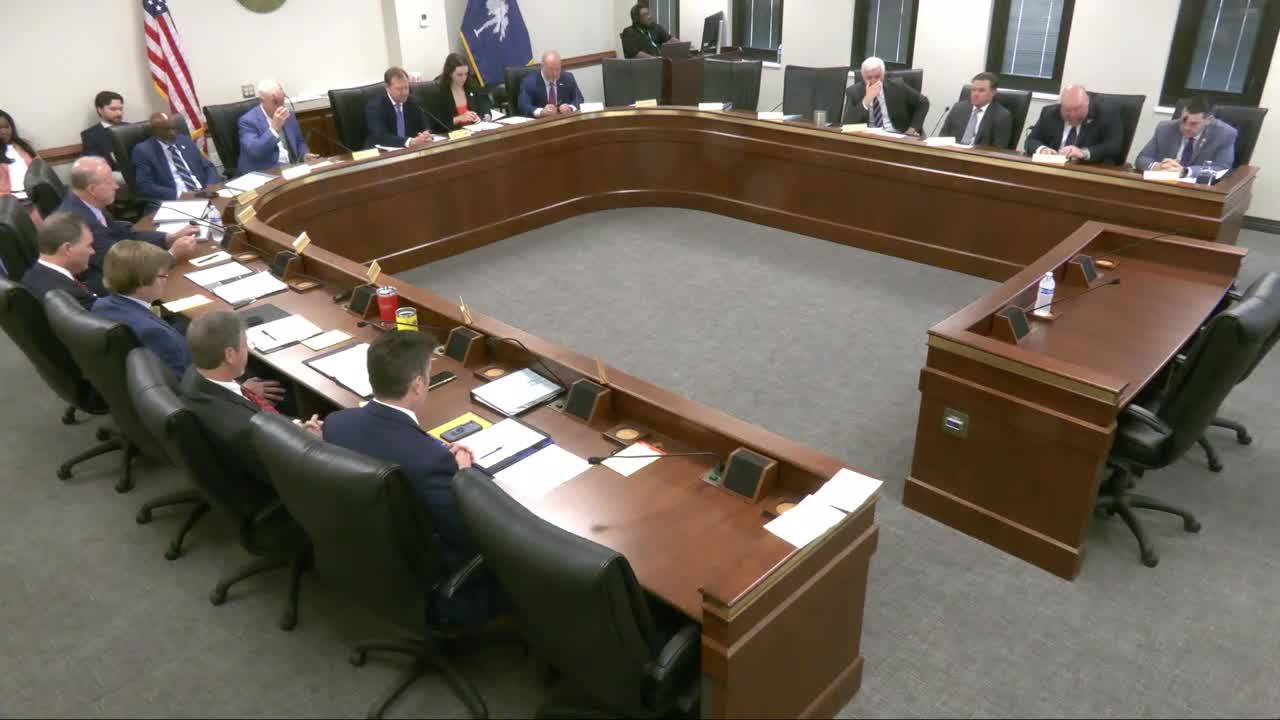
The Senate Agriculture and Natural Resources Committee on Tuesday gave a favorable report to Miss Reese, nominee for director of the Department of Environmental Services, after a confirmation hearing that focused on coastal property rights, permitting capacity and the department’s position on climate and causation.
Committee members pressed Reese on her views as nominee and on the department’s actions after the General Assembly in 2018 changed coastal policy from retreat to preservation. The committee voted to forward her nomination to the full Senate by voice vote with several members recorded as abstaining; a proxy vote from Senator Gambril was recorded as voting in the affirmative.
The session included sustained questioning from the senator from Spartanburg about stormwater practices in new subdivisions. The senator described how detention ponds on development sites frequently leave “a large hole, which is just mud,” and asked whether South Carolina could adopt alternative approaches used in other states. Reese responded that the agency is “committed to looking at best practices from other states,” citing pervious materials and other stormwater management techniques as options to “moderniz[e] our programs.”
Chairing the hearing, the committee’s presiding senator focused much of the exchange on coastal property rights versus the state’s preservation policy. The chair asked Reese to explain her statement preferring “community solutions” over individual measures to address shoreline erosion and rising seas. Reese said the approach she envisions involves “sitting down with the community, the community leaders, and really bringing the data to the table,” and emphasized tailored strategies for different beachfront communities.
When pressed on why the department took roughly six years to update regulations following the 2018 legislative policy change from retreat to preservation, Reese acknowledged the delay. She told the committee, “We should have prioritized and made sure that we started the process of looking at the regulations,” and said competing priorities, including disaster response and drawing lines, contributed to the lapse.
On climate and causation, Reese told senators she relies on climate scientists to inform technical conclusions but framed the department’s role around adaptation and resilience. “I leave the climate science to the climate scientist,” she said, and added the department’s emphasis will be on preparing for more frequent or severe weather and improving recovery capacity. Reese cited the state’s stakeholder-driven response to the federal Clean Power Plan proposal as an example of the department convening utilities, local leaders and EPA Region 4 to shape implementation-focused comments.
Permitting delays and the department’s budget request for additional permitting staff drew further scrutiny. Reese said permitting is a top priority and that funding for core permitting work has declined over decades. She said the agency has performed business-case reviews, used Lean Six Sigma time studies to identify inefficiencies and plans to prioritize high-volume program areas such as septic, stormwater and air permits. Reese indicated the additional staff requested in the budget are meant to support expedited timelines discussed in recent energy legislation and pre-application meeting processes.
Reese also described management expectations for department staff and said the agency “holds them accountable,” adding that appropriate personnel actions would follow if staff acted contrary to adopted policy.
The committee took a voice vote to report the nomination favorably; the chair announced the nomination will go to the Senate floor for consideration during the confirmation process.
Votes and procedural notes: The committee chair called for a motion “for a favorable report” and the motion received a second. The chair called for a voice vote; the record includes an affirmative proxy from Senator Gambril and named abstentions by the senator from Georgetown, the senator from Chester and both senators from Spartanburg. The transcript did not contain a numerical roll-call tally for the motion.
The committee adjourned after completing the nomination vote and handling a separate resolution (adopted as amended) encouraging the use of native landscape plants.