Get Full Government Meeting Transcripts, Videos, & Alerts Forever!
Get email alerts on the Economic Development topic
No spam. Unsubscribe anytime.
Private group pitches large indoor Sportsplex for Pittsboro; seeks town support and land
Summary
Entrepreneur-led Supa Athletics presented plans for a modular, LEED-focused indoor Sportsplex that would host tournaments, school programming and community-subsidized access; presenters asked the town to consider making land available under a long-term lease or donation to help secure philanthropic and private financing.
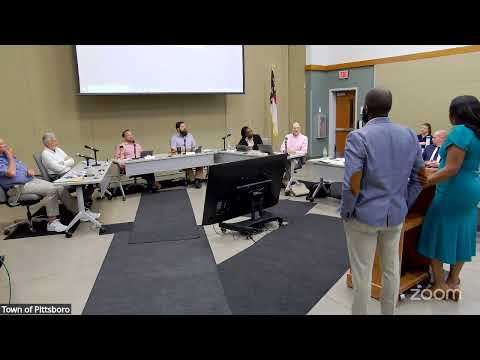
A private developer and community organizers on April 14 presented a proposal for a large, modular indoor Sportsplex in or near Pittsboro designed to host indoor track, basketball, volleyball and turf sports, to pursue LEED certification, and to pair rooftop solar generation with a community-solar program. The presenters told the Board of Commissioners they are seeking municipal support, including site availability or a long-term lease on town-owned land, to unlock philanthropic and private financing.
Project overview and modular approach: Supa Athletics, led by Latonya Brown, presented a concept of up to four field houses (each ~128,000 square feet) connected by a central “connector” with training, media and community spaces. The design is modular: the team said it could open a first fieldhouse (an indoor banked track that the presenters said would be the first in the state) and expand in phases. Presenters said the facility would host regional and national tournaments, school programming and community uses and would generate revenue from tournaments, naming rights and sponsorships.
Funding and public-private model: Presenters described multiple revenue streams — memberships, tournaments, sponsorships (including naming rights), and energy monetization from rooftop solar — and said many comparable projects use long-term land leases (for example, 99‑year leases) or nonprofit ownership to secure capital. They said seed philanthropic support and letters of institutional support have been obtained; presenters asked the town to consider making 14–18 acres available for initial phases to make the fundraising case viable.
Equity and programming: Supa representatives described a dual structure: Supa Athletics (a for-profit operator) and Supa Cares (a 501(c)(3)) for scholarships and community programs. They said a portion of participants already are subsidized and that a community-solar model could reduce energy bills for underprivileged households while supporting scholarship capacity for youth sports. Presenters also discussed internships and workforce opportunities in media, sports management and facility operations with local colleges.
Board reaction and next steps: Commissioners asked staff to pursue feasibility, including site suitability and soil/topography checks, and to coordinate follow-up meetings with Chatham County staff and the school system. Several commissioners urged coordinated county-and-town consideration and asked staff to present pro forma financials and a clearer ask on land and infrastructure assistance. The presenters said they will bring financial models and letters of support to future meetings. The board did not take formal action at the meeting.