Get Full Government Meeting Transcripts, Videos, & Alerts Forever!
Get email alerts on the Urban Chickens topic
No spam. Unsubscribe anytime.
Cascade council considers urban-chicken ordinance; first reading fails for lack of second
Summary
After public comment and council debate, a proposal to add an "urban chickens" chapter to the city code (Ordinance 2-25) did not advance when a motion to approve the first reading failed for lack of a second.
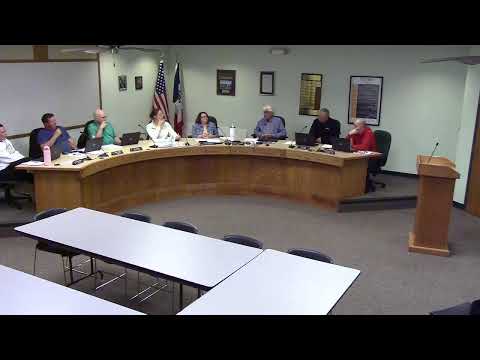
Cascade City Council members on April 14 considered Ordinance 2-25, a proposed addition to the city code titled "Title 4: Mental Physical Health, Chapter 2, Urban Chickens," following public comment from residents.
The proposal drew public support and opposition during the meeting's public-comment period. Eric Honda, a Cascade resident, told the council, "My name's Eric Honda. I live at 316 Second Avenue Southwest here in Cascade. I would like to talk about the ordinance 0 2 25, the urban chicken ordinance." Honda said he serves as a law-enforcement officer in an adjoining city and had not observed calls for service tied to chickens. Leanne Reisner, also speaking during public comment, said allowing backyard chickens could create educational opportunities for youth and help children learn where food comes from.
Council discussion then addressed ordinance specifics and community reaction. One council member summarized outreach and research, saying neighboring and larger Iowa cities allow backyard hens and that Dubuque staff told her they receive "between 10 to 20 chicken complaints a year" compared with about 1,500 animal complaints overall. That council member also noted the proposed ordinance excludes roosters, limits the number of birds, and contains sanitary provisions intended to address odor and vermin concerns.
Several residents and council members expressed concerns about possible smell, pest problems and how enforcement would work. During public comment and council exchange, questions surfaced about a proposed 100-foot neighbor-approval requirement and how mediation would occur if a neighbor objected. Resident Eric Honda said he was "confused on why my neighbor across the street that which have would have no effect of my backyard be able to say yes or no" under the 100-foot rule as drafted. A public commenter also recommended using a building/structural permit for coops instead of an annual permit so inspection would ensure compliance.
After discussion the council moved to act. Councilmember Oliphant made a motion to approve the ordinance for its first reading; the motion received no second and therefore did not advance. Mayor (presiding officer) called the result: the motion "dies for lack of a second." No formal roll-call vote on the ordinance first reading was recorded because the motion was not seconded.
The ordinance text under consideration is listed in the agenda as "ordinance number 2-25, an ordinance adding title 4 mental physical health, chapter 2, urban chickens, to the city code of ordinances"; the council did not adopt the ordinance or set a new hearing date on April 14. Council members said they had received both public support and substantial public opposition in the run-up to the meeting and that more outreach and clarification of details — especially the neighbor-approval, permit type, and enforcement/mediation processes — would be needed before a future vote.
The council did not take further action on the item at the April 14 meeting.