Get Full Government Meeting Transcripts, Videos, & Alerts Forever!
Get email alerts on the Zoning Code Affordability topic
No spam. Unsubscribe anytime.
Home builders warn proposed zoning changes could raise costs, urge tweaks to tree and design rules
Summary
Representatives of the Chippewa Valley Home Builders Association told the Eau Claire Plan Commission that several proposed zoning-code changes — including a tree‑preservation standard and anti‑monotony/garage‑frontage rules — could increase housing costs and reduce some housing types locally.
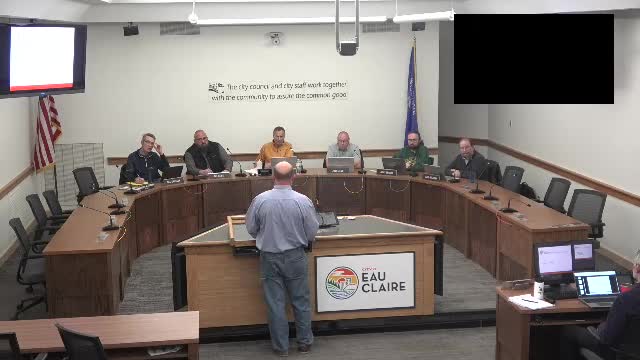
Pat Smith, government affairs chair for the Chippewa Valley Home Builders Association, told the Eau Claire City Plan Commission during the April 14 public‑comment period that several proposed changes to the city's zoning code could increase the cost of new homes and reduce housing affordability.
Smith said the association supports many of the code updates that would allow more housing types and smaller lots, but urged the commission and staff to reconsider some proposed requirements that, the group said, would add per‑unit costs. “For every $1,000 increase in the price of a home, 31 households can no longer afford a home” in the Eau Claire area, Smith said, citing the National Association of Home Builders’ priced‑out estimator. He said a single proposed landscaping requirement — described by the builders as adding roughly $5,000 to the cost of an average single‑family home — would, by that metric, make about 155 households unable to afford that home.
Paul Holzinger, a local homebuilder and member of the Home Builders Association and the zoning advisory committee (ZPAC), addressed the plan commission about the city’s emerging tree‑preservation ordinance and offered results from a tree inventory his group completed at the Creekside development. Holzinger said Creekside covers about 58 acres, of which roughly 32 acres were forested before development. He reported about 6,063 trees in the study area and said roughly 19.5% of those trees had a diameter at breast height (DBH) greater than 12 inches. Holzinger said those findings matter because the draft tree ordinance ties replacement requirements to the count and size of removed trees. He urged the commission to consider raising the minimum protected DBH from 12 inches to a higher threshold (he suggested 17–20 inches) to reduce replacement burdens and related fees on developers.
Christina Thrun, executive officer of the Chippewa Valley Home Builders Association, focused on proposed anti‑monotony and garage‑frontage rules. She said the combination of a strict anti‑monotony rule (for example, requiring multiple different house types within small developments) and limits on garage frontage could make twin homes — a commonly built and relatively affordable housing product in Eau Claire — impractical. “Twin homes are one of the most popular homes being built right now … the 1‑story twin with a two‑car garage is the most popular plan,” Thrun said, adding that stricter design rules could push twin‑home construction outside the city.
Speakers from the association left materials and asked staff and ZPAC to consider alternatives that achieve design variety and tree canopy goals without creating prohibitively high per‑unit costs. Commissioners and staff indicated they expect continued discussion at upcoming ZPAC and Plan Commission work sessions.
The public‑comment segment closed without formal action; the commission is scheduled to continue zoning‑code and related ordinance work through ZPAC and future commission meetings.