Get Full Government Meeting Transcripts, Videos, & Alerts Forever!
Get email alerts on the Budget Finance topic
No spam. Unsubscribe anytime.
Rockwall ISD previews budget outlook and a proposed 3% compensation increase amid legislative uncertainty
Summary
District finance staff presented 2025–26 budget projections, a tentative 3% raise proposal for teachers and certain staff, and potential revenue and reduction options. Board discussion highlighted legislative risks including proposed homestead exemption changes and timing of school finance bills.
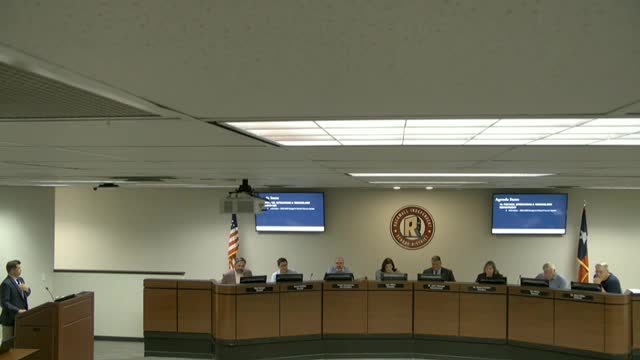
The Rockwall ISD administration presented updated 2025–26 budget projections and a draft compensation plan at the board’s regular meeting, recommending a 3% salary increase for teachers, nurses and library/media specialists while outlining revenue options and possible cost reductions if state funding changes.
Why it matters: The district is operating in a rapidly changing legislative environment; school finance decisions at the state level and local revenue choices will influence pay, staffing, and long-term facility planning in a fast-growing district.
What was presented - Budget baseline and deficit: Administration presented a base budget that rolled forward current year spending and added operating costs for a planned Middle School No. 4. The base scenario showed approximately $185 million in projected revenue and $189.4 million in projected expenditures; adding operating and staffing for the new middle school adjusted projected expenditures to about $191.6 million and left a roughly $6.5 million deficit under current-law assumptions.
- Proposed compensation plan: The administration proposed a 3% raise for teachers, nurses and library/media specialists and a 3% raise from the midpoint for non-teaching staff. The presentation said each 1% increase costs roughly $1.25–$1.3 million; a 3% package without offsets would raise the budget deficit to roughly $10.2 million.
- Targeted incentives and critical-need stipends: The draft plan includes a $500 signing bonus and increased stipends (from $4,000 to $5,000) for hard-to-fill special education positions and additional stipends for diagnosticians, speech-language pathologists and school psychologists.
- Revenue options and reductions: Staff outlined possible revenue and savings to offset the compensation package, including modest meal-price and after-school tuition increases (estimated to produce about $720,000 from meal-price adjustments and additional revenue from after-school fees), targeted contract renegotiations, and other operational efficiencies. The district also noted it currently provides free after-school care to employees at an estimated cost of about $1 million annually.
- Legislative risks: Presenters summarized ongoing action in Austin. They noted House Bill 2 (school finance) and Senate Bill 1 (appropriations) were moving, and highlighted Senate Bill 4, which would raise the mandatory homestead exemption from $100,000 to $140,000; the administration estimated that, as drafted, the change could reduce the district’s interest-and-sinking (I&S) tax collections by about $3.4 million because two bond issuances from 2023 ($194 million) and 2024 ($82 million) would not be covered by proposed hold-harmless language. The district is actively communicating with state representatives to seek language that holds prior bonds harmless.
Board discussion and next steps Board members asked about the per-percent cost of raises, possible enrollment impacts of tuition increases and the timing for final decisions. Administration said it would bring a recommendation to a May 5 special session for tentative approval of the compensation plan (teacher contracts are due back April 9 in the presentation timeline), continue to refine budget reductions, and return with a final budget workshop in June and budget adoption at the June 16 meeting.
What the district did not decide The board did not adopt the compensation plan at the meeting; the 3% figure was presented as an administration recommendation and the board directed staff to return with refined proposals and additional data, including possible participation impacts of fee increases.