Get Full Government Meeting Transcripts, Videos, & Alerts Forever!
Get email alerts on the Budget topic
No spam. Unsubscribe anytime.
Carson City tourism authority approves $3.68 million tentative fiscal 2026 budget; public hearing set for May 19
Summary
The City Culture and Tourism Authority Board on April 14 approved a tentative fiscal year 2026 budget with estimated expenditures of $3,678,344 and set a public budget hearing for May 19 at 3:30 p.m.
The City Culture and Tourism Authority Board of Directors approved the tentative fiscal year 2026 budget at its April 14 meeting, moving the plan to a public budget hearing on May 19 at 3:30 p.m.
The board approved a budget package that contains three governmental funds and total estimated expenditures of $3,678,344, according to documents presented at the meeting. "This is our tentative budget for fiscal 26 and we've already submitted this to the Department of Taxation," said Chris Kipp, a CTA staff member who reviewed the proposal for the board.
Why it matters: The tentative budget sets spending and revenue expectations that will guide tourism marketing, capital projects and contracts for the coming fiscal year. The document contains the authority's revenue and expenditure forecasts and is the basis for the required public hearing required by state budget law.
Key details and revenue assumptions - The tentative budget projects a 2.83% increase in lodging tax revenue for fiscal 2026, the figure staff used across multiple funds. Kipp said the projection was used in both the general fund and separate capital and B&T (bed tax) funds. - The packet lists $316,000 remaining in Bridal Nevada funds earmarked for the 3D Cultural Corridor project; the full Bridal Nevada allocation reported was $630,000 and staff said spending is being split across fiscal years. - The capital projects fund includes the full bond principal and interest payment for Centennial Park improvements for fiscal 2026. - Expenditures are grouped by function (general government, culture and recreation, interlocal agreements) and by category (salaries, benefits, services and supplies). The draft budget includes a 1% cost-of-living adjustment for staff to help offset an anticipated Public Employees' Retirement System contribution increase, which Kipp said will raise employer rates from 33.5% to 36.75%.
Contracts and vendor list Staff presented a list of contracts that will affect fiscal 2026, including an audit contract with Casey Neeland, continuing work with KPS3 for marketing, and a web-development engagement with the Estefona Group for the cultural corridor. Kipp said remaining contracts are listed on page 13 of the budget packet.
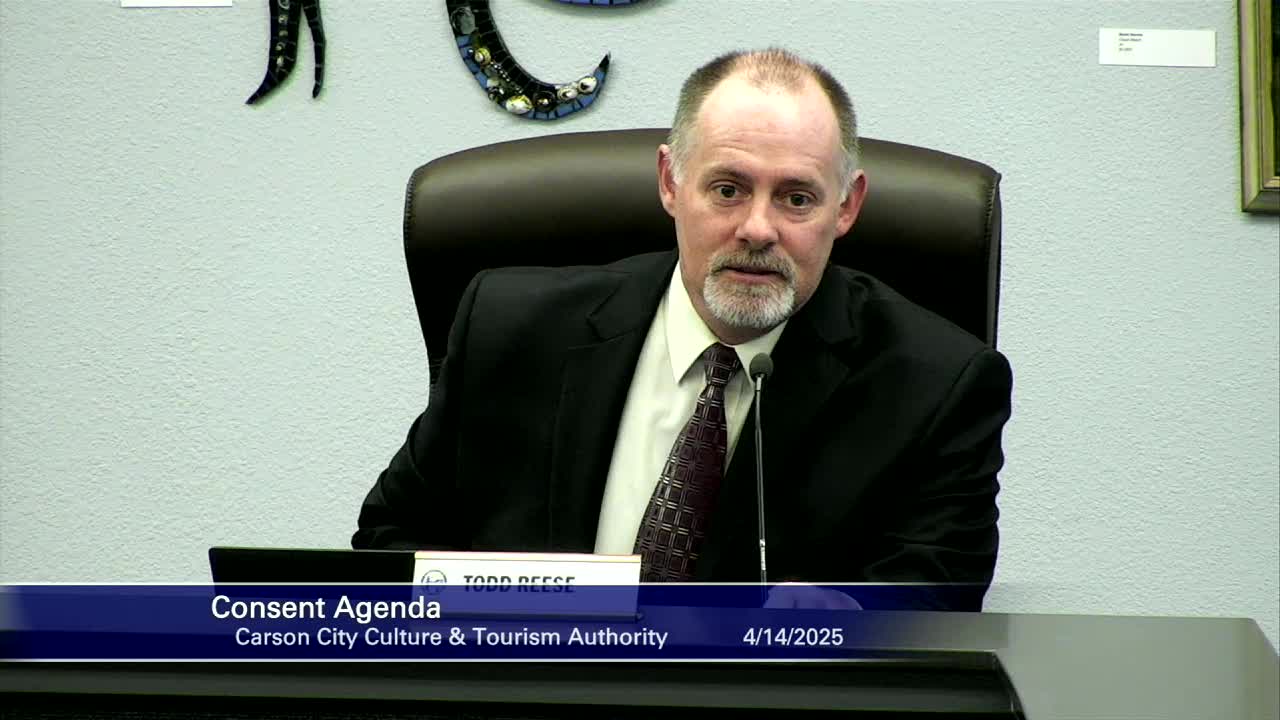
Board action Mike Jones, chair of the City Culture and Tourism Authority Board, made the motion to approve the tentative fiscal year 2026 budget "as discussed." The motion was seconded by Andrew Reno, and the board voted in favor with no recorded opposition; the chair declared the motion passed. The budget will proceed to the statutorily required public hearing at the May 19, 3:30 p.m., meeting.
Other formal votes at the meeting - The board approved minutes from the March 10, 2025 CTA Board meeting. The motion passed without recorded opposition. - The board approved the consent agenda, which included statements of accounts payable and P‑card transactions for February and the CTA fiscal year 2025 budget report (items 6 and 7 on the agenda). That motion passed without recorded opposition.
What comes next Staff said the tentative budget has already been submitted to the Nevada Department of Taxation; the board will consider public comment and any final edits at the May 19 budget hearing before adopting a final fiscal 2026 budget.
Meeting context Board members and staff spent the bulk of the meeting discussing the budget presentation and supporting reports. Staff noted increased benefit and services costs tied to PERS, workers' compensation and group insurance rate increases, and flagged one-time and grant-funded items that carry between fiscal years.