Get Full Government Meeting Transcripts, Videos, & Alerts Forever!
Get email alerts on the Education Multi Tiered System Of Supports topic
No spam. Unsubscribe anytime.
Camas School District outlines timeline to implement MTSS with special-education eligibility change in sight
Summary
District staff presented progress on the Multi-Tiered System of Supports (MTSS), outlining four annual goals, scheduling and professional learning priorities, resource constraints and a target to have MTSS implemented with fidelity by the 2027–28 school year ahead of a state special-education eligibility change.
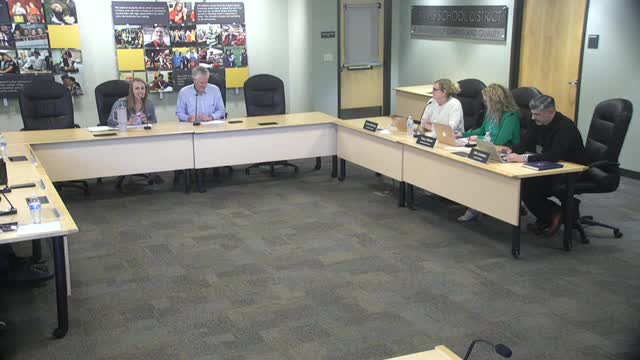
Allen Flagg, the district's Director of Special Programs, told the Camas School District workshop on April 14 that staff have been working with a district MTSS work group since the start of the school year and have adopted a clear vision and short-term objectives for the initiative. "So we're here to give you an update on the MTSS initiative, which is a part of the strategic plan," Flagg said, describing MTSS as "the umbrella for all the initiatives that the district's moving forward on."
The work group identified four annual progress-monitoring targets for the coming year: (1) a clear MTSS vision statement, (2) school schedules that show when tiered interventions happen, (3) school-based data teams using a balanced assessment system, and (4) focused professional learning so staff use evidence-based practices and assessment-guided instruction. Rebecca, who co-leads the work group with Flagg, defined the balanced assessment system as including progress monitoring, screening, benchmarking, formative assessments and formal standardized assessments. "It just captures the whole part to use the data to make decisions," she said.
District staff described achievements to date as a developed mission statement, organized work groups addressing schedules and PLC structures, and early scheduling practices in elementary reading programs. They said the work now focuses on expanding tiered instruction scheduling into other subjects (for example, math and social-emotional learning), clarifying how secondary schools deliver interventions, and strengthening PLCs so teams explicitly ask: what should students know, how do we know they know it, what do we do if they don't know it, and what do we do if they already know it.
Flagg and work-group members emphasized a target implementation timeline tied to changes in state special-education practice. The district set a goal to implement MTSS "with fidelity by 2027–28," and to pilot components earlier so systems are tested before the 2028–29 school year, when the speakers said state special-education rules will end use of the discrepancy model and move toward a response-to-intervention approach for identifying students with specific learning disabilities. "We have the ability to label a student as disabled based off of the intervention that they have or have not been receiving," one presenter said, explaining why the district wants MTSS established before that eligibility model change is used for special-education determinations.
Presenters flagged constraints. Staff noted Camas's limited ability to replicate staffing models used in some neighboring districts, where multiple specialists are funded through Title I and LAP; Camas currently deploys Title I and Learning Assistance Program (LAP) resources primarily at the elementary level. "We're not gonna ... build this system on hiring a bunch more people," a presenter said. Instead, staff described planning to reorganize existing staff time and schedules, expand professional learning beginning in August, and pilot the system in selected buildings to surface practical issues.
Board members asked about tools used for fidelity checks (for example, the Tiered Fidelity Inventory) and whether each school has a functioning MTSS or intervention team. Staff said every building has some kind of team but that depth and data practices vary; the work group's next steps include meetings with principals to document existing leadership and teaming structures and to determine where additional support or refinement is needed.
No formal motion or vote occurred on MTSS at the workshop. Staff listed next steps as continuing work-group meetings, developing professional-learning schedules beginning in August, piloting MTSS components at a limited number of sites, and meeting with school administrators to align local teams and schedules.