Get Full Government Meeting Transcripts, Videos, & Alerts Forever!
Get email alerts on the Museum Funding topic
No spam. Unsubscribe anytime.
Shaker Historical Museum asks council to place 0.3‑mill levy on November ballot to stabilize operations
Summary
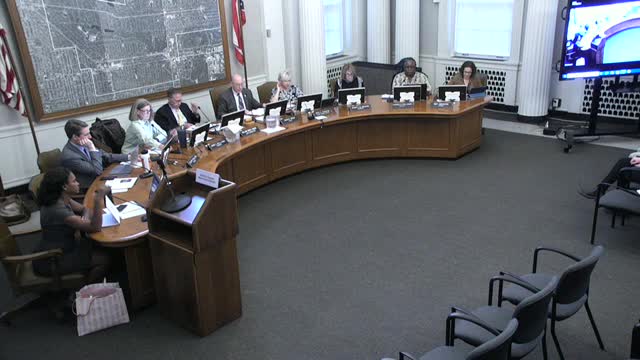
Shaker Heights City Council heard a request on April 14 from the Shaker Historical Museum and affiliated nonprofit groups to place a proposed 0.3‑mill municipal property tax levy on the November 2025 ballot.
Shaker Heights City Council heard a request on April 14 from the Shaker Historical Museum and affiliated nonprofit groups to place a proposed 0.3‑mill municipal property tax levy on the November 2025 ballot.
Hazel Smith, representing the Friends of the Shaker Historical Museum, told council, “we're proposing a very modest, municipal property tax levy at 0.3 mills.” She said the levy would be renewable every five years and that the museum modeled the levy to raise about $300,000 a year, which museum leaders say would stabilize operations and allow expanded programming and collection care.
The museum’s presentation said a 0.3‑mill levy translates to roughly $10.50 per $100,000 of assessed value and would cost the average Shaker Heights homeowner — with a median home value the presenters used of about $323,000 — about $34 annually (about $3 per month). The nonprofit’s financial overview showed average annual revenue of about $123,000, average expenses near $240,000 and an annual deficit of about $117,000; presenters said the museum has drawn from an accessible investment account (about $330,000 in quarter two 2025) but expects that reserve to be largely depleted by mid‑2028 if current trends continue.
The presentation explained the levy would make every city resident a museum member, expand school and community programming, improve exhibit and storage conditions and support digitization of collections. Brianna Trelevin, executive director of the Shaker Historical Society, and board leaders joined the presentation and described partnerships with the schools, the library and the city on research and neighborhood programs.
Council members raised procedural and policy questions. Council Member Moore asked whether pending state actions to redirect residual levy revenues could affect the museum; museum representatives said they had not seen specific state action but had modeled the proposed levy and built a modest buffer into the plan. Council Member Bixenstein asked whether the levy would create a local precedent for other nonprofits; Hazel Smith cited the Ohio Revised Code provision allowing levies for the maintenance of a free art, science or history museum and said the museum believes it is the only local history museum eligible under that statute.
Council Member Malone said he supports the museum’s mission but questioned whether asking voters — rather than expanding city subsidies and in‑kind support from the library and schools — is the right approach. “I may yet be persuaded on this. But right now, I'm still struggling with the notion of necessity,” Malone said. Council discussion noted the city provided $100,000 in support last year and $50,000 so far this year; museum leaders described those as helpful bridge funding but said they do not view ad‑hoc city subsidies as a sustainable long‑term funding model.
Presenters explained the legal and calendar steps required to place the levy on the ballot. Council must adopt a resolution of necessity; within 10 days the county auditor certifies the levy and the millage calculation, and the city must later adopt a resolution to proceed before the Board of Elections will place the issue on the ballot. Presenters said they requested an earlier council vote to allow more time for public outreach, although the city’s staff noted the final deadline to submit ballot language to the board of elections is August 6, 2025. Council members were informed that both pieces of council legislation require two‑thirds approval (five affirmative votes) to proceed.
Council asked additional operational questions about demographics, programming for teens and rental revenue. Museum staff said they do not currently collect detailed demographic attendance data but plan to provide their annual report with those metrics when available. Staff described event rentals and a rebuilt gift‑shop space as nascent revenue streams that have been difficult to scale with a small staff. Council and museum staff also discussed facility ownership: the building is under the Ohio History Connection network, and presenters said the Ohio History Connection has assumed more facility maintenance costs in recent years but that the museum does not own the building.
No formal council action was taken at the April 14 work session. Museum representatives asked council to consider an earlier vote to allow more community outreach before the August certification deadline. Councilmembers said they would continue the conversation at upcoming meetings.
What's next: If council votes to adopt a resolution of necessity and later a resolution to proceed, the county auditor will certify the levy and the Board of Elections will place the question on the November 2025 ballot. The levy, if approved by voters, would begin collection in 2026 and would need renewal every five years, per presenters’ description.
(Reporting note: the presentation and council discussion are summarized from the Shaker Heights City Council work session on April 14, 2025; no council vote on the levy occurred during the session.)