Get Full Government Meeting Transcripts, Videos, & Alerts Forever!
Get email alerts on the Public Art topic
No spam. Unsubscribe anytime.
Selection panel recommends Mark Forn pavilion for Richardson City Hall plaza; council asks for more detail
Summary
A city art selection panel recommended a $850,000 pavilion by Mark Forn for the new City Hall plaza; councilmembers praised the design but requested additional information on maintenance, sightlines and weather resilience before final approval.
A city art selection panel has recommended a pavilion-style sculpture by Mark Forn for the hardscape plaza opposite the Civic Center fountain at Richardson’s new City Hall, with an estimated project budget of $850,000 funded through the city’s percent-for-art ordinance.
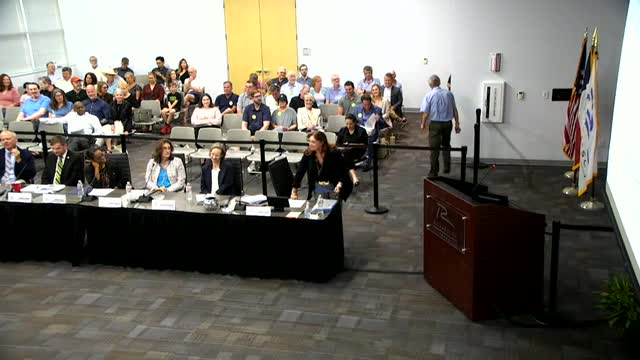
Meredith McKinley, who presented the panel’s work to the Richardson City Council on April 14, said the panel reviewed 111 artist applications, invited three finalists to visit Richardson and unanimously recommended Forn’s proposal, titled “Tornelle.” She told council the work is intended to echo the diameter of the fountain, provide a shaded, interactive gathering space and be installed near the end of City Hall construction in the fall of 2026.
The recommendation matters because the chosen artwork will occupy a prominent public plaza at the municipal complex and represents the city’s largest single public-art investment to date. The panel and the Cultural Arts Commission endorsed the design for its scale, references to local architectural history and its potential for programming and day‑to‑day use.
Forn’s concept is a large, thin‑aluminum canopy described by panelists as pavilion‑like and “living.” The selection materials presented to council listed the proposed dimensions as about 21 feet tall and 45 feet in diameter, with a slightly elevated base and an ADA‑accessible ramp. The panel emphasized fabrication methods that allow for ultra‑thin aluminum elements and highlighted inspiration from local landmarks such as the Collins Radio antenna and historic park gazebos.
Councilmembers generally praised the selection while raising technical and siting questions. Councilmember Mitch Hutchenrider said the piece “is kind of neutral” for him and asked whether the thin aluminum would support ice loads. Meredith McKinley replied that the artist is a licensed architect who works with engineers and that the concern would be addressed during design development. Councilmember Mario Barrios said, “I love that it’s usable and it’s interactive,” but asked for details about the structure’s height relative to the new council chambers and fountain so the scale could be better evaluated.
Several councilmembers asked staff and the artist to return with additional information during design development. Requests included conceptual options for: sightline studies showing how the work will look from council‑chamber windows and from the library; color alternatives and maintenance implications; anticipated annual upkeep costs and cleaning methods; options to reduce heat buildup in Texas summers; and methods for managing snow or ice if it accumulates on the canopy (for example, integrated heating elements or other mitigation).
McKinley said the selection panel preferred a light (shown in presentation images as a buff or white finish), but the artist proposed multiple color options and the palette could be revisited. She also noted that the piece was designed so no on‑site welding or painting would be required; fabrication would occur off‑site.
The council did not take a final vote on purchase or installation at the meeting. Instead, members directed staff to obtain the further design‑development materials requested and to report back with cost estimates for maintenance and the additional sightline and technical information before the council is asked to authorize final acceptance. The city manager’s office and the Cultural Arts Commission will coordinate next steps with the artist and project architects.
Other finalists shown to the council included a seven‑petal steel work by the team of Tom Drugan and Laura Haddad, titled “Fluorescence,” described in selection materials at roughly 20–36 feet in height, and a stainless steel piece, “Earth Sky Duet,” by Po Xu Wang, described as an 18‑foot tall, 24‑foot‑diameter stainless installation accompanied by a sound component. The panel said both alternate proposals were strong but either raised budget or programmatic concerns (in one case similarity to earlier local works; in another, technical and cost questions about a large polished‑stainless composition and its sound element).
City staff and the Cultural Arts Commission indicated the panel’s recommendation will be part of future design‑development work. Councilmembers asked that the report back include specific annual maintenance estimates, the artist’s proposed fabrication and installation schedule, and example material samples or mockups where feasible.
If council accepts a final proposal after the requested follow‑up, the work would move into a contract for design development, fabrication and installation timed to coincide with the late stages of City Hall construction.