Get Full Government Meeting Transcripts, Videos, & Alerts Forever!
Get email alerts on the State Land Use topic
No spam. Unsubscribe anytime.
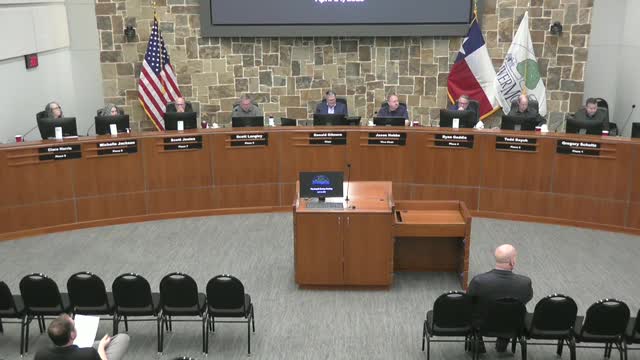
Flower Mound staff briefs commission on state land‑use bills that could limit local zoning authority
Summary
Town planning staff summarized four state Senate bills under monitoring that, as written, would restrict municipal control over development standards including setbacks, parking, lot size and accessory dwelling units.
Town planning staff told the Flower Mound Planning & Zoning Commission that several state bills under consideration would reduce municipal control over local land‑use rules if they become law.
Poornima, planning staff, summarized four bills the town is monitoring and said the town’s mayor pro tem and deputy mayor pro tem recently testified against some of the proposals. “This requires municipalities to allow mixed use and multi family developments on religious owned land, and prohibits city's ability to regulate any development in certain ways,” Poornima said of one bill she identified as Senate Bill 854. She also described measures she said would cap lot sizes, limit local regulation of accessory dwelling units and extend similar restrictions to nonresidential areas.
The presentation matters because, if enacted as described, the bills would narrow common regulatory tools local governments use to manage site design, density and parking. Poornima told commissioners the town has minimum lot sizes and parking standards that could be affected and that staff will continue to monitor the bills and report changes to the commission.
In the staff presentation, Poornima listed the four bills as follows: - Senate Bill 854 — described by staff as a bill that would require municipalities to allow mixed‑use and multifamily development on religious‑owned land and that would “prohibit the city's ability to regulate lot coverage, parking, setbacks, density, unit size, or require the buildings to be less than 3 stories,” as Poornima summarized. She said the bill, as written, appeared to apply to all municipalities but at the time of the meeting “has not got enough votes in Senate to pass.” - Senate Bill 840 — described as similar to SB 854 but, according to staff, limited to municipalities in a 150,000 population bracket; Poornima said that population cap would exclude Flower Mound. - Senate Bill 15 — described by staff as a “small lot bill” she said would cap minimum lot sizes for certain unplatted properties and, in her account, the version that passed the Senate contained a 150,000 population bracket and therefore would not affect Flower Mound at present. - Senate Bill 673 — described as a bill relating to accessory dwelling units that, in staff’s description, “prohibits municipalities from regulating minimum lot size, setbacks, parking requirement for accessory dwelling units, maximum square footages, design, etcetera.” Poornima said this bill did not include a population bracket and that the town would lose some local ADU controls if the bill were enacted.
Commissioners asked for clarification about whether specific bills had already passed the Senate. Poornima replied that, as of her report, the accessory dwelling unit bill “has not passed the Senate yet.” Another commissioner noted similar versions of the ADU proposal had come up in prior sessions and said past attempts had failed by narrow margins according to the staff briefing.
Poornima emphasized staff will continue to track amendments and the bills’ movement through the legislative session and will notify the commission if any of the measures gain new traction. The presentation concluded with no formal action by the commission; staff said they will provide further updates as the legislative session proceeds.
The commission did not vote on or direct specific local policy changes during the report; the item was informational.