Get Full Government Meeting Transcripts, Videos, & Alerts Forever!
Get email alerts on the Animal Nuisance Ordinance topic
No spam. Unsubscribe anytime.
Upland council amends animal-nuisance law to allow signed complaints and video evidence
Summary
The Upland City Council unanimously adopted an ordinance amending Upland Municipal Code section 6.04.140 to change how the city verifies animal-nuisance complaints, allowing signed witness declarations or specified video/audio evidence as grounds for enforcement.
The Upland City Council on April 14 unanimously adopted an ordinance amending section 6.04.140 of the Upland Municipal Code to change how animal-nuisance complaints are verified.
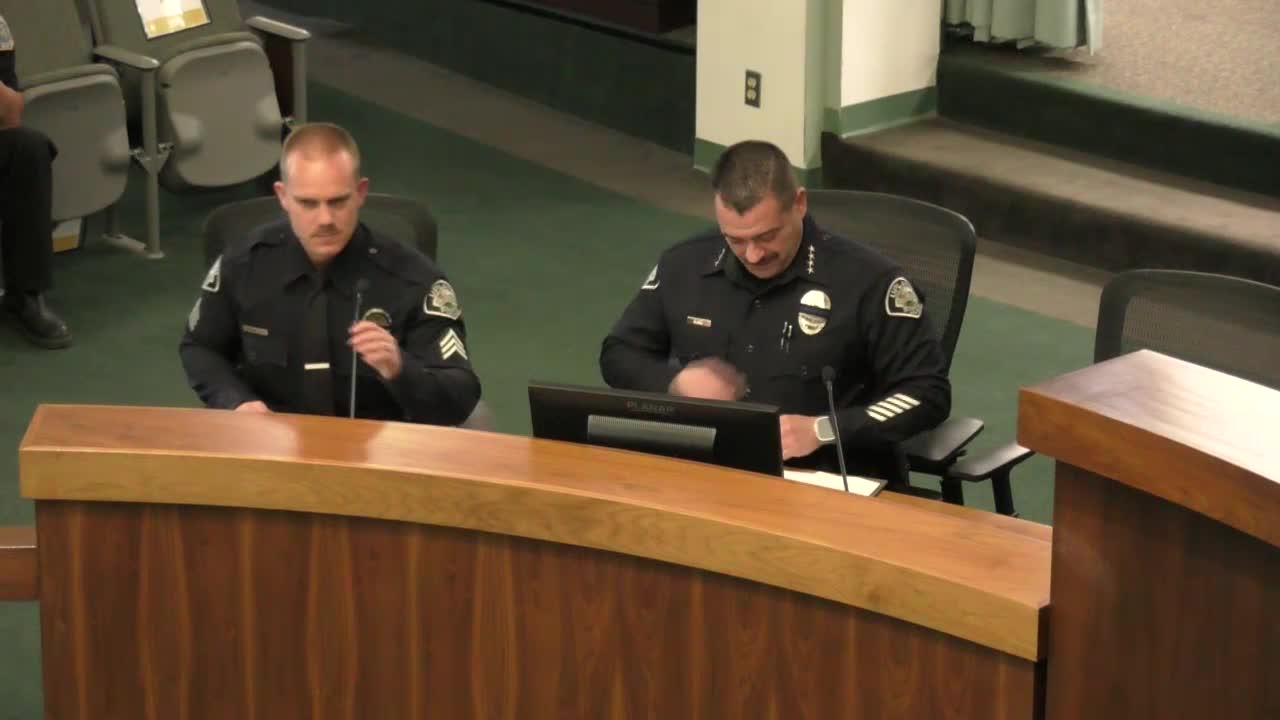
Sergeant Bryce Milakovic told the council the existing code was difficult to enforce because animal control officers frequently could not observe alleged barking or other nuisances during inspections. Under the amended ordinance, complaints may proceed if either two witnesses from different residences within 200 feet sign statements under penalty of perjury that they observed the disturbance, or one complainant provides video/audio surveillance showing at least 30 minutes of continuous evidence of the nuisance within a 24-hour period (or 60 minutes intermittently), as described by Milakovic.
"Two complainants would be required to sign under penalty of perjury that they have witnessed the violation," Milakovic said, summarizing the new verification options. The ordinance also establishes a process of courtesy notification to the owner, a 15-day period to comply, a notice of violation if the conduct continues and another 15-day compliance window before an administrative citation is issued. Complainants who proceed may be required to sign that they will testify at an administrative hearing; if the hearing is won by the complainant, the city may seek to recover investigation costs.
Council members expressed support for the ordinance but asked staff about practical concerns. Council Member Carlos asked how the requirement to sign an affidavit would affect residents who fear retaliation; Milakovic responded that the legal system requires identification for prosecution and that anonymous complaints cannot form the basis for a citation. Other members raised concerns that some residents' properties would make it physically difficult to record visual evidence (for example, a neighbor at a higher elevation), and suggested the city produce guidance on how to collect evidence without escalating neighborhood conflict. Milakovic said staff would prepare a brochure and post materials on the city website.
Why it matters: The amendment is intended to give neighbors a clearer path to remedy recurring animal nuisances while providing law enforcement a verifiable standard for administrative enforcement. The council and staff emphasized an educational approach before citations are issued.
Vote: Motion to adopt the ordinance was made by Council Member Garcia and seconded by Council Member Breitling; the ordinance passed unanimously (5-0).
Implementation notes: Staff said owners will receive a courtesy notification and then have 15 days to comply; if the issue continues, staff will issue a notice of violation and allow another 15 days before further administrative action. Staff also said they consulted the city prosecutor and reviewed similar time frames used by other cities.
Public outreach: Council members asked staff to prepare educational materials, including a brochure explaining how to document persistent barking and other animal nuisances and alternatives for resolution such as training resources provided by local organizations.