Get Full Government Meeting Transcripts, Videos, & Alerts Forever!
Get email alerts on the Animal Care Shelter Operations topic
No spam. Unsubscribe anytime.
Volunteer warns kennels lack outdoor water; staff says buckets will be returned during extreme heat
Summary
A longtime Austin Animal Center volunteer told the Animal Advisory Commission that a new cleaning protocol removes outdoor water from kennel areas and has led to dogs being left outside without access to water. Animal Services staff said two buckets will be placed outdoors when temperatures reach about 95 degrees.
A volunteer at the Austin Animal Center told the Animal Advisory Commission that a recent cleaning protocol has created a risk that dogs left in outdoor kennel runs can be deprived of water for long periods.
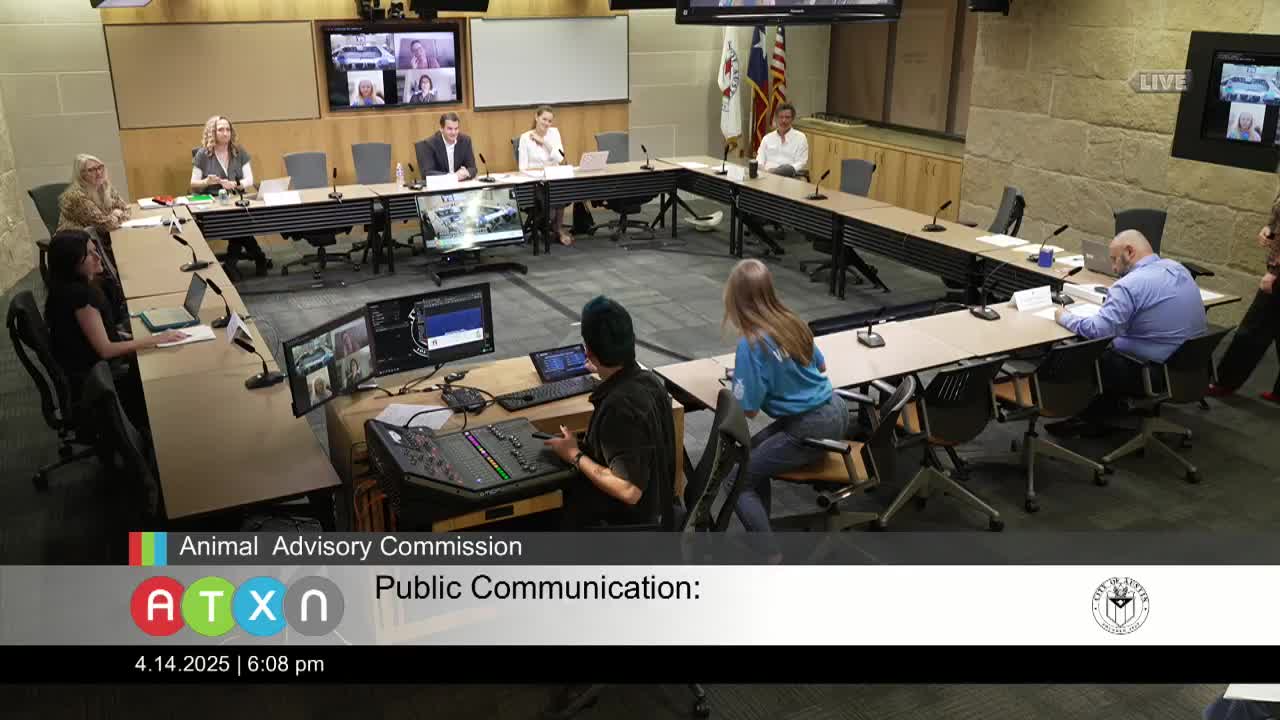
Julie Oliver, a volunteer at the shelter, said the center had previously provided two water buckets per kennel, one inside and one outside a guillotine-style divider. “If the guillotine door gets accidentally left closed ... a dog ends up on the outside, they can be left without water for a very, very long time,” Oliver said, adding that she has observed the mistake “almost every day.”
Oliver urged the commission to act quickly, citing rising temperatures and the vulnerability of senior dogs and brachycephalic breeds. “They need access to water to cool themselves down. It's not optional. It's vital,” she said.
Jason Garza, an Animal Services staff member, responded during the monthly briefing that the department had implemented the change to speed cleaning but intended to modify the practice during hot weather. Garza said the department would “put 2 buckets out” once temperatures reach about 95 degrees and that operations staff confirmed the adjustment.
Commissioners asked for a faster, permanent fix. Vice Chair Linder and other commissioners pressed staff about short- and long-term changes and about assigning responsibility for confirming outside water is present. Garza said he had texted his operations manager and that the department would verify procedures and follow up with the commission.
The discussion occurred during the public comment period and the staff briefing; commissioners did not take a formal vote on the issue. Garza characterized the department’s plan as an operational modification rather than a policy change and said staff would verify whether overnight and daytime procedures might differ.
The commission did not adopt a formal motion on this item but directed staff responses and asked for follow-up at future meetings.