Get Full Government Meeting Transcripts, Videos, & Alerts Forever!
Cochise County highways staff urge larger chip-seal stockpile as budget lines shift to materials and contingency
Summary
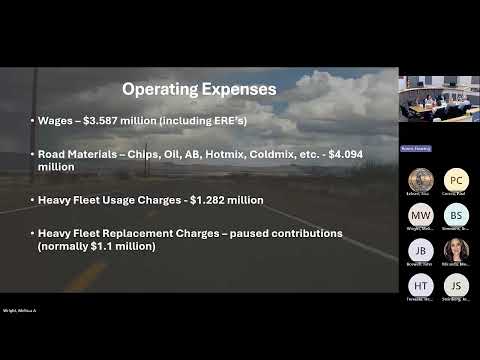
Highways staff told supervisors a 12,000-ton purchase will cover roughly this fiscal year’s chip-seal work but recommended building a 20,000-ton reserve; the presentation also detailed overhead allocations, contingency funds and professional-services spending tied to contractor miles.
During a Cochise County budget briefing, highways operations staff described plans to buy 12,000 tons of chip-seal material to support roughly this fiscal year’s chip-seal program and recommended building a larger reserve of about 20,000 tons to sustain work into the next fiscal year.
The county’s highways presenter said the 12,000 tons “will give us everything we need this year plus some towards next fiscal year,” and added that staff “are looking to stockpile more material than that. What we'd like to have is probably 20,000 tons of material sitting at our sites so that we can go out and chip seal any roads, and we can hire a contractor, and we're not sweating having this material around.” The presentation noted that 12,000 tons would not quite cover 70 miles of chip sealing when accounting for prior-year activity and the program’s fiscal-year timing.
Why it matters: chip-seal material availability, haul distance and contractor logistics affect how many miles the county can surface each year and the labor hours required on site. Highways staff said stockpiles should be held at fenced and secured road yards when possible to prevent theft and to keep contractors working without long truck turnarounds.
Key budget trade-offs and numbers discussed included a planned cushion for materials of roughly $300,000–$400,000 and a contingency line of about $2.9 million. Staff described shifting a previously scheduled $1.1 million annual contribution to fleet…
Already have an account? Log in
Subscribe to keep reading
Unlock the rest of this article — and every article on Citizen Portal.
- Unlimited articles
- AI-powered breakdowns of topics, speakers, decisions, and budgets
- Instant alerts when your location has a new meeting
- Follow topics and more locations
- 1,000 AI Insights / month, plus AI Chat