Get Full Government Meeting Transcripts, Videos, & Alerts Forever!
Get email alerts on the School Health Policy topic
No spam. Unsubscribe anytime.
Policy committee flags legal uncertainty over nasal epinephrine spray, will consult solicitor and legislators
Summary
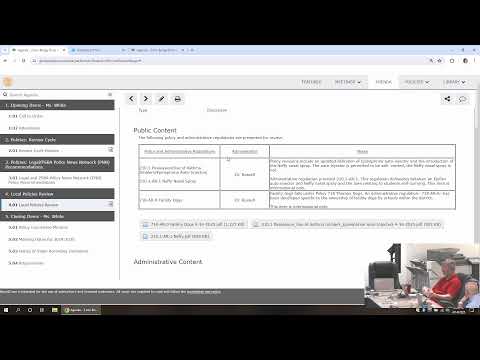
Perkiomen Valley administrators introduced administrative regulations about adding nasal epinephrine spray to school protocols. Committee members said state law mentions auto-injectors but does not clearly authorize nasal sprays; the district will consult its solicitor and contact state legislators.
Administrators told the Perkiomen Valley School District policy committee they had drafted administrative regulations about school use of a newly available nasal epinephrine spray and that nurses raised concerns about whether current state law authorizes storage, administration or student self-carry of the product.
"Nephi nasal spray is fairly new," Dr. Russell said, explaining the nurses asked for regulation language because current statute named auto-injectors specifically. He told the committee the nurses' impression was that the spray could be stored and administered by a licensed nurse on site but — unlike auto-injectors — was not yet permitted for student self-carry under the law as they understood it.
Committee members urged caution and legal review. One board member said the statutory language cited in the administrative regulation refers only to "auto injectors," and suggested the district consult its solicitor and consider contacting state legislators about updating the law. "The law is written in terms of auto injectors," Dr. Russell observed during the discussion.
Administrators provided several specific operational details: the district reported about 47 high-school students currently self-carry epinephrine auto-injectors; the nurses presented the draft administrative regulation to the committee and requested solicitor review; and staff described the nasal-spray device as recently approved (committee discussion noted the device received approval last August). The committee also discussed the nurses' concern about professional liability if staff administered a product not clearly authorized in statute.
Members agreed to follow up rather than adopt the administrative regulation immediately. The administration said it would take the draft to the district solicitor, return with legal guidance, and — if necessary — reach out to state representatives named during the meeting (Representative Webster and Representative Sheeran) and Senator Casey Pennycu?ck (as transcribed: "Pennycook") to seek clarification or legislative change.
The meeting also included a brief administrative note that one facility dog is now assigned to a west-side school (identified in the notes as "Bridal School West"); the facility-dog administrative regulation was presented as guidance for schools that might later request a facility dog.
Next steps: administration will seek solicitor guidance on whether current law covers nasal epinephrine sprays for storage, administration by nurses, or student self-carry, and will report back to the policy committee. The district also indicated it may contact state legislators to request statutory clarification.