Get Full Government Meeting Transcripts, Videos, & Alerts Forever!
Get email alerts on the Student Assessment topic
No spam. Unsubscribe anytime.
Perkiomen Valley policy committee updates assessment-policy language, debates role of formative tests
Summary
The Perkiomen Valley School District policy committee recommended updating Policy 2-13 to explicitly include "enrichment or additional support" and discussed whether district reporting should place greater emphasis on formative assessments such as STAR rather than only standardized tests.
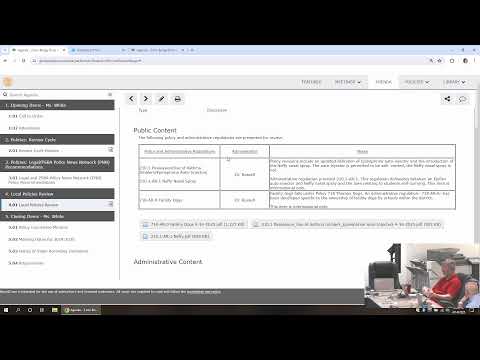
Perkiomen Valley School District policy committee members voted by consensus to accept recommended language changes to Policy 2-13 that add "enrichment or additional support" to how the district describes interventions for students who need additional help.
The change was presented at the committee meeting as a clarification to the policy’s assessment section. Dr. Russell said, "the language was shifted from simply remedial work alone to also incorporate enrichment or additional support," and described the revision as aligning policy with current instructional language used by teachers and administrators.
Committee members spent the bulk of discussion on how the district reports assessment results. A board member said the district’s annual data presentations focus heavily on standardized and summative measures such as state testing and College Board results and urged that reporting include more regular, classroom-level measures so the board and public can see day-to-day student progress: "I just would like to see if there's some way that rather than ... the extreme focus on the standardized testing, we can get into something more where we're looking at the actual, assessments that we do for students on a regular basis." Dr. Russell and other administrators acknowledged that formative assessments such as STAR and locally developed benchmarks currently inform instruction and suggested the data presentation could be expanded in future years to highlight those measures.
District staff said some work is already under way to improve comparability of classroom assessments. Dr. Russell noted that Mr. Mitchell is leading efforts to develop common assessments (for example among Algebra I teachers) so the district can make more apples-to-apples comparisons across classes and grades.
Speakers also raised limitations of repeated use of certain formative tools for high-performing students. A committee member described concerns that students who reach the top percentile on a STAR assessment may show little measurable growth in later administrations because the test no longer discriminates at the high end, and that repeated testing can take instructional time.
The committee gave informal approval to the suggested wording changes to Policy 2-13 and directed staff to consider how formative and benchmark assessments could be more clearly represented in future data presentations to the board.
Next steps: the administration will finalize the revised Policy 2-13 language for the board’s formal review process and Mr. Mitchell will continue work on common classroom assessments.