Get Full Government Meeting Transcripts, Videos, & Alerts Forever!
Get email alerts on the Housing topic
No spam. Unsubscribe anytime.
Nonprofit housing developer asks Kenai to speed land donation for senior, low-income units
Summary
KPHI asked the City of Kenai to approve donation of about 5.09 acres adjacent to its existing properties so it can apply for a Federal Home Loan Bank grant and expand senior and low-income housing; council members asked about rent rules, tax status and contract performance requirements.
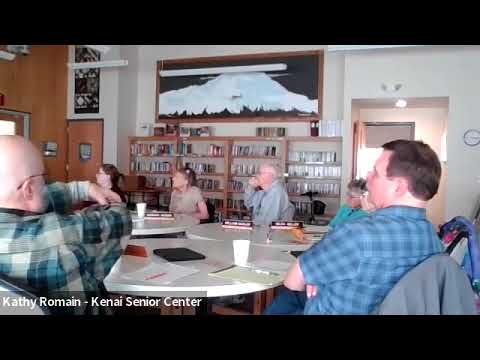
Greg Gregora, a representative of Kinetic Peninsula Housing Initiative (KPHI), told the Kenai Council on Aging on April 10 that the nonprofit is asking the city to donate roughly 5.09 acres adjacent to land already given to KPHI so the developer can apply for a time-sensitive federal grant and build more senior and low-income housing.
The ask came during a scheduled public comment and information session on a proposed ordinance to transfer the parcel. “We would like to thank you guys for the opportunity to present to you guys this evening,” Gregora said, outlining KPHI’s existing portfolio and development plans. He said the parcel under consideration would increase the total developable area to about 10 acres and, depending on funding, allow KPHI to bring the site to “54 units of senior housing and 54 units of low income multifamily housing” across that 10-acre parcel.
The request’s timing is tied to a Federal Home Loan Bank grant application that opened April 1 and closes May 1; Gregora said securing donated land before the application window closes would improve KPHI’s competitiveness for that funding. He told the council the 5.09-acre figure came from the group’s architect and that KPHI already owns other lots in the same tract that were previously donated by the city.
City and council members asked detailed questions about how rents and tenant eligibility would work. Brandice, identified at the meeting as KPHI’s executive director, explained the organization uses funding-specific rent limits from HUD and income-certification rules required by its grant sources. “If somebody’s income increases over 80% of area median income, we are required to charge the lesser of 30% of their adjusted monthly income or market rent,” Brandice said, describing the post-certification rent adjustment that can take tenants to market-rate rents if their incomes rise.
KPHI said most rents are set by the funding source (HUD rent limits) and that rents cover utilities, insurance, operations and debt service. Gregora said KPHI currently has a wait list of about 62 people for Kenai properties and stressed that donated land has been critical to KPHI’s past success in leveraging competitive grants.
Council members pressed on ownership and fiscal effects. One council member contrasted this proposal with an alternative model in which the city retains ownership of housing and the city’s enterprise fund receives rent revenue; others asked whether buildings developed by a nonprofit would be subject to property tax. Council discussion clarified that the donation contract used by the city requires KPHI to build within a set performance period or the property reverts to the city; “we’re not risking the property if they can’t perform,” a city representative said, describing the reversion condition in the donation contract.
Council staff said the land-donation request has been introduced as an ordinance (an action that normally requires two meetings) and will be discussed at the council’s next meeting; no final vote on the donation occurred at the April 10 meeting. A city official described the current step as an ordinance introduction that permits discussion at the next scheduled meeting, with a subsequent meeting required for final approval.
Council members and staff also discussed alternatives such as leasing land to preserve the city’s ownership and the potential effect of a donated site on other local housing providers. Several council members said they support adding housing capacity while noting that donated land plays a key role in nonprofit developers’ ability to win certain grants.
The council did not take final action on the land-transfer ordinance during the meeting; staff said the item will return for a formal council consideration at a subsequent meeting.
Ending — next steps: The ordinance introduction remains on the council calendar; council staff said the city will discuss the matter at its next meeting and that public comment and additional council questions will be part of that meeting.