Get Full Government Meeting Transcripts, Videos, & Alerts Forever!
Get email alerts on the Opioid Funding Sober Living topic
No spam. Unsubscribe anytime.
Operator of Russell County sober-living homes asks fiscal court for opioid-settlement support; court asks staff to craft monitoring process
Summary
Rick Robbins, who operates four sober-living residences in Russell Springs, asked the Russell County Fiscal Court for $10,000 from opioid-related funds to cover utilities and other operating costs. The court signaled willingness to help but asked staff to develop a system for monitoring and reimbursement before authorizing expenditures.
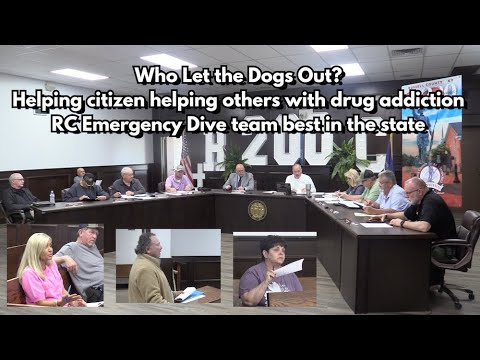
Rick Robbins told the Russell County Fiscal Court on April 14 that his sober-living operation in Russell Springs now houses 14 men and asked the court to consider $10,000 to help pay operating costs, such as utilities and appliance replacement.
Robbins described his program as privately funded and focused on helping residents obtain jobs and regain family relationships after treatment. He said many residents “do qualify on the opiate stuff” and that his houses are in Russell Springs; he offered to provide receipts and progress reports if the court provided funds.
Court members and staff raised questions about whether opioid-settlement funds may be used for the purposes Robbins requested, particularly transportation and ongoing utility payments. A county official said such expenditures could be allowable but would require a monitoring apparatus and documentation demonstrating that the funds were spent according to the settlement’s rules. The official also recommended that, rather than provide a lump-sum payment to Robbins, the court could pay vendor bills directly (for example, utility or water bills) and require receipts and ongoing monitoring.
Robbins said he would be willing to accept direct payment for utilities and to turn in receipts. Court members asked him to provide contact information, return next month with documentation and site photos, and share records that show residents’ eligibility for opioid-related assistance programs. Members discussed developing a standard process for reviewing similar requests in the future so the court has a programmatic approach rather than ad hoc approvals.
No formal appropriation or award was made at the meeting. Court members said they were generally sympathetic and likely to support assistance if staff and the county attorney could design a monitoring and payment mechanism consistent with legal requirements and the county’s reporting obligations.