Get Full Government Meeting Transcripts, Videos, & Alerts Forever!
Get email alerts on the Budget Cip topic
No spam. Unsubscribe anytime.
Geary County approves three CIP projects; commissioners discuss ambulance and equipment funding
Summary
Commissioners approved three capital projects — courthouse tuckpointing phase two, a register of deeds plotter replacement and metal repairs at Public Works — while discussing a proposed county ambulance purchase and EMS equipment costs tied to a pending intergovernmental agreement.
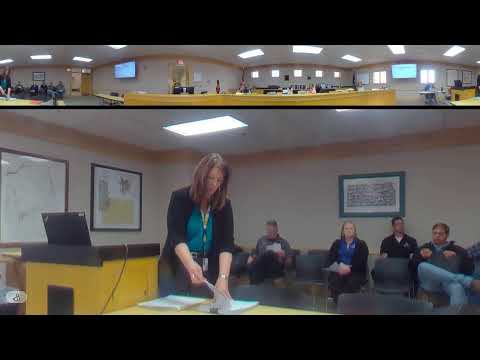
Geary County commissioners approved three items from the county’s 2025 capital improvement program during a work session, and discussed but did not finalize funding for a proposed county ambulance and related emergency medical services equipment.
Tammy Robinson, the county finance director, presented updated CIP cash balances and a rolling list of requests. She said the CIP fund held a multi‑million dollar balance after reserves but cautioned large projects and contract terms could affect available funds in coming years. "This is our second CIP work session of 2025," Robinson told the commission, summarizing available cash, reserve allocations and pending requests.
Commissioners voted to approve three specific projects that Robinson and department heads recommended: phase two of a courthouse tuck‑pointing and masonry project (estimated at about $325,000), replacement of the register of deeds plotter/plotter‑combo (about $13,049), and rusted‑metal repairs and repainting at the Public Works office building (about $40,000). The motion was moved and seconded and passed by unanimous voice vote.
Jeremy (Public Works/Facilities staff) briefed commissioners on the courthouse scope and said keeping the contractor on site for phase two would reduce mobilization costs. He also said delaying the project risks construction cost increases: "...he's saying anywhere from 15 to 25% a year increase as we continue to push this project out," Jeremy said, referring to a contractor estimate about annual escalation if the county delays the next phase.
Commissioners and county staff discussed a separate request from Emergency Medical Services. The county and the city are negotiating an agreement under which the county could buy a Type 3 ambulance; the county portion was described as up to $220,000 on a vehicle whose list price was presented at about $330,000. EMS leaders also asked the commission to consider replacement of auto‑pulse devices and other life‑safety equipment, which combined with the ambulance would increase the county’s near‑term capital needs. County staff said it was possible to phase funding across fiscal years or use CIP reserves, but that timing and contract language would determine what is feasible.
Tammy Robinson told commissioners that the county could move an additional roughly $68,000 from the current budget into CIP this year to help cover near‑term equipment needs but warned that would not fully cover the ambulance and equipment requests in 2026 without further budget decisions.
Why it matters: The county balanced short‑term maintenance and equipment needs against uncertain grant prospects, construction escalation and the need to coordinate any multi‑jurisdictional EMS contract. Approving the three maintenance projects clears planned work while commissioners continue to negotiate the intergovernmental EMS arrangement.
Votes at a glance: The commission approved three CIP requests for 2025 (courthouse tuckpointing phase 2; register of deeds plotter; Public Works metal repair and repainting).