Get Full Government Meeting Transcripts, Videos, & Alerts Forever!
Get email alerts on the City Budget topic
No spam. Unsubscribe anytime.
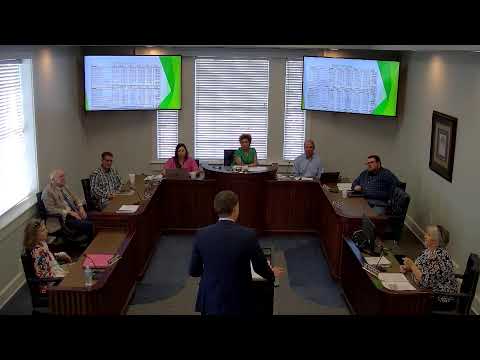
City administrator gives FY26 budget update; $1.4M general-fund gap remains, staff proposes fees and millage options
Summary
Easly City administrator presented a working draft FY26 operating budget April 14, reporting a narrowed general-fund shortfall and proposing a mix of fee adjustments, personnel additions and capital requests to close the gap.
Easly City administrator provided a status update April 14 on the FY26 operating budget, describing the document as a working draft that is not yet balanced.
Administrator Couch said the city started the budget process with roughly a $7.5 million general-fund gap and reduced it to about $1.4 million through expenditure adjustments and savings. The draft includes a proposed 3% cost-of-living increase (COLA) for employees and lists 13 requested new positions; the administrator said six positions requested by the fire department were reduced to six in the draft and the budget includes an events coordinator, additional patrol and traffic officers, a city planner and a building inspector.
Couch said health-insurance increases were negotiated down from an expected 22% to about 14%, yielding a significant savings. Retirement contribution assumptions were unchanged. Staff said they plan to ask for the first reading of the budget at the May meeting and a second reading in June.
On revenue and fees, staff proposed modest increases across several fees: grass-cart service from $35 toward $45 (to avoid subsidizing the service), roll-cart fees from $60 to $65 (with higher tiers for multiple carts), updates to business-license and building fees based on regional comparisons, and nuisance abatement fees to recover city costs when staff files liens. Impact fees will continue to be designated for parks and recreation, police, and transportation categories; staff said impact fees already designated for parks would be combined with a planned drawdown of hospitality-fund balance.
Couch described capital requests of about $1.4 million in the draft capital plan including a new police vehicle fleet, body cameras, Flock cameras, public-works vehicles and 800 additional roll carts. The largest capital items discussed include a new garbage sideloader truck, replacement/repair of a spare rear-end loader, and fire-station related expenses: $110,000 for a concrete pad and $3.5 million listed as a grant figure for a new station (staff said federal grant action is pending and the money is not in hand).
On taxes, the draft includes an assumed 3-mill property tax increase in one scenario; staff said each mill currently generates an estimated $130,000 and suggested a 3-mill increase would reduce the gap further. The official maximum millage that can be applied will be determined when state revenue and fiscal data and population figures arrive in May; staff estimated (informally) a potential statutory maximum in the 12–14 mills range but said they would confirm with state revenue and fiscal affairs.
Couch said the hospitality fund has a balance the city intends to use in part for parks expansion, including soccer-field expansion and parking; staff proposed using $5,000,000 from the hospitality fund together with parks-designated impact fees to complete projects in phases. Couch said some capital items might be financed to spread payments across years or paid from fund balance depending on council decisions.
Council members discussed workforce retention and turnover in public safety and the need for pay adjustments. Council asked about possible millage increases; council members expressed differing views and said public input would be required for significant millage changes. The administrator said a final balanced budget will be presented in subsequent readings and no formal budget vote was held during the April 14 meeting.