Get Full Government Meeting Transcripts, Videos, & Alerts Forever!
Get email alerts on the Workplace Drug Testing topic
No spam. Unsubscribe anytime.
Milwaukee commission upholds discharge of DPW sanitation worker after MRO rules ‘refusal to test’
Summary
On April 14, 2025, the Milwaukee City Service Commission denied an appeal by DPW recycling driver Jeffrey Datka and sustained his discharge after the Medical Review Officer determined medical documentation did not justify his inability to provide a DOT urine specimen.
The Milwaukee City Service Commission on April 14 upheld the Department of Public Works’ discharge of recycling driver Jeffrey Datka after the office of the Medical Review Officer determined Datka’s medical documentation did not establish a condition that would have prevented him from producing a required urine specimen for a DOT-regulated test.
The decision follows a formal appeal hearing in which the department argued it followed federal regulations and the city’s drug-and-alcohol policy, and the appellant and his medical provider said he has a medically recognized condition often described as “shy bladder.” Commissioners voted 4–0 to find the department had cause to discipline Datka and then voted 4–0 to sustain the department’s discharge action.
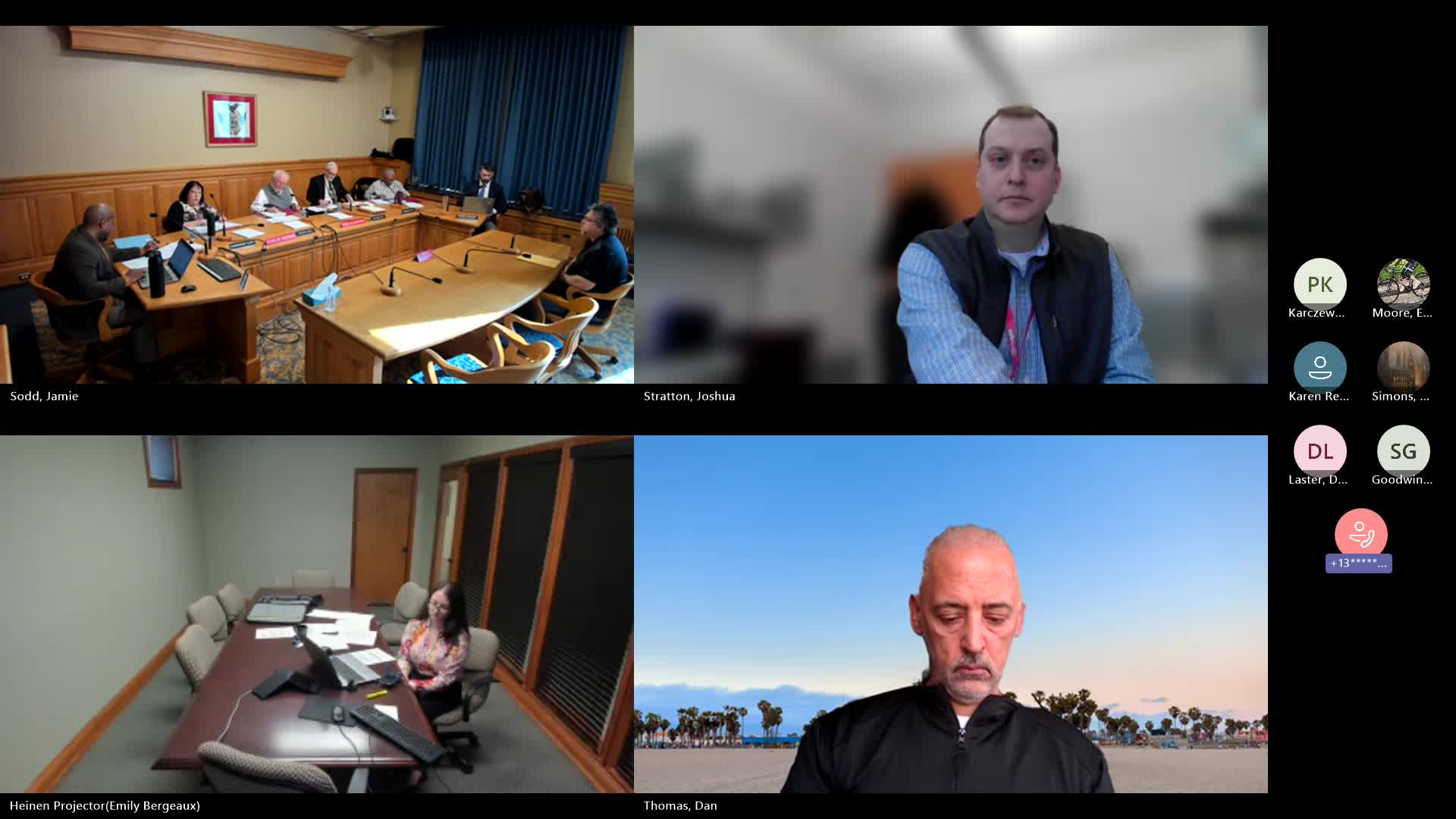
City and department attorneys and witnesses told the commission the federal regulations that govern drug testing for commercial drivers require a medical review by a credentialed Medical Review Officer (MRO). Joshua Stratton, human resources representative for the Department of Public Works, told the commission that after Datka failed to provide a 45-milliliter urine specimen within the three-hour collection window on Jan. 31, 2025, the MRO reviewed the medical materials submitted and “determined that the information did not demonstrate a medical condition that would have prevented him from providing a specimen.” Stratton said the department was bound to follow the MRO’s determination and the City of Milwaukee DPW drug-and-alcohol testing policy.
Datka, who represented himself at the hearing, said he could not provide a sample on Jan. 31 despite multiple attempts and that he subsequently saw a clinician who treated him for urinary hesitancy and later diagnosed him with shy bladder syndrome. “I didn’t refuse anything. I went there and tried everything possible,” Datka told the commission during opening remarks and later in testimony.
The commission heard testimony from Lauren Torhorst, an advanced practice nurse practitioner who treated Datka. Torhorst said she evaluated him on Feb. 4, 2025, prescribed medication used for benign prostatic hyperplasia and later recorded a formal diagnosis of shy bladder on March 10, 2025. She also testified that she asked a urology colleague, identified in the hearing as Dr. Damon, to review and sign the evaluation documents.
Emily Bergeraux, compliance officer for the MRO office for Dr. Brian Heinen, testified on behalf of the MRO. Bergeraux said the initial documentation had been completed by an APNP and that, after review, Dr. Heinen concluded the documentation did not provide “an adequate medical basis” under the applicable Federal Motor Carrier Safety Administration standards and the relevant sections of the U.S. Department of Transportation regulations (CFR 40.191/40.193). Bergeraux clarified that an MRO determination of a ‘‘refusal to test’’ does not mean the employee explicitly said he would not test, but that the documentation did not meet the regulatory standard: “Us making that determination is not saying that he explicitly refused to take a test.”
During the hearing, commissioners questioned whether the medical records demonstrated that a qualifying medical condition existed before the Jan. 31 collection — a requirement stated on the shy bladder instruction form provided to Datka and cited by the department and the commission chair. Administrative Services Director Dan Thomas told commissioners the department relies on credentialed practitioners and the MRO’s conclusions for final disposition of DOT-regulated tests.
Datka and his clinician disputed the MRO’s conclusion and submitted additional medical notes and follow-up records, some of which were admitted into the record after discussion on timeliness. Datka told the commission he had difficulty reaching clinicians and gathering documentation within the MRO’s five-day timeframe. The department and the MRO’s office said the paperwork received did not meet the regulatory requirements and that the MRO’s decision therefore stood.
After deliberation in closed session, the commission returned to open session and voted that the department had cause to take disciplinary action and then voted to sustain the discharge. Chair Frank Bach addressed Datka after the vote: “What that means, Mr. Datka, is that your appeal was denied, and the discharge action they took stands.”
The City Service Commission did not announce any further administrative steps at the end of Thursday’s meeting. No additional appeal actions or filings were recorded on the commission’s agenda for April 14.