Get Full Government Meeting Transcripts, Videos, & Alerts Forever!
Get email alerts on the Public Health Opioid topic
No spam. Unsubscribe anytime.
Supervisors discuss options for distributing opioid-settlement funds; Manning Recovery Center outlines treatment and prevention needs
Summary
County public health staff presented options used by neighboring counties to distribute opioid-settlement funds via a review committee and application process; a representative from Manning Recovery Center described treatment capacity, costs and local outreach needs. The county reported roughly $300,000 in settlement funds on hand.
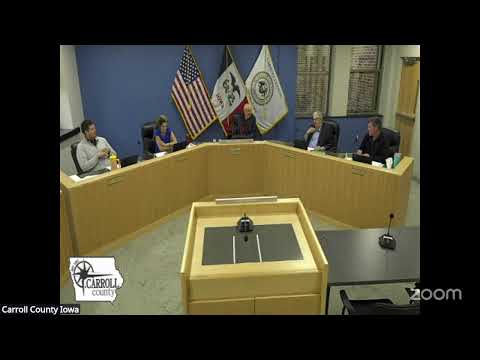
Carroll County supervisors heard a public-health briefing on April 14, 2025, about possible approaches to distributing opioid-settlement funds and received a presentation from Manning Recovery Center on treatment and prevention needs.
County public-health staff summarized best practices from nearby counties — Jasper, Dallas and Greene — that have formed advisory committees, opened simplified applications, and required quarterly reporting from awardees. The staff member said a committee model broadens reach, reduces reliance on a single provider, and provides subject-matter expertise (for example, including representatives from county attorneys, law enforcement, pharmacy, schools, EMS, public health and individuals with lived experience).
The county reported it is holding roughly $300,000 from opioid settlements in certificates of deposit. The staff presentation noted some earlier published estimates that Carroll County could receive about $464,000, but speakers clarified that the county’s current balance is about $300,000 and that additional funds and schedules depend on national settlement timetables.
Tayah (Tay) Vanami, who runs the Manning Recovery Center, described services and local treatment capacity. Vanami said a 30-day residential stay typically bills about $20,000 for cash patients; many insurance contracts and Medicaid reimbursements reduce that net amount, and Medicaid reimbursement rates negotiated with managed care organizations have improved since earlier fee-schedule levels. Vanami said Manning serves a substantial Medicaid population and that roughly half of treatment admissions are court-ordered (including alcohol and amphetamine cases), and that many applicants are turned away for financial reasons — Vanami estimated roughly 50% of applications may be declined statewide for financial reasons but did not provide a Carroll-only figure.
Speakers discussed trade-offs between using settlement funds for prevention (school-based education, public outreach, first-responder training) and direct treatment subsidies (residential or outpatient). County public-health staff and recovery providers urged a grant program structure with simplified applications, quarterly reporting, and a committee to recommend awards to the board of supervisors. The staff noted that some counties use quarterly award cycles and require itemized quarterly reports to auditors.
No board decision was made at the meeting; supervisors said the discussion would inform next steps as staff draft a recommended process for application, award criteria and reporting. Presenters said they would be available to assist as the county designs the program.
Votes at the meeting did not decide the distribution plan; the supervisors signaled intent to bring back specifics for future consideration.