Get Full Government Meeting Transcripts, Videos, & Alerts Forever!
Get email alerts on the Neighborhoods Planning topic
No spam. Unsubscribe anytime.
City planning launches Neighborhood Conditions Index pilot to select up to three areas for concentrated investment
Summary
The Tulsa Planning Office described a one‑year Neighborhood Conditions Index (NCI) pilot to work with up to three neighborhood statistical areas using data‑driven reports and a task force of city departments; applications opened immediately and close in early April, with selections to be announced in May.
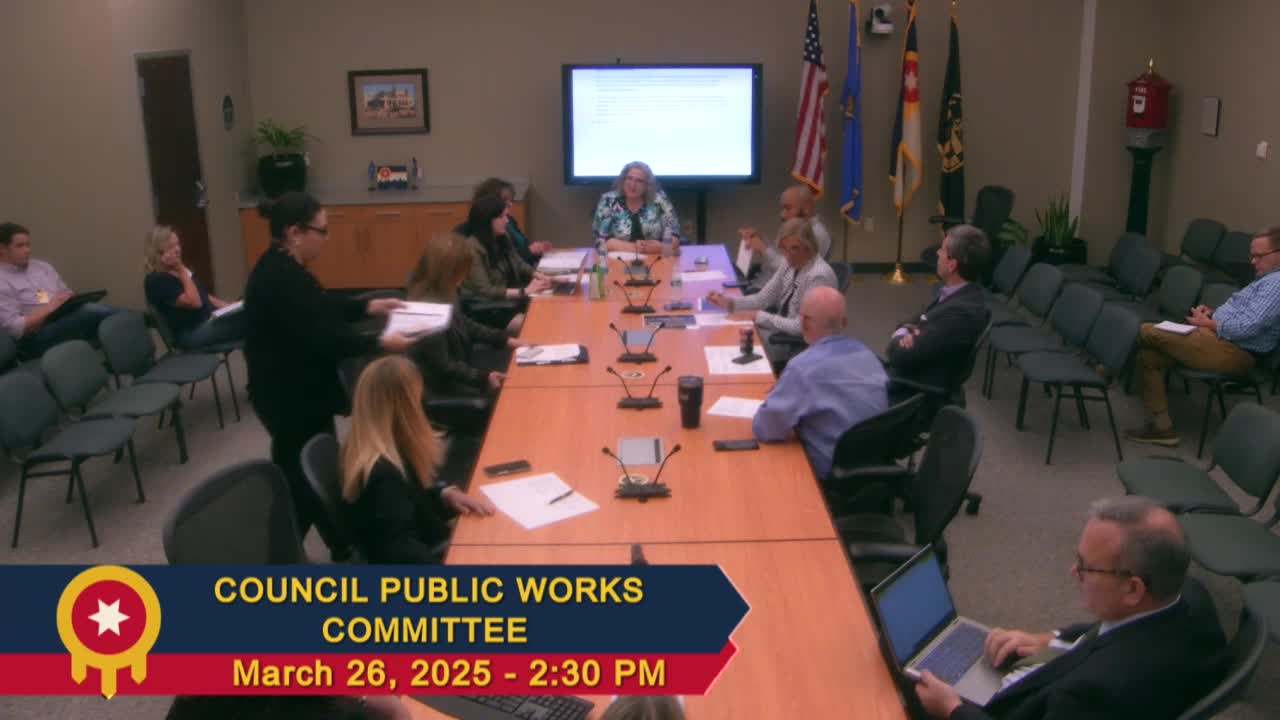
City planners told the Public Works Committee they will launch a one‑year Neighborhood Conditions Index pilot program that will pair the Planning Office and a city task force with up to three neighborhood statistical areas to identify three prioritized, implementable actions per neighborhood and coordinate city resources to complete them within the pilot year.
Susan Miller and Paulina (Planning Office staff) described the NCI as a data‑driven report that highlights strengths and areas for improvement across themes such as land use, transportation, economic development and housing. Miller said the index is intended as a “conversation starter” with neighborhoods, not a top‑down mandate, and the pilot is designed to focus city resources for visible results within 12 months.
The Planning Office said it developed 80 NCI reports that correspond to neighborhood statistical areas (groupings of census tracts). Eligibility for the pilot is limited by filters: NCI priority groups 1 and 2 and evidence of an active, registered neighborhood group. The application opened after an information session at a regional library and will close on a Tuesday in April at 5 p.m.; Planning staff said they expected to announce the selected neighborhoods on a Friday in May.
The pilot will form a task force including representatives from the Planning Office, Police Department, Code Enforcement, Public Works and Animal Services. Selected neighborhoods will name a neighborhood representative and form a steering committee; planners will conduct three workshops per neighborhood (June–August) to prioritize goals and build an action plan, with implementation and reporting scheduled from September through February and periodic task force meetings. Planning staff noted the application is available in English and Spanish and pointed committee members to tulsaplanning.org/nci for materials and a recorded information session.
Committee members asked how the pilot will interact with existing neighborhood programs and plans, including small area plans and the City’s Vibrant Neighborhoods Partnership (VNP). Planners said the pilot differs from earlier, broader plans because it aims to prioritize only three achievable actions and concentrate city resources for measurable progress in a short time frame; existing VNP or small area plans could still apply. Councilors suggested features to improve peer learning across neighborhoods and to ensure eligible neighborhood registries are up to date; staff said they will monitor applications and follow up where neighborhood registries are incomplete.
Planners also outlined the pilot’s selection criteria (organizational readiness, alignment of neighborhood priorities with services the city can provide, and geographic eligibility) and said the program will try to distribute selected neighborhoods broadly across districts. No formal council action was taken at the meeting; the Planning Office opened the application process and requested councilors’ help publicizing the opportunity to neighborhood leaders.