
Boulder presents long-term financial strategy, outlines 2025 ballot options and summer outreach
Get AI-powered insights, summaries, and transcripts
Subscribe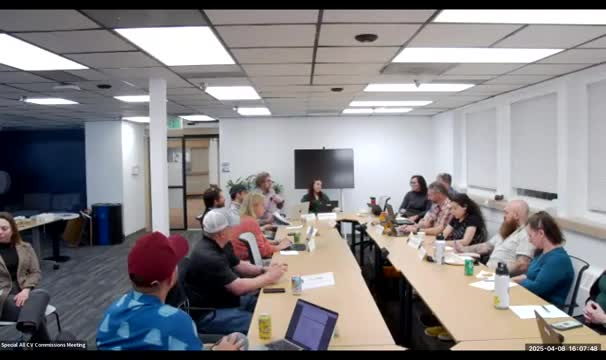
Summary
City budget staff previewed a comprehensive long-term financial strategy, proposed two ballot options for 2025 and invited community input through a “Fund Our Future” engagement process scheduled for July–October 2025.
Charlotte Skee, a city budget officer, presented the City of Boulder's long-term financial strategy and a multi-year ballot framework at a joint meeting of the city—s community vitality commissions on April 8, 2025. She said the plan responds to a long list of unfunded and underfunded needs and seeks to reduce reliance on sales tax while increasing revenue stability.
The strategy builds on prior recommendations from the Blue Ribbon Commission reports and the 2019 "Budgeting for Community Resilience" report and centers on four workstreams: a five-year long-term financial plan, alternative funding mechanisms, core service-level identification, and a multi-year ballot-measure strategy. "We have a significant unfunded and underfunded needs list that's currently around $380,000,000," Skee said during the presentation.
Why this matters: City staff said a large share of current revenues is dedicated and therefore inflexible, leaving fewer options to meet emerging community needs. Staff asked commissions and community members to participate in upcoming outreach so city leaders can weigh priorities before taking any ballot items to voters.
Skee outlined two specific ballot options staff are exploring for 2025: (1) extending the existing 0.3% "community cultural resilience and safety" sales-and-use tax (the presentation said most revenue from that tax is spent on city infrastructure while a portion supports nonprofit capital and capacity-building) and (2) creating a "public realm" property-tax option that would raise the permanent parks mill levy from 0.9 mills toward the city-charter cap (presenters cited a notional increase to 2.252 mills) and broaden allowable uses to parks, civic buildings and the public right-of-way. Staff estimated the public-realm option could generate about $7,000,000 annually if enacted.
Staff framed 2025 as a narrowly focused year of "taking care of what we have" (backlog, maintenance, replacing aging assets) and said 2026 would include a broader, more creative set of options if council chooses to pursue them. The presentation described the outreach timetable: preview sessions for boards and commissions in April–May; a city council forum on June 12; Fund Our Future community engagement from July through October 2025; and a staff report to council with narrowed options and analysis in May 2026.
During public participation, a resident who identified themselves as having worked on the earlier community-culture-resilience effort criticized the current distribution of the 0.3% tax, saying nonprofit allocations have diminished and that most of the money now supports city projects rather than nonprofit capital investment. Other commenters raised concerns about shifting revenue burden to property owners and how that could affect residents on fixed incomes.
City staff said the long-term financial strategy will include equity considerations (reducing burdens on historically disadvantaged groups through targeted fee policies), resiliency (diversifying revenue and maintaining adequate reserves), and fiscal sustainability (identifying core services and aligning revenue to priorities). Staff also flagged potential alternative tools beyond sales and property taxes—fee adjustments, public–private partnerships, targeted vacancy or lodging taxes, and limited use of debt financing—as part of the analysis.
No formal council action or ballot placement occurred at the meeting; staff characterized the presentation as a preview and asked the commissions for input to be included in a memo to council due later in the week. Skee invited commission members and the public to participate in the Fund Our Future outreach over the summer and fall.
Ending: City staff emphasized the presentation was the start of a multi-month public process and that final proposals would come to council only after the scheduled community engagement and staff analysis.