Get Full Government Meeting Transcripts, Videos, & Alerts Forever!
Get email alerts on the Public Safety K9 Program topic
No spam. Unsubscribe anytime.
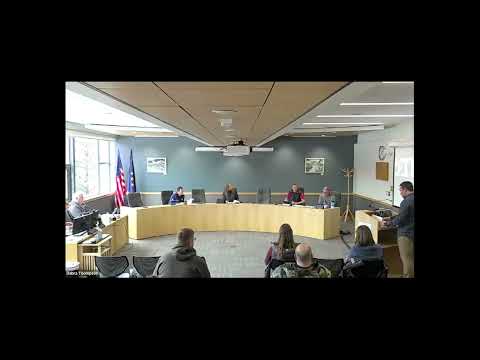
Petersburg Assembly rejects proposal for dual-purpose K-9 unit after divided public comment
Summary
After extensive public testimony for and against a dual-purpose police K-9, the Petersburg Borough Assembly voted 5–1 to defeat a motion to approve acquisition and funding for a dual-purpose K-9 unit.
The Petersburg Borough Assembly voted 5–1 on April 7 to defeat a motion to approve acquisition of a dual-purpose police K‑9 unit that would combine narcotics detection and patrol/apprehension capabilities.
The proposal generated lengthy public testimony and debate over cost, staffing, community need and the dog’s role. Supporters said a K‑9 could help with narcotics interdiction, search and rescue and de‑escalation in mental‑health encounters; opponents and several assembly members cited budget uncertainty and concerns about sustaining a program.
Patrol Sergeant Drew Harrison of the Petersburg Police Department spoke at length as a private citizen and urged caution in breed and mission choice. “If the assembly chooses to move forward with the K‑9 program, I will support the use of a non‑aggressive narcotics detection K‑9 with search and rescue capabilities,” Harrison said, adding concerns about staffing and whether a handler would still be available for routine calls if the officer was deployed elsewhere. He recommended a trial approach, including partnering with regional K‑9 units for periodic deployments.
Chief James Kerr, speaking in his capacity as Petersburg Police chief, argued for a dual‑purpose dog trained in both narcotics detection and patrol. Kerr said a trained canine can de‑escalate some crisis calls and provide a “recallable” use‑of‑force option that can be called off if a situation changes. He also emphasized search‑and‑rescue benefits in Petersburg’s terrain and weather.
Several community members testified in favor. Tina Kerr said the Petersburg Indian Association had pledged $14,000 to support the unit; Tribal administrator Jalen Palmerenke read the PIA’s formal letter of support and confirmed the donation. Resident Stephanie Akins supported a Belgian Malinois as a resilient, dual‑purpose choice. A vendor, Mike Weaver of Adlerhorse International, described European procurement and training practices and said well‑trained patrol breeds are social and controllable in the hands of trained handlers.
Other speakers pressed the Assembly to pause. Suzanne Wood, a resident, said she could not support borough funding without clearer evidence that local drug problems exceed the capacity of Southeast Alaska cooperative efforts (CCAD) and warned private donations might not be sustainable. Several assembly members echoed budget concerns, noting declines in federal Secure Rural Schools funds and uncertain revenue heading into FY2026; one member said the community faces a projected school‑related deficit depending on state action.
Assembly debate also highlighted internal police department differences. Assembly members said the department appeared split on mission and implementation, and some urged a pilot or rental arrangement with neighboring K‑9 teams before committing capital and operating funds.
The motion to approve the request was moved by Member Stett and Gregor and seconded by Mayor Johnson. Roll call on the final motion recorded votes as: Scott — no; Bob — no; Mark — no; James — no; Donna — yes; Jay — no. The motion failed, 5–1.
The Assembly did not adopt a next step or a funding line in this meeting; members who opposed the motion asked staff to return with more detailed cost estimates, staffing impacts, options for a pilot arrangement with regional K‑9 units, and written agreements describing private funding terms before reconsideration.
Ending: The defeat leaves Petersburg without a locally based dual‑purpose K‑9 for now; supporters said they will continue exploring partnerships and donations and opponents said budget pressures make implementation premature.