Get Full Government Meeting Transcripts, Videos, & Alerts Forever!
Get email alerts on the Property Tax Appeals topic
No spam. Unsubscribe anytime.
Buncombe County board opens formal appeal period, discusses hearing schedule and late-list penalty rules
Summary
The Buncombe County Board of Equalization and Review voted unanimously to close the informal appeal period as of April 11, 2025, and open the formal appeal period through May 16, 2025, and spent the meeting discussing hearing schedules, evidence submission rules and whether to adopt firm rules for late-list penalties ahead of a likely caseload increase in the next reappraisal year.
The Buncombe County Board of Equalization and Review voted unanimously to close the informal appeal period as of April 11, 2025, and open the formal appeal period to extend until May 16, 2025, and spent the rest of the meeting reviewing hearing procedures, scheduling options and how to treat late-list penalties.
The question is significant because the scheduling and rules will govern how property owners and businesses present appeals of appraisals, and a reappraisal year typically produces a sharp increase in filings that could require more frequent hearings and clearer procedural rules.
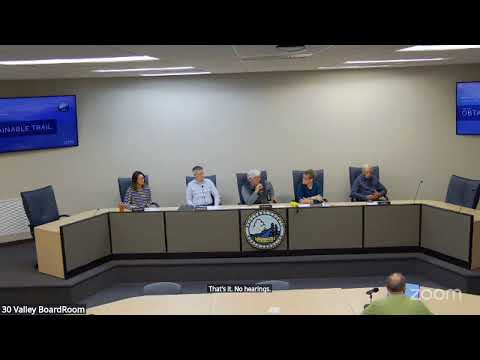
Board members first approved minutes from the March 19, 2025, meeting by motion and voice vote. Chair Randall Barnett then read the board's statutory duty and announced the appeal-period dates: "Per the North Carolina General Statute . . . So I now close the informal appeal period as of 04/11/2025 and open the formal appeal period to extend until 05/16/2025," Barnett said. The motion to open the formal period was moved and seconded and carried by an in-meeting voice/hand vote; no roll-call tally was recorded in the transcript.
Staff told the board the office currently has "around a little over a hundred" appeals in hand and that number is declining as staff settles cases; staff also warned the board that the next reappraisal year will likely produce a much larger caseload. Because the final list of appellants will not be known until the close of the formal filing window, staff recommended the board set a recurring meeting schedule (for example, a particular week and weekday each month) so the public can plan attendance and the county can publish consistent notice.
Discussion points about scheduling included: - Frequency: Members and staff discussed meeting monthly or twice monthly in a reappraisal year. Several members favored meeting more often for shorter sessions (two hours) rather than less often for longer sessions (four hours). - Day/time: Options raised included first-and-third Mondays or second-and-fourth Tuesdays, with staff cautioning against conflict with Board of Commissioners meetings and other major board schedules to avoid staffing and AV conflicts. - Start date: Staff recommended beginning hearings after the formal filing window closes and after required notice periods; participants suggested starting hearings in June (the board discussed a tentative June 9 start and the general idea of beginning in the second week of June to avoid Memorial Day).
Board procedure topics covered: - Hearing length and agenda planning: Staff recommended blocking a set hearing window (for example, 12 to 4 p.m. or shorter two-hour sessions if meeting more frequently) and grouping simpler residential matters earlier in an agenda with commercial and business personal property matters scheduled when more time is available. - Order of presentation and conduct: Staff described the board's quasi-judicial role and recommended a standard order in which staff typically presents evidence first, the appellant presents next, staff may offer rebuttal, and appellants then may rebut. The board may ask questions; parties address the board, not one another. The board's deliberations must be public, though the board may enter a closed session for privileged legal advice. - Evidence submission: Staff recommended requiring appellants to submit documents and expert reports before the hearing so materials can be included in the board book; the plan is for supporting documents to be provided the week before a hearing so members have time to review them.
Late-list penalties and waiver rules drew extended discussion. Staff explained that counties vary: some have cut-and-dry rules that deny late listings unless the assessor's office can be shown to have erred, while others exercise discretion. The North Carolina Department of Revenue (DOR) does not prescribe a single approach, and examples given included some counties that forgive a first late listing and deny subsequent late listings. Board members said they would like sample policies from peer counties and suggested staff provide proposed language for the board to consider before the board hears any late-listing appeals.
Administrative items noted during the meeting: the board book and case paperwork will accompany the agenda; appellants may be allowed to drop appeals off in person, though staff said that rarely happens; and staff contact for questions is Reina. The board set a next meeting date to coincide with closing the formal appeal period (the meeting on May 16 was discussed for routine business and to set hearing dates for June) and adjourned by motion.
Votes at a glance - Approve minutes (March 19, 2025): motion seconded and approved by in-meeting voice/hand vote; no roll-call recorded. - Open formal appeal period (close informal 04/11/2025; open formal through 05/16/2025): motion seconded and approved by in-meeting voice/hand vote; no roll-call recorded. - Adjourn meeting: motion seconded and approved by in-meeting voice/hand vote.
What comes next: Staff will provide the board with proposed rules of procedure and sample late-list penalty policies from peer counties in advance of the board's May 16 meeting; staff also will provide an updated count of formal appeals in mid-May and proposed recurring hearing dates so the board can set a regular schedule and public notice.
Contact: Appellants were told to call the county office and may reach staff member Reina with questions. The board chair closed the meeting after the motions passed.