Get Full Government Meeting Transcripts, Videos, & Alerts Forever!
Get email alerts on the Gaza Humanitarian Access topic
No spam. Unsubscribe anytime.
UN warns Gaza displacement orders and access blocks put civilians at grave risk
Summary
The UN spokesperson said new Israeli displacement orders and denied movements are fragmenting Gaza, leaving more than two-thirds of the territory under evacuation or no‑go restrictions and severely limiting humanitarian aid.
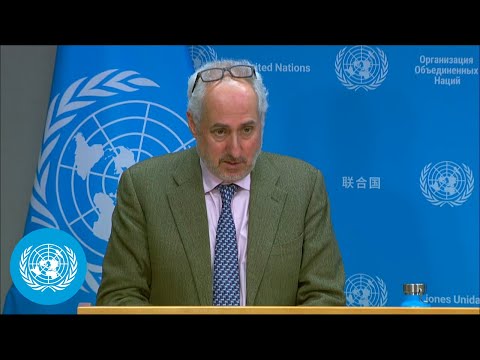
The United Nations spokesperson said on April 12 that Israeli authorities have issued two new displacement orders covering large areas of northern and southern Gaza, and that more than two‑thirds of the Gaza Strip is now either under active displacement orders or designated as no‑go zones.
The spokesperson said the Office for the Coordination of Humanitarian Affairs (OCHA) warned these measures could have “life‑threatening consequences” for people who need urgent care. “This leaves Palestinians with less than a third of Gaza's area to live in, and that remaining space is fragmented. It's unsafe, and it's barely livable following 18 months of hostilities,” the spokesperson said.
Why it matters: The restrictions and designated no‑go areas are limiting where people can shelter and where humanitarian responders can operate. The spokesperson said overcrowded shelters are in “terrible conditions,” that service providers are struggling and resources are nearly depleted. She also reported that bakeries have shut down and life‑saving medicines have run out.
Most substantive details reported by UN officials: OCHA told the briefing that the newly designated displacement zones are located within areas where humanitarian teams must coordinate movements with Israeli authorities. The spokesperson said that in the past two days six out of 10 coordination attempts to move UN teams or supplies were blocked outright; the few movements allowed were limited to staff only and did not include deliveries of aid. She also noted that the UN has been unable to access aid stockpiled in holding zones inside Gaza and that supplies on the other side of Gaza remain inaccessible.
The briefing further noted an ongoing ban on cargo entry into Gaza: the spokesperson said it has been 40 days since Israeli authorities imposed a “foreclosure” on cargo entering Gaza, preventing the delivery of critical supplies regardless of need.
Attribution and limits: The briefing attributed assessments and specific operational details to OCHA, the UN humanitarian office. The spokesperson also relayed reporting from the UN human rights office that the nature and scope of the Israeli evacuation orders raised “serious concerns” that Israeli authorities intend to permanently remove civilian populations from parts of Gaza to create a buffer zone. The article does not assert intentions beyond the UN offices' statements.
Forward look: The spokesperson said UN agencies continue to press for access and coordination to move humanitarian assistance into and within Gaza, and that staff are trying to negotiate safe passages and permission to deliver aid.