Get Full Government Meeting Transcripts, Videos, & Alerts Forever!
Get email alerts on the Election Legislation topic
No spam. Unsubscribe anytime.
Iowa election bills would expand registration checks, change recount rules and ban ranked-choice voting, secretary says
Summary
Secretary of State Paul Pate described provisions in a major Iowa elections package: front-end citizenship checks at registration, allowing poll-worker remedies to avoid on-the-spot provisional ballots, changes to recount boards and thresholds, a ban on ranked-choice voting and limits on party access to ballots.
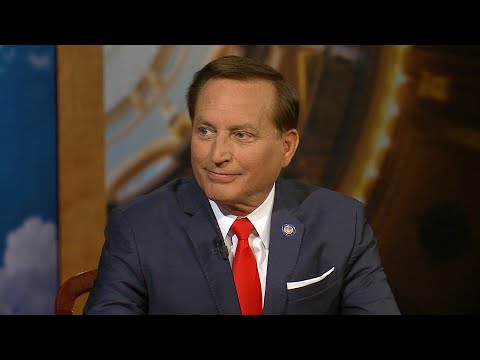
Iowa Secretary of State Paul Pate outlined components of a broad elections package moving through the Legislature that he said would make registration and recount procedures more uniform and clarify who gets access to federal immigration and identity lists.
Pate said the bills include provisions to emphasize registration-level verification of citizenship rather than attempting to resolve questions at polling places on Election Day. “I personally prefer my approach, and that is one where we deal with all this at the voter registration level rather than the day they're voting,” Pate said.
The legislation would, by Pate’s account, authorize his office to obtain federal lists used to check immigration or citizenship status and clarify the format states should receive them. Pate told Iowa Press that before the 2024 election the federal lists were either not shared or were provided in formats that complicated matching; he said the state requested lists keyed to Social Security numbers to reduce name-matching errors.
The package also contains provisions affecting poll-worker procedures. Pate said poll workers already have authority to ask about citizenship, identity and address, and that the bill aims to give poll workers tools to remedy questions so voters do not have to cast provisional ballots on the spot. “What we were actually doing in the bill was trying to make it where they could actually remedy the situation to avoid having to do a provisional ballot right then and there,” Pate said, adding the changes are meant to reduce confusion and not to create new authority.
Recount legislation has moved through the House and was in the Senate at the time of the interview. Pate said the bill seeks uniform recount procedures across counties, and it would place county auditors and their staff as members of recount boards (a change some auditors have questioned). The bill also proposes threshold limits for triggering recounts: an automatic or candidate-requested recount only if the margin is 1% or less in larger contests, and a 50-vote threshold in smaller contests, language Pate described as a legislative policy choice intended to limit frivolous recounts and taxpayer costs.
Other provisions in the wider election bill package would make it harder for minor parties to achieve major-party status and would add a so-called “sore-loser” rule that bars a primary-losing candidate from running in the general election under another party or no-party label. Pate said he did not draft that provision but that several states have similar rules.
The package would also ban ranked-choice voting in Iowa, which Pate supported on grounds of continuity and administrative simplicity. “It’s hard enough to get people to vote, and to confuse them with a ranked-choice voting process … I think is a recipe for disaster,” he said.
Pate said he supports improved uniformity and training for recounts and poll workers and stressed transparency measures in the House bill such as public observation and party representation during recounts.
The bills discussed were described in general terms on the program; specific bill numbers, enactment language and effective dates were not provided on air.