Get Full Government Meeting Transcripts, Videos, & Alerts Forever!
Get email alerts on the Voter Registration topic
No spam. Unsubscribe anytime.
Secretary of State: 35 noncitizens voted in 2024; investigations and federal data sharing remain unresolved
Summary
Iowa Secretary of State Paul Pate said 35 noncitizens cast ballots in the 2024 general election after cross-checks of a federal list; Iowa has referred cases to the attorney general and the Department of Criminal Investigations while pressing for better-formatted federal data.
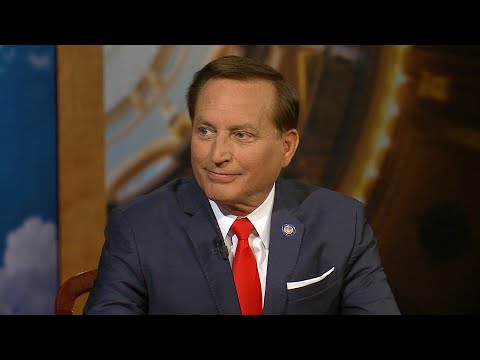
Paul Pate, Iowa secretary of state, said that 35 noncitizens had ballots counted in Iowa’s 2024 general election and that state officials have referred suspected illegal registrations and votes to the Iowa attorney general and the Department of Criminal Investigations.
Pate told Iowa Press that his office initially worked from a Department of Transportation list of about 2,100 names that could be outdated. “That’s the information we cross checked against our voter registration database,” he said. He said the office later obtained a federal list and narrowed the potential matches to about 270 names and then to 35 whose votes were counted; five others attempting to vote were turned away, he said, for a total of about 40 attempted votes by noncitizens.
Why it happened and how the count shifted, Pate said, reflected limits on federal data sharing before the election. “Because the federal government would not share their database with us when we kept asking for it, it put us in a place where we had to work from a list that could be outdated,” Pate said. He said the state asked the Biden administration for the current list and later received it; Pate added the Trump administration also provided a list but in a different format, and Iowa asked for the file keyed to Social Security numbers rather than a special federal ID to reduce name-matching errors.
Pate said the office did not throw out ballots simply because a name appeared on the initial list. Instead, counties were asked to use the list at check-in so poll workers could note questions and, where appropriate, have voters cast provisional ballots to be reviewed after election day. “No one had a ballot thrown out for that being on that list,” Pate said.
The secretary of state said his office and the attorney general have turned names over to investigators. “They’ve been turned over to the attorney general and our DCI, Department of Criminal Investigations. They’re pursuing those,” he said. Pate said at least one charge had been publicly shared and that more were likely as investigators process the referrals.
Pate said the episode has strengthened his office’s push to perform eligibility checks at the voter-registration stage rather than at polling places on Election Day. He said improved access to federal lists in a usable format would allow the state to keep its voter rolls current and reduce on-the-spot eligibility questions at polling sites.
The secretary cautioned that officials faced logistical and timing challenges before the 2024 election and emphasized that the state was trying to avoid disenfranchising eligible voters while identifying registrations by noncitizens.
The attorney general’s office and DCI are handling the criminal review; Pate said his office would continue to press for clearer, standardized federal data for future cross-checks.