Get email alerts on the Solid Waste Recycling topic
No spam. Unsubscribe anytime.
Assembly hears case to extend recycling contract; members stress alignment with solid-waste plan
Summary
Staff proposed a one-year extension (with an optional second year) of the borough recycling contract with Threshold Services; Solid Waste Advisory Board provided no formal recommendation and discussion focused on costs per ton, CPI increases in the contract and landfill-space benefits of recycling.
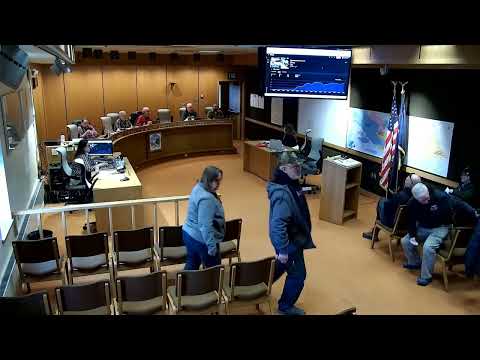
Borough staff asked the Kodiak Island Borough Assembly on April 10 to approve a one-year extension (through June 30, 2026) of the borough’s recycling contract with Threshold Services, with an optional additional one-year extension available for 2026–27.
The existing contract expires June 30, 2025, and the borough packet included cost spreadsheets and infographics showing Recycling program counts and the contractor’s proposed cost proposal. Staff said the contract extensions would align recycling and solid-waste timelines and support coordinated procurement for waste management services. The Solid Waste Advisory Board (SWAB) discussed the extension at its April 2 meeting and did not issue a formal recommendation; SWAB instead referred the matter back to the assembly for consideration.
Assemblymembers and staff discussed price comparisons and mechanisms for annual increases. Patricia, a borough staff member presenting the recycling material, said thresholds’ contract includes an annual increase clause of “2% plus CPI,” which is written into the existing contract. Assemblymembers asked for per-ton cost comparisons between landfill tipping fees and recycling expenditures; staff did not have a complete per-ton figure available on the spot and agreed to provide details. During the meeting one figure was cited in discussion noting roughly $0.18 per pound (about $360 per ton) for landfill costs and an approximate $660 per-ton cost reported for recycling on a narrow line in the packet.
Several assemblymembers voiced support for continuing recycling services despite higher per-ton costs because recycling reduces landfill volume and postpones costly landfill expansion. One member called the SWAB members subject-matter experts and urged the assembly to accept SWAB recommendations and keep the program running while staff refines cost comparisons. Others asked staff to document how annual contract increases were implemented historically, since some members recalled prior statements that increases would come before the assembly.
No formal vote was taken at the work session. Staff said they would return with supplemental cost-per-ton comparisons, a summary of historical increase implementations, and any recommended contract edits; the extension would reach the assembly as an action item before June 30 if the assembly chooses to proceed.
AI generated
The text on this page is AI generated. Summaries, highlights, analysis, and video transcripts are all produced from the original source material.
AI can make mistakes, so if you spot one, and we will fix it for everyone.
Note: the source content is unaltered by us. Any content source we link to, be it a video, an audio recording, or a document, is presented exactly as its publisher released it. That publisher is usually a government body, sometimes an individual official or another organisation.