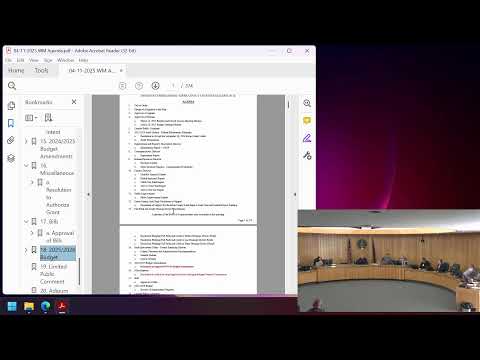
Ways & Means backs county bonding plan, approves full-faith pledges for three drain projects
Summary
Eaton County Ways & Means voted to recommend bonding options to prepay the county's share of three drainage projects and approved resolutions pledging the county's full faith and credit to Hobart, Lehi and Bank drain district bonds. Committee also approved a notice of intent and an exception to a 2011 internal bonding policy to speed financing.
EATON COUNTY, Mich. — The Eaton County Ways and Means Committee voted Apr. 11 to move forward with plans to issue county-backed bonds to prepay the county's share of three drainage projects and to approve resolutions pledging the county's full faith and credit for Hobart, Lehi and Bank drain district bonds.
The committee also approved sending a notice of intent to bond and recommended an exception to the county's 2011 full faith and credit internal policy so the county can meet the drainage district's project timeline.
Why it matters: The Bank Intercounty Drain is the largest of the three projects and will affect multiple jurisdictions and thousands of parcels. Backing the bonds with county credit lowers interest costs for the drainage district borrowing, but it commits the county as a backstop if special assessments go unpaid.
Bonding versus pay-as-assessed: Committee members and bond counsel discussed options for raising cash to cover the county's apportionment of the Bank Intercounty Drain. Administration and financial advisors presented scenarios showing lower lifetime interest costs if Eaton County borrows and amortizes its obligation over 20–25 years rather than letting the drainage district collect annually with interest embedded in assessment schedules. One example presented showed a potential life-of-loan interest savings of roughly $2.6 million by choosing a 20-year financing term over the longest drainage bond schedule.
Bond counsel Roger Swetz (Dickinson Wright) explained the practical effect of the county pledge: "Michigan drainage districts are unique entities ... the drainage district is itself a separate legal entity that has to do its financing," and without the county's support the district's bonds would sell at higher rates. He said the county pledge acts as a backstop so the borrowing can carry the county's credit and attract lower interest rates.
Finance advisor Robert (Bobby) Benzinski added that drainage bonds are issued only for the project cost and that the district's assessments are the primary repayment source; the code also allows a 1% administrative spread on assessments to create a reserve for shortfalls. "There's always a like amount of special assessments ... any assessment can be prepaid at any time," Benzinski noted.
Committee action and timing: The committee moved and supported a recommendation to the full board to adopt a notice of intent to issue capital improvement bonds (up to $12 million maximum in the draft language) so Eaton County can proceed to market and prepay its share of the Bank Intercounty Drain. Members also voted to approve resolutions pledging full faith and credit for Hobart Drain and Lehi Drain bonds earlier in the meeting; the Bank Drain pledge vote followed after discussion.
Administration said final project cost adjustments may be adopted by the drainage district on Monday following the committee meeting; if those reduce the overall project cost, the county apportionment and borrowing need will fall.
County and intergovernmental shares: Administration described negotiations that reduced the county's share from earlier estimates. The committee reported the county's apportionment for the bank project settled near 21% after county review and discussion with district engineers and counsel; Ingham County's share is estimated at 6% of the total. Road Commission costs for certain elements will be billed separately and are expected to be shared with Eaton County.
Risk and protections: Bond counsel and the county's financial advisor described how shortfalls would normally be small and handled through the county tax collection process and the drain code's deficiency-assessment authority. Swetz said major county payments because of delinquent assessments are rare; when they do occur the drain code allows levying a deficiency assessment against the district to make the county whole.
Next steps and options: With the notice of intent recommended to the full board, administration said it will return with a final financing plan (term and structure) after bids and market conditions are known. The committee also discussed an optional structure allowing the county to use any remaining bond proceeds for county capital improvements (safe-guarded in the bond resolution) if the final project cost proved smaller than the authorization.
What the committee recorded: Members approved recommending the notice of intent to the board and voted to pledge full faith and credit on the three drainage district bond resolutions at the committee level. The full board will consider the notice of intent and final bond documents in subsequent meetings before the county goes to market.
AI generated
The text on this page is AI generated. Summaries, highlights, analysis, and video transcripts are all produced from the original source material.
AI can make mistakes, so if you spot one, and we will fix it for everyone.
Note: the source content is unaltered by us. Any content source we link to, be it a video, an audio recording, or a document, is presented exactly as its publisher released it. That publisher is usually a government body, sometimes an individual official or another organisation.